

/ Pilates
Trial
class
Not a “trial, just to look around”. It is a measurement: what you are coming in with and where to start.
Fifteen movements, each scored from 0 to 3. The total out of 45 is your starting number, which we come back to in a few months to see the difference.
Leave your number — then pick what suits you: Telegram or a call. No commitment.
/ What we look at
Six things
we measure
The instructor picks the movements for you — after a conversation and a questionnaire. But looks at the same things every time.
Joint mobility
How much range you actually have. Not “go deeper”, but where exactly the movement stops and why.
Joint stability
Whether the joint holds its position under load or slides. Mobility without stability is not freedom, it is risk.
Limb alignment
How you stand on two legs and how on one. What the foot, knee and pelvis do while you do.
Control in motion
The same alignment, but in movement. Holding a static position is easy, keeping it while moving is another task.
Core strength
Whether there is support in the center. Without it the limbs work on credit.
Arm strength
The upper body — what half of the reformer exercises rely on.
/ Scoring
From zero
to three
Every movement gets a score. The scores add up to a single number out of 45 — and that becomes your baseline.
The movement does not work or causes pain. Here we do not insist, we look for the cause.
It works, but with heavy compensation: the body borrows the movement from somewhere else.
It works, the compensation is visible, but there is already control.
The movement looks clean. Nothing to fix.
In a few months we go through the same movements again and score them anew. Progress is not a feeling of “probably better”, it is the difference between two numbers.
/ Protocol
Fifteen movements
of the Polestar protocol
We do not invent the test ourselves. It is the Polestar Pilates fitness screening form — the international school whose method our instructors work in. The instructor goes through all fifteen, and if your situation calls for it, adds movements and tells you so.
Half of the movements are standing and seated, half are lying on the back, side and stomach. Together they cover the whole body, not one area.
/ What it looks like
The second half —
actually is
The test takes up to thirty minutes. The time left we give to getting to know the equipment — so that you come to your first class without questions like “what is this and how does it move”.
- what a reformer is and what it consists of
- how the carriage moves and what the springs are for
- how spring stiffness differs and why lighter does not mean easier
- basic exercises — but not random ones
We pick the exercises based on your test results: we take what is lagging behind and try working with exactly that. Or the other way around — we take a movement that causes discomfort and look for how to remove it.
- 6A Pyrohova St — a five-minute walk from Universytet metro
- Mon–Fri 08:00–20:00, Sat–Sun 09:00–18:00
/ How long
How long
it takes
One hour-long meeting — and a return to the same numbers in a few months.
Test
Conversation, questionnaire and fifteen movements with scores. This is the main part: everything else builds on it.
Getting to know the reformer
An introductory session on the equipment, with exercises matched to your result.
Conclusion
We tell you what to focus on and what to improve — and which format suits you: group or one-on-one.
Repeat test
The same movements, the same scoring. We compare two numbers — and see what actually changed.
/ Who it is for
Who should start
with a trial class
- you have never done Pilates
- you have, but at a different studio and in a different method
- you have restrictions or an old injury
- you are coming back after a long break
- you are not sure whether to go group or one-on-one
- you want to understand whether this is for you at all
Everyone who starts Pilates with us goes through the trial class. It is not a formality and not a way to sell a membership: without it the instructor does not know what you can be given and what not yet.
/ Instructors
Who teaches
pilates
Three instructors, all working in the Polestar Pilates method — so the test and the classes speak the same language.
 Hanna IvakhnoPilates instructorPolestar Pilates, reformer, posture10 years+
 Valeriia KonstantinovaPilates instructorPilates, barre · rhythmic gymnastics, CMS5 years+
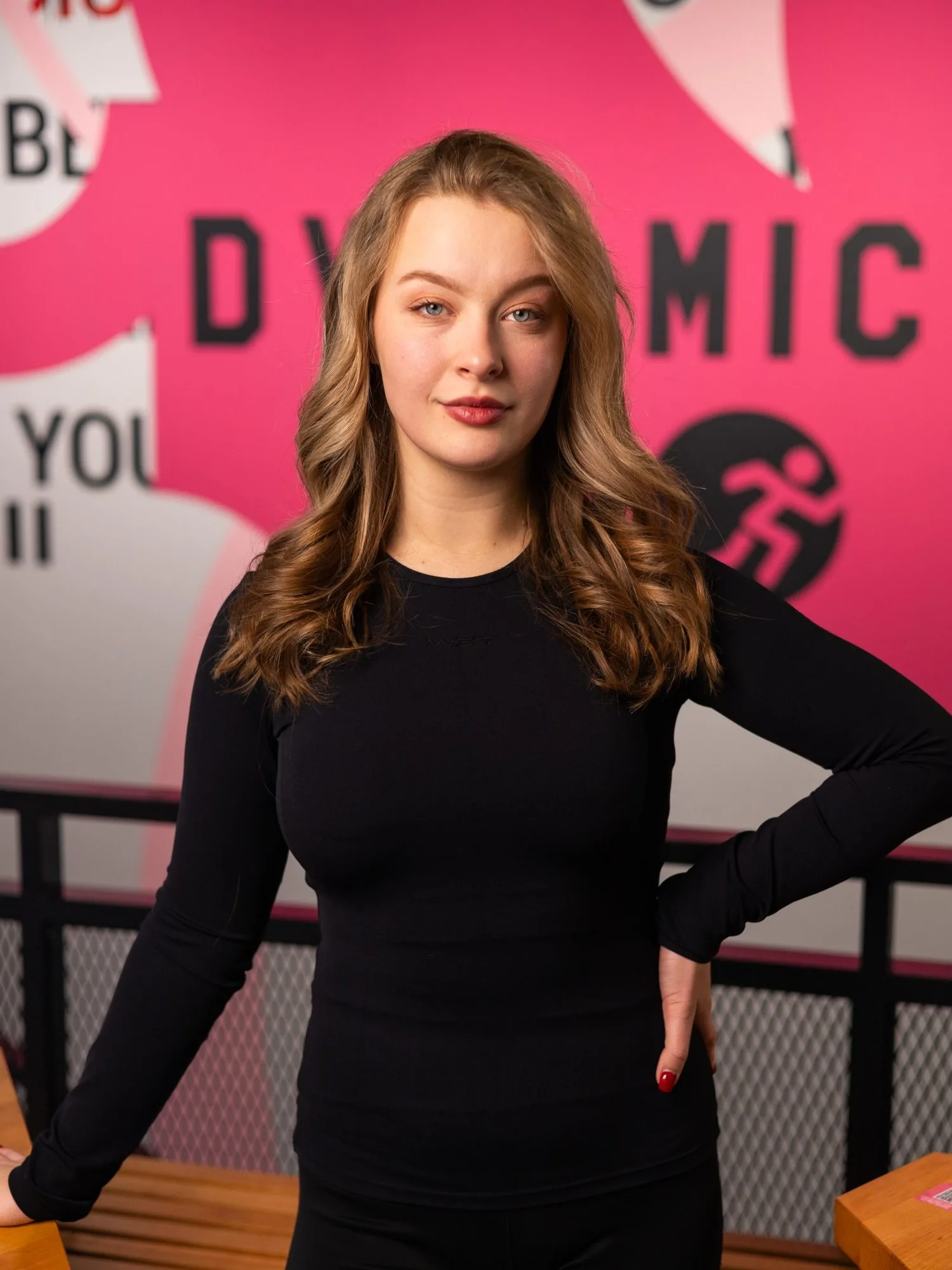 Yuliia LiashokPilates instructorDancers, movement restrictions4 years+
/ Reviews
What people say about us
“I learned more about my weak spots in training, I will try to correct them.”
Damon Damonfirst class“I had never done sport, but I finally dared — and got the place right the first time: a place that inspires and where you feel completely comfortable.”
Alina Zuievafirst time in the gym“I really liked the group reformer classes, it was my first time, and even though it is a group the instructor managed to give attention to everyone.”
мамуличка мамfirst class
/ First step
Start with a measurement,
not with a membership
One hour — and you know your starting number, your format and where you personally should begin.
Trial class — UAH 1,200 · 60 min · then group 1000 / one-on-one 1,700
/ Questions and answers
Frequent questions
Can I go straight to a group class, without the trial?+
Is it hard? I am not in shape at all.+
What do I get at the end?+
Why repeat the test?+
Is the reformer complicated?+
How much does it cost?+

/ Who is responsible for this area
Reviewed by Hanna IvakhnoPilates instructorPolestar Pilates method · 10 years of practiceSpecialist profile →1 October 2026