/ Where it hurts
Posture is
not “sitting up straight”
It is control of the body in motion. We do not “fix posture” — we teach the body to manage load better.
We work step by step — from removing pain to building strength, under medical supervision.
Leave your number — then pick what suits you: Telegram or a call. No commitment.
/ Signs
What people come in
complaining about
Rounded, dropped shoulders
and a feeling that the body is collapsing forward.
The head juts forward
typical after years at a computer.
Tension in the neck and shoulders
by evening everything is like stone.
You tire quickly sitting down
hard to get through a workday.
Asymmetry of the shoulders or pelvis
one side is noticeably higher.
A child with rounded shoulders
and it is unclear where to go with that.
/ What it means
Three myths about posture
The most common beliefs that get in the way.
- “You just need to sit up straight.” If the body is tired or weak, holding the “correct” position for long is impossible. Stable posture is built not through control but through strength and coordination.
- “The problem is only in the back.” Posture is affected by the feet, shoulders, pelvis, trunk, thoracic mobility and movement habits.
- “Posture is fixed quickly.” It formed over years — changes are gradual, and that is normal.
There is no such thing as perfect static posture. The body is built for movement, not for holding a position.
/ Who it is for
This is for you if…
- you are constantly told to “straighten up”, and you are tired of it
- by evening your neck and shoulders are like stone
- you see yourself in a photo from the side — and you do not like it
- you have tried “holding your back” — it lasts ten minutes
- your child has rounded shoulders and you do not know where to go
- you are not happy with how you look in motion
People who come to us are not athletes — they are people who want to move, sleep and sit normally without pain.
/ The cause
Why “holding your back”
does not work
Posture is a consequence. The cause is in how the body moves.
When some muscles are overloaded and others barely work, you get the feeling that the body is collapsing forward.
Conscious control drains you and does not last longer than a few minutes. We work with strength, thoracic mobility and control — so that a straight back does not require effort. Posture is a movement skill, not willpower.
What happens,if you do nothing
Posture in itself is not a disease. But over time it starts creating consequences: neck tension, back pain, shoulder overload, quick fatigue at the computer, restricted shoulder movement. Most people come with those — not with how it looks.
/ First visit
What happens at the first visit
It will not hurt. This is not about enduring, it is about understanding your movement — 90 minutes at a comfortable pace, and you leave with a plan.
We check joint mobility and muscle strength, palpate the area you complain about, take your history and run functional tests.
We try the first exercises and watch how your body responds — without sharp pain.
What exactly is holding the pain, which movement patterns are off, and a clear route forward. No pushing.
/ Proof
What you take
at the first visit
Not an opinion “in words”, but a written report: complaints, examination data in numbers, a conclusion and recommendations. Here are three real ones — different cases.
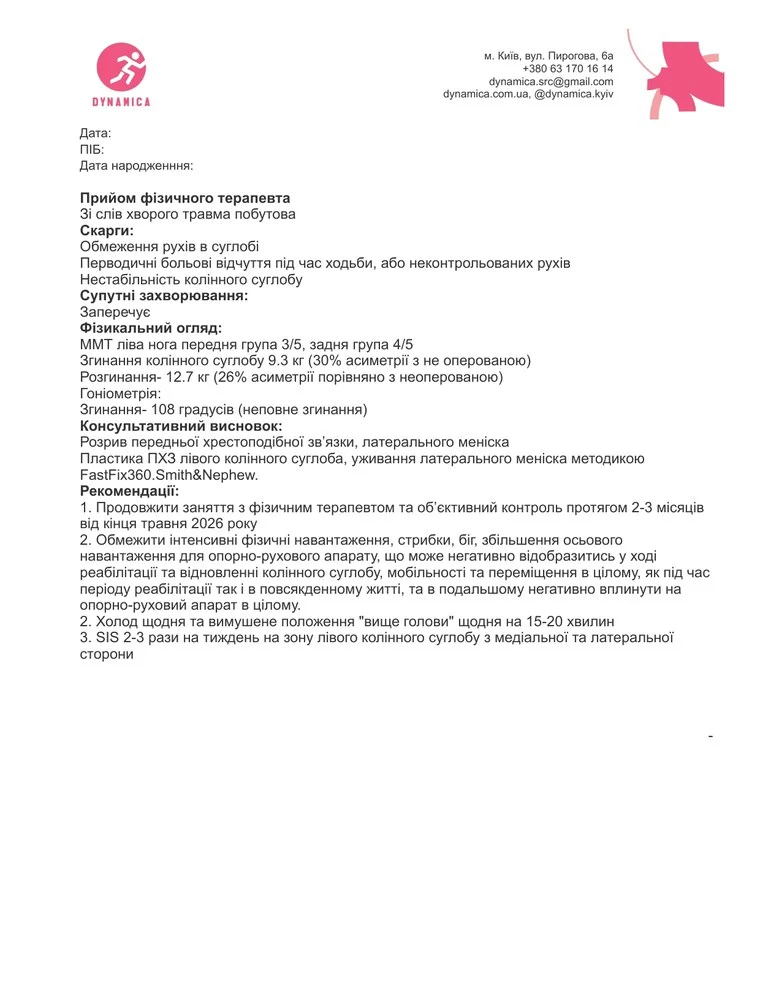
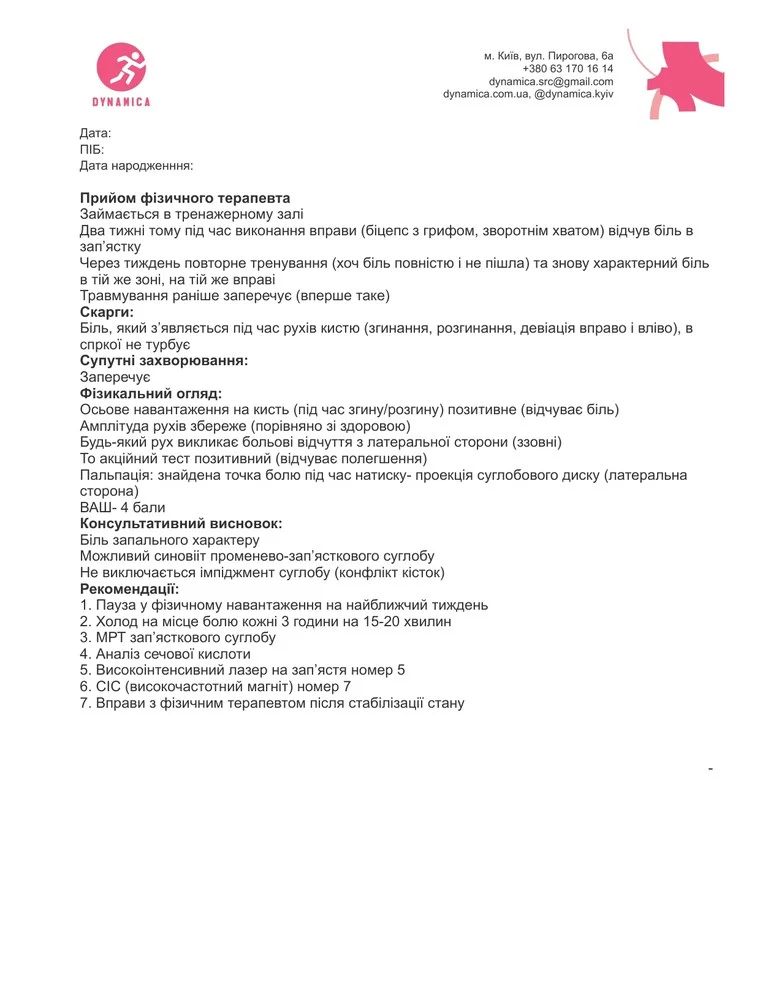
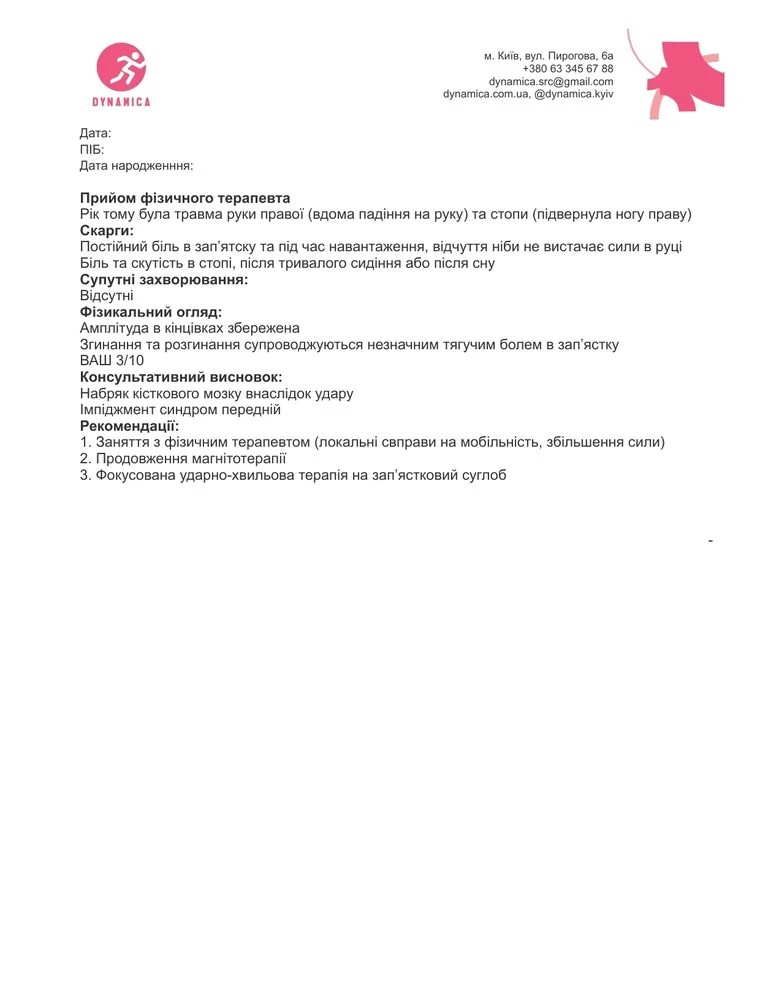
Real reports. Personal data hidden.
/ Recovery route
How we work:
from pain to strength
How long does it take? The first changes in movement control are noticeable within a few weeks. Strength and endurance are months of systematic work. We will be more precise after the assessment.
Stage 01 of 04 · REHAB
Release the tension
If posture already hurts — we start with comfort in movement.
- We assess where the body holds tension and why.
- We restore mobility where it is missing.
- Manual techniques and physiotherapy — where appropriate.
Stage 02 of 04 · MOVE SAFE
Trunk control
Posture is not sitting up straight; it is steering your body.
- We learn to control the position of the shoulders and pelvis.
- We spread the load evenly.
- We restore thoracic mobility.
Stage 03 of 04 · MOVE SMART
Stability in daily life
The important part happens outside the gym.
- We go through your workstation and habitual positions.
- We bring in Pilates as a tool for movement control.
- Regular reassessment — by the numbers.
Stage 04 of 04 · MOVE STRONG
A margin of strength
So the position holds itself, without reminders.
- Strength and endurance of the trunk muscles.
- Posture holds under load, not only at rest.
- A plan you run yourself.
/ Team
Who will work with you
Posture is handled by those who work with trunk control and Pilates.
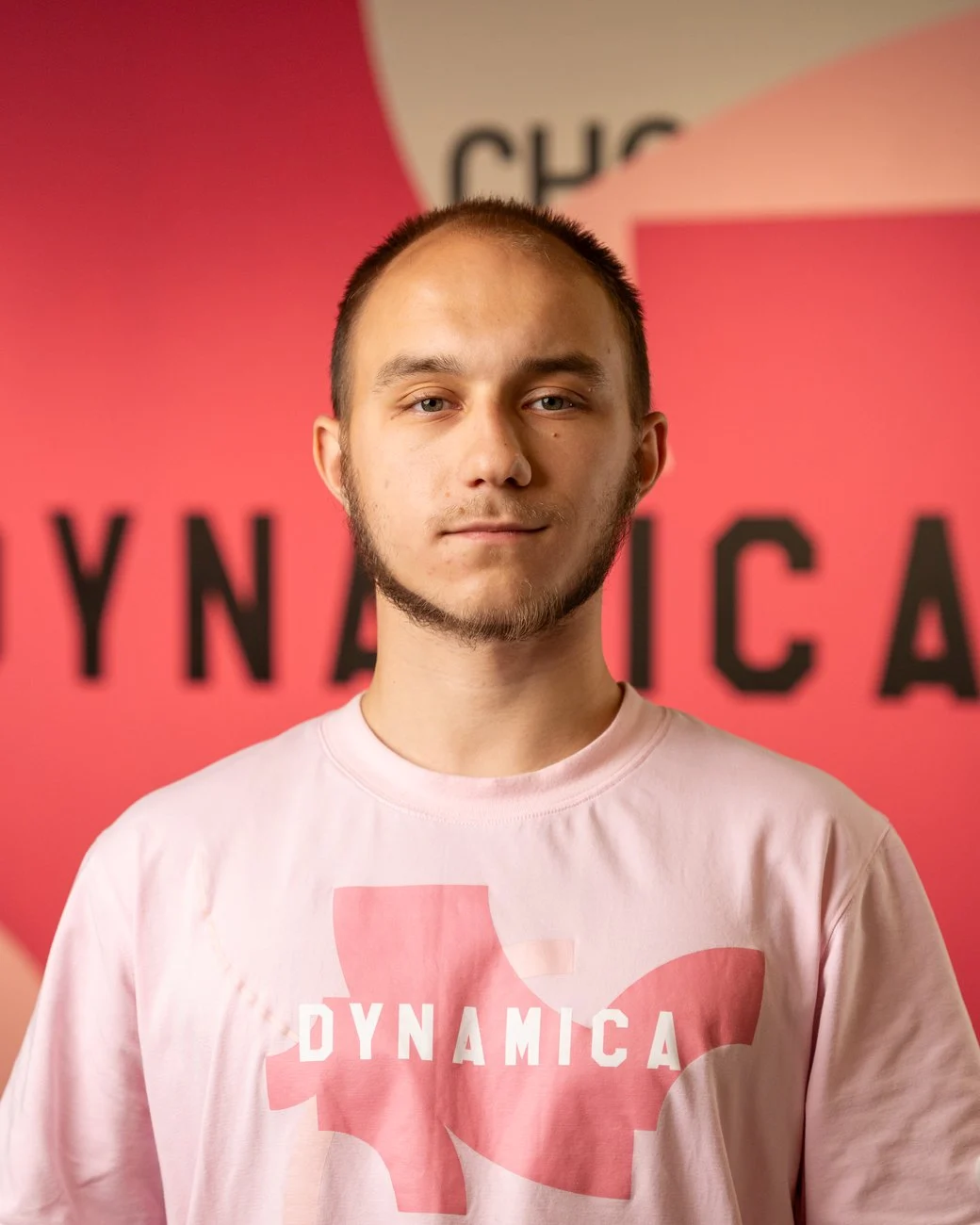 Mykyta ShutovRecovery specialistKnee, posture, foot · FC Zorya5 years+
 Daryna PopovaRecovery specialistBack, shoulders, knees, postnatal recovery4 years+
/ Physical therapy
What can help
you get there faster
Posture itself is not treated by a machine. But when there is pain and chronic tension, physiotherapy takes them down — so that work on movement control becomes possible at all.
This is not a separate course of procedures. Everything works inside the plan — and at the first visit it is included in the price.
Four tools. Which of them you actually need is decided by the physical therapist after the movement assessment.
/ Red flags
When you need a doctor examination
These signs mean you need a doctor first:
/ Reviews
What people say about us
“Thank you to Dynamica Movement Lab, and especially to Valeriia Chernii, for excellent rehabilitation, an individual approach and an interesting training program that got me back on my feet.”
Юрій Карпенкоposture“She was very attentive to my request, put together an individual rehabilitation program and monitored progress throughout.… The Dynamica center has modern equipment, a pleasant atmosphere and a high level of service.”
Володимир Малянчукposture“From the first session it felt like everything was somehow very easy, but a month later you clearly see your body toned up, your head and neck stop hurting, and you start holding your posture.”
Ангелина Дорошенкоposture, neck
/ First step
Start with an assessment —
and see what is really in the way
The assessment will show what exactly is being overloaded and why. The movement assessment does not commit you to further work.
Movement assessment — UAH 2,000 · sessions after that UAH 1,500
/ Questions and answers
Frequent questions
I have scoliosis. Do you work with that?+
Yes, within physical therapy — with movement control, strength and load symmetry. The degree and tactics are determined by a doctor; we work with function.
From what age do you work with children?+
Needs to be checked with the center — it depends on the request and the specialist.
Will a posture corrector help?+
It reminds you about position, and over a short stretch that can be useful. But muscles do not get stronger from it — so on its own a corrector does not change posture.
How much time does it take?+
Posture formed over years, so changes are gradual. The first noticeable ones come within a few weeks, stable ones after months of regular work.
Will Pilates help?+
Yes, it is one of the best formats specifically for control and stability. After the assessment we often send people exactly there.

/ Who is responsible for this area
Reviewed by Mykyta Shutovrehabilitation and physical therapistNUPESU, physical therapy · knee, posture, footSpecialist profile →23 September 2026