
/ Pilates → Barre
BARRE — strength
without impact
on your joints
Ballet barre, small range, long holds.
A low-impact format built on ballet biomechanics, Pilates and isometric work. No jumping, no choreography, no dance background required.
Leave your contact — we’ll match you a group and time.
/ The format
A ballet barre
without the ballet
Barre is a functional low-impact format: no impact loading on the joints. It combines the principles of classical ballet training, Pilates, elements of yoga and isometric strength work.
The class is built on controlled small-range movements, static holds, high repetition counts and constant work on muscular endurance. We use the barre as support: it holds your balance while your body learns to hold position.
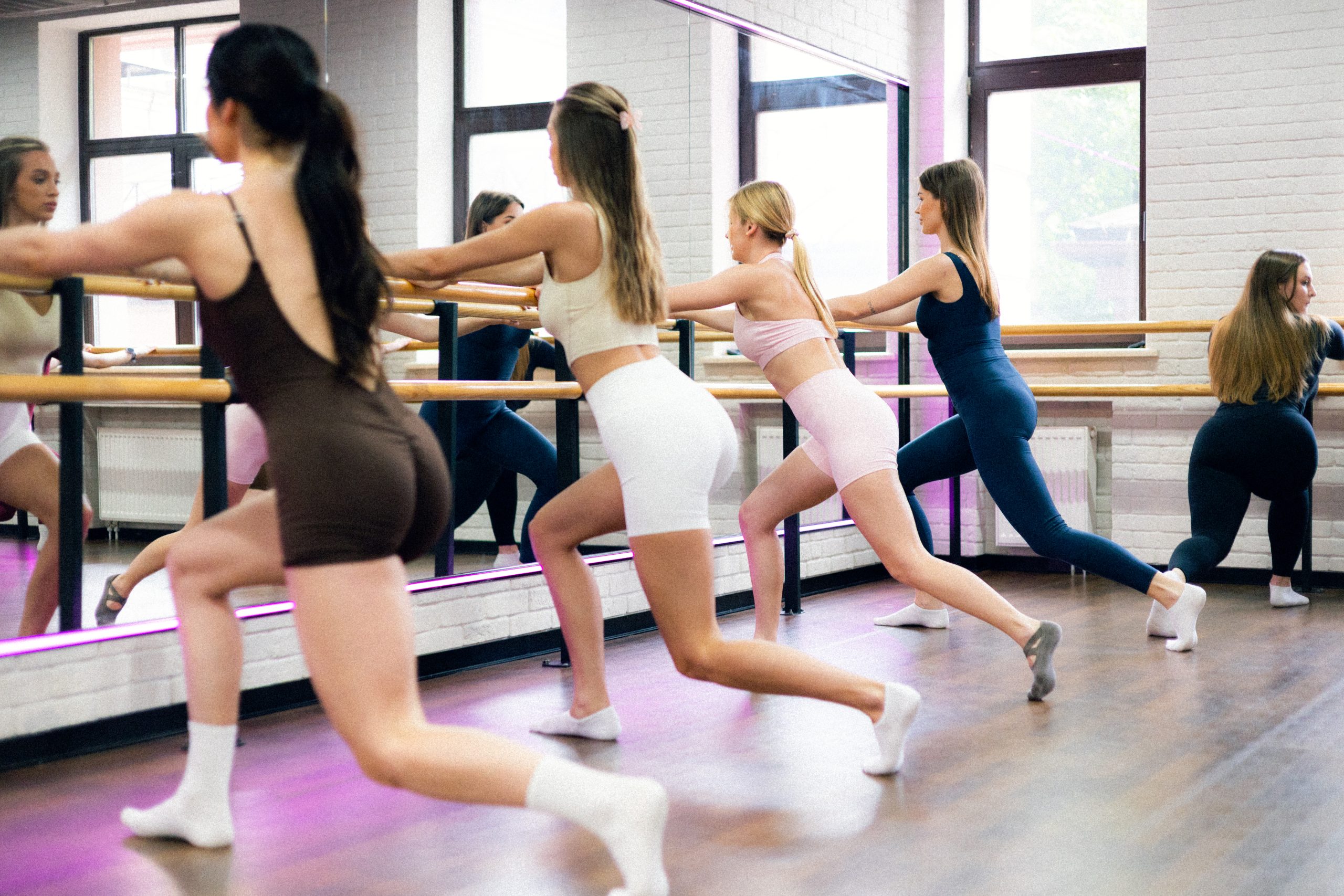
The format grew out of adapting ballet method for a general audience. Modern barre does not teach you to dance — it uses ballet biomechanics as a tool for stability, postural control, mobility and local endurance.
/ The big misconception
This is not
a dance class
For all the aesthetics, barre is not dance. There are no choreographic sequences to memorize, no performances and no missing the beat.
- No dance experience needed. None at all.
- No ballerina flexibility needed — the movements are small, and you choose the range.
- Music sets the tempo, not the shape of the movement.
- The instructor names and demonstrates every movement — there is nothing to memorize.
This is a structured system of functional loading focused on control, endurance and stabilization. The method works through precision, repetition and neuromuscular adaptation — not through high-intensity or heavy strength stimulus.
/ The mechanism
Shaking is
not weakness
The main loading mechanism in barre is not heavy weight — it is time under tension.
That is why the characteristic muscle shake shows up during class. It is local muscular fatigue from long time under load, not a sign that you are doing something wrong, and not a reason to stop.
The weight is small. The time under tension is long. Fatigue comes from time, not from kilograms.
/ What it looks like
Forty seconds
on the format
What barre is, what it works on and who we invite — briefly, out loud. Subtitles are burned in, so you can watch it without sound.
- the barre holds your balance while your body learns to hold position
- movements are simple and repeat — the difficulty is in the volume, not the pattern
- there is nothing to memorize in advance
/ The focus
Not maximal strength,
but movement quality
The focus is not hypertrophy and not a one-time record. Barre works on seven things at once.
- muscular endurance
- posture work
- stabilization
- movement control
- balance
- coordination
- deep muscle layers
The areas that simply sleep in everyday life — glutes, the back and inner thigh, the core — work in every single exercise at the barre. That is why the body becomes more collected: tone and control appear, posture changes.
The class trains pelvic and scapular stability, core control, lower-limb endurance, thoracic mobility and coordination at the same time — and through that it improves the quality of your movement patterns.
The key thing about barre is strength work and mobility in one format. Usually those are two separate sessions.
/ Equipment
Light dumbbells
and your own body weight
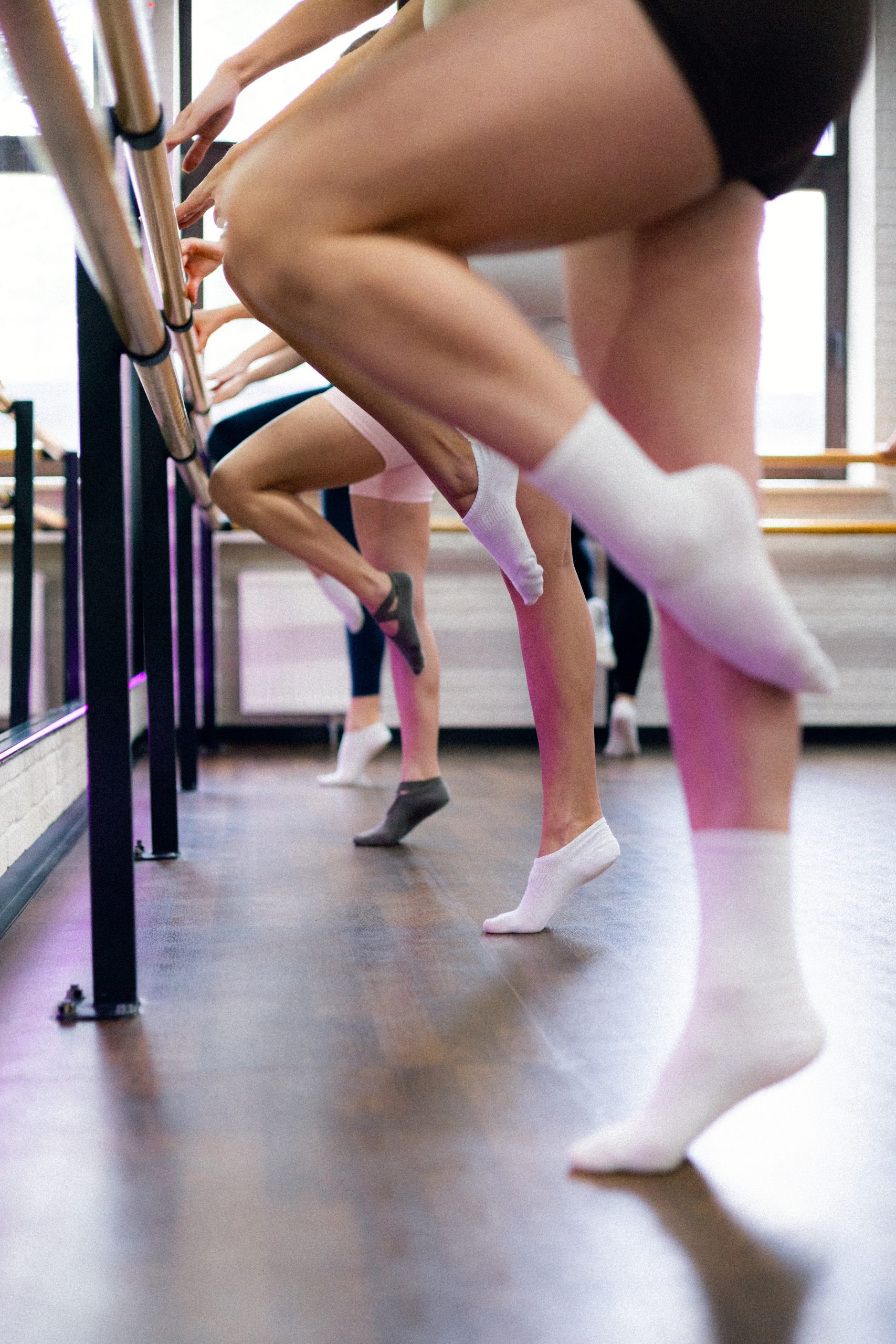
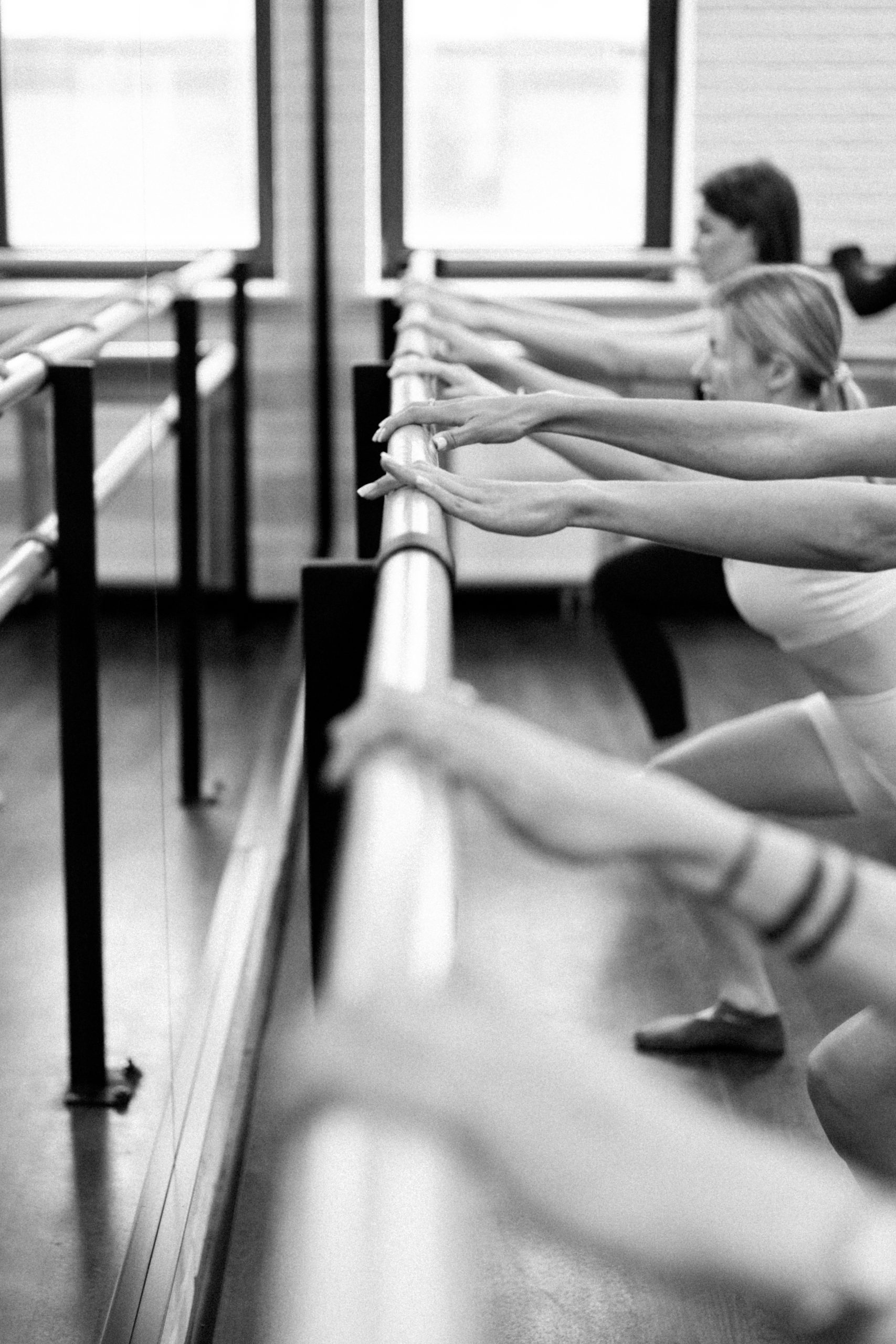
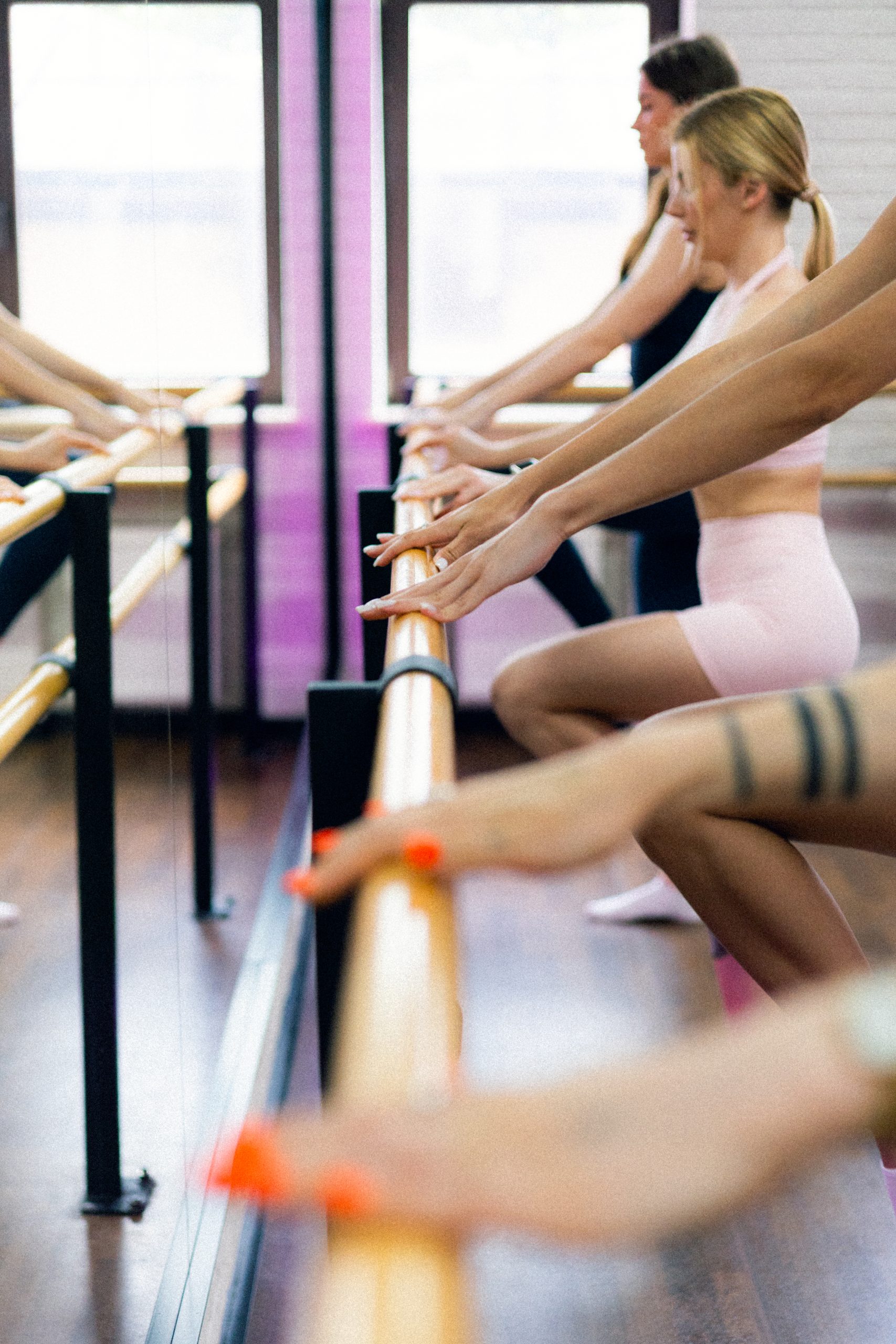
Most classes use light dumbbells, Pilates balls, resistance bands, ankle weights — or nothing but your own body weight.
The load comes not from iron but from precision, long sets and keeping the muscle working the whole time.
/ Who it’s for
You can start
from any point
Because there is no impact, barre suits different levels of fitness, including people coming back after a break.
- People coming back after a break who don’t want to start with impact loading.
- People who want to add more controlled work alongside strength or cardio.
- People who can’t jump or run right now — joints, back, post-surgical restrictions (cleared with a physical therapist).
- People who are new to the gym and want to start with technique, not weight.
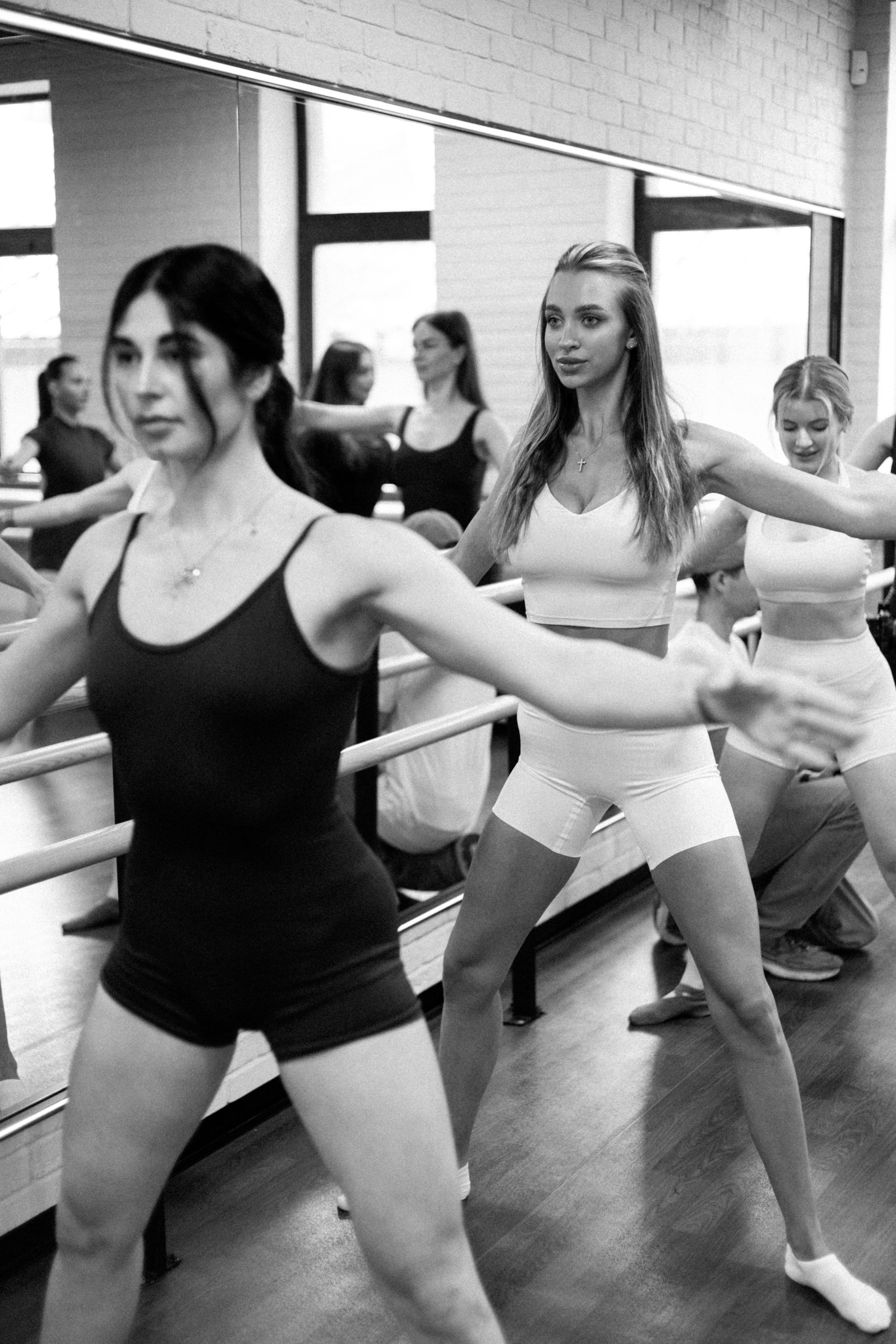
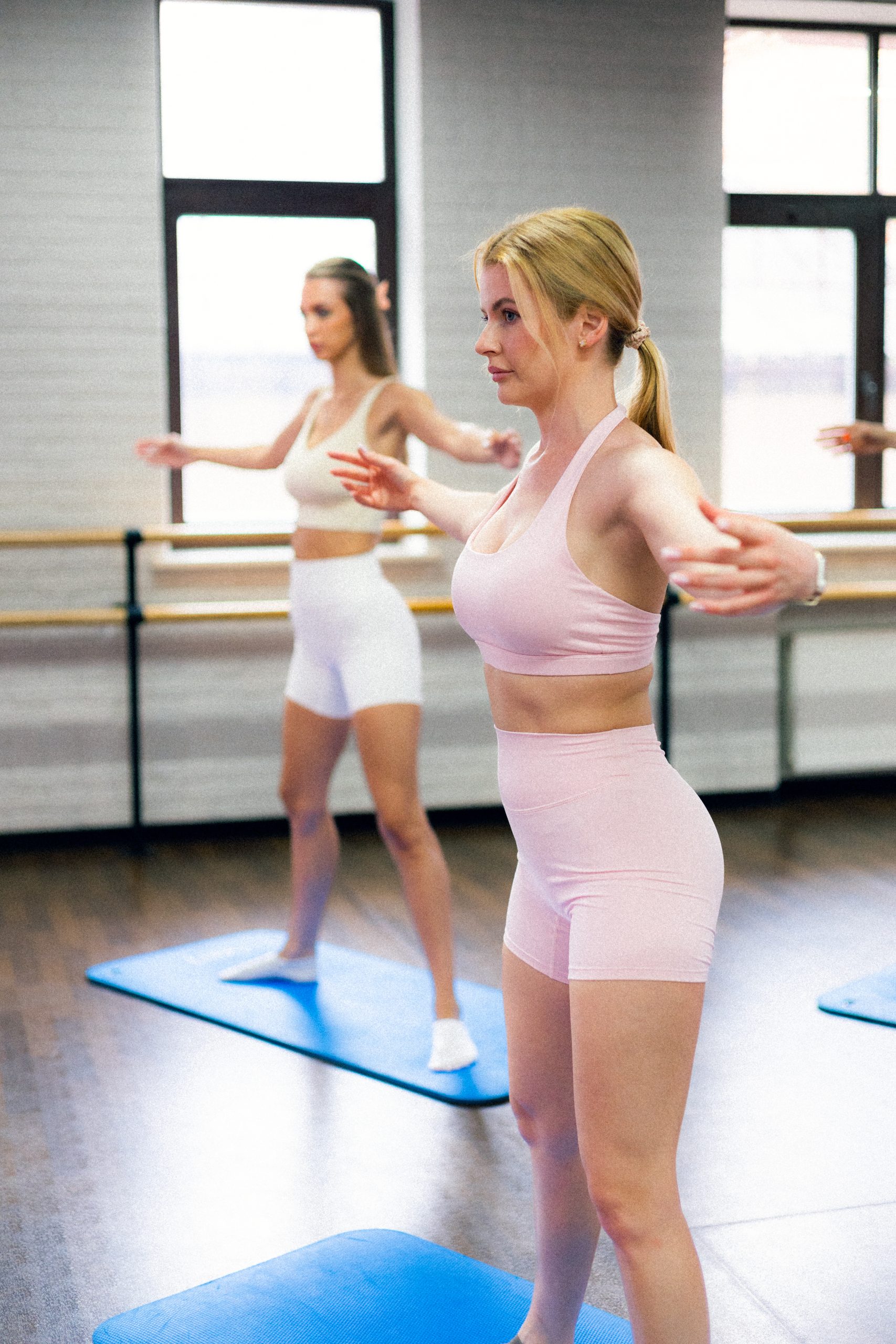
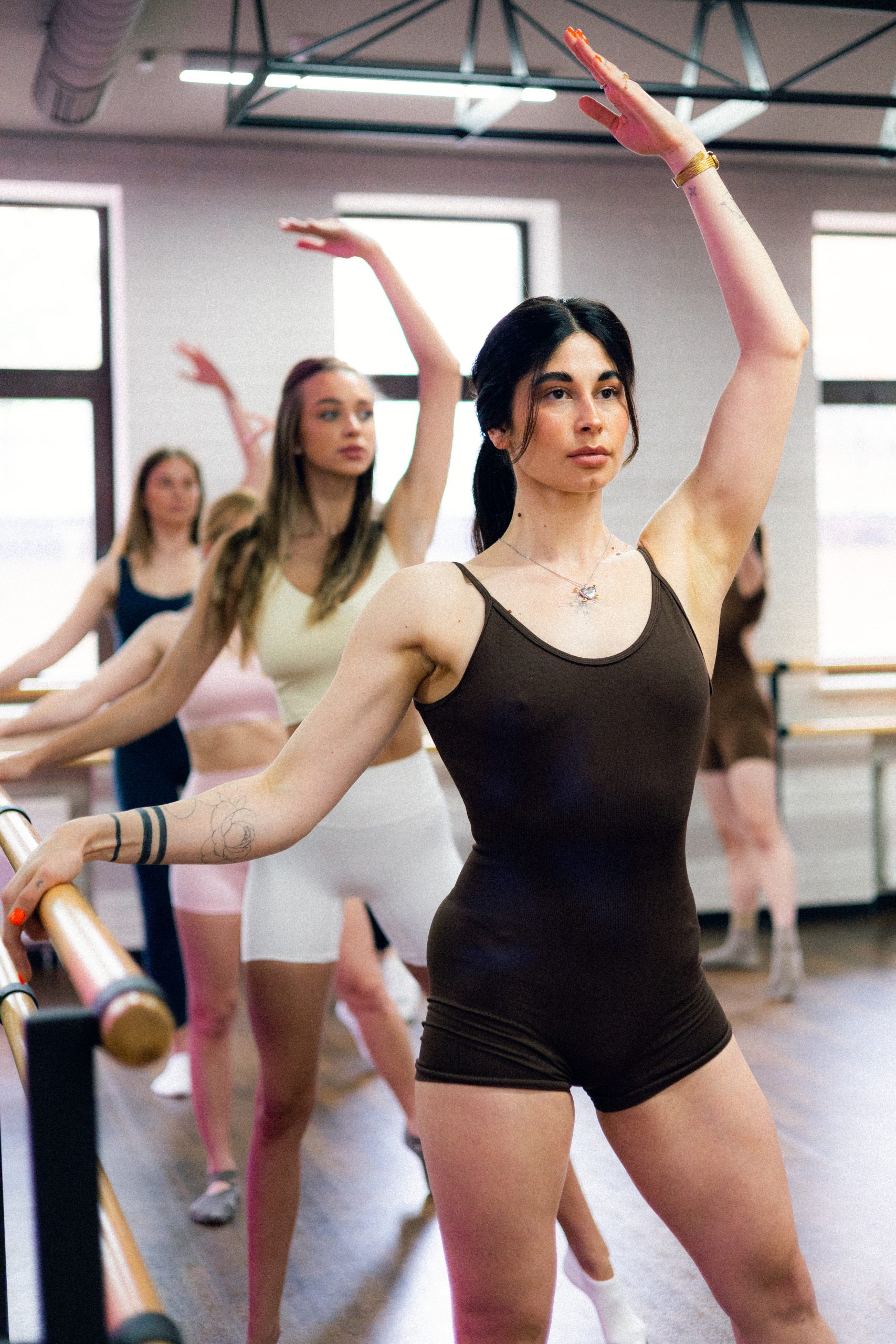
Not sure it’s safe for you right now? Start with a movement assessment — or see how barre differs from reformer Pilates.
/ How a class runs
The instructor is next to you,
not across the room
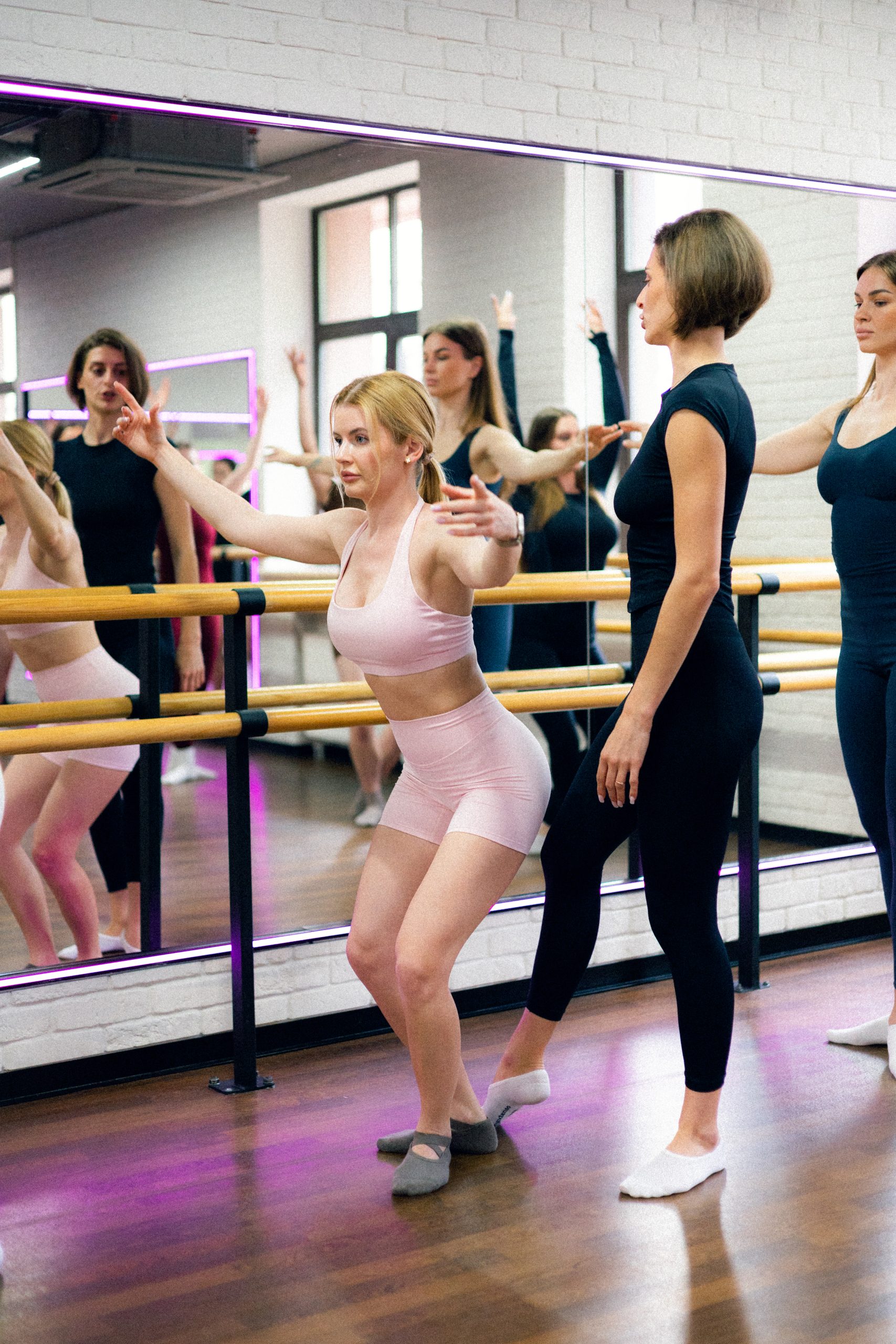
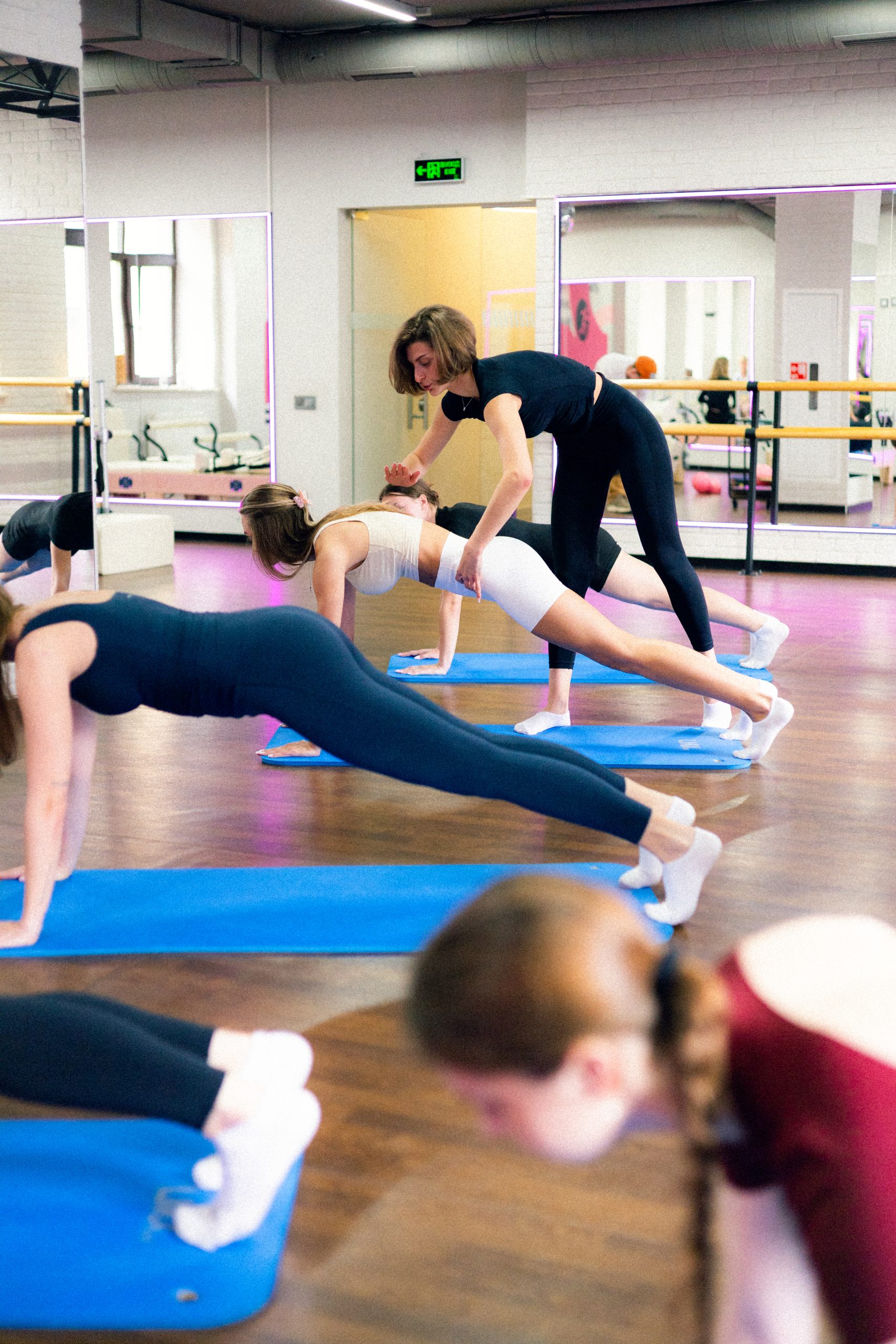
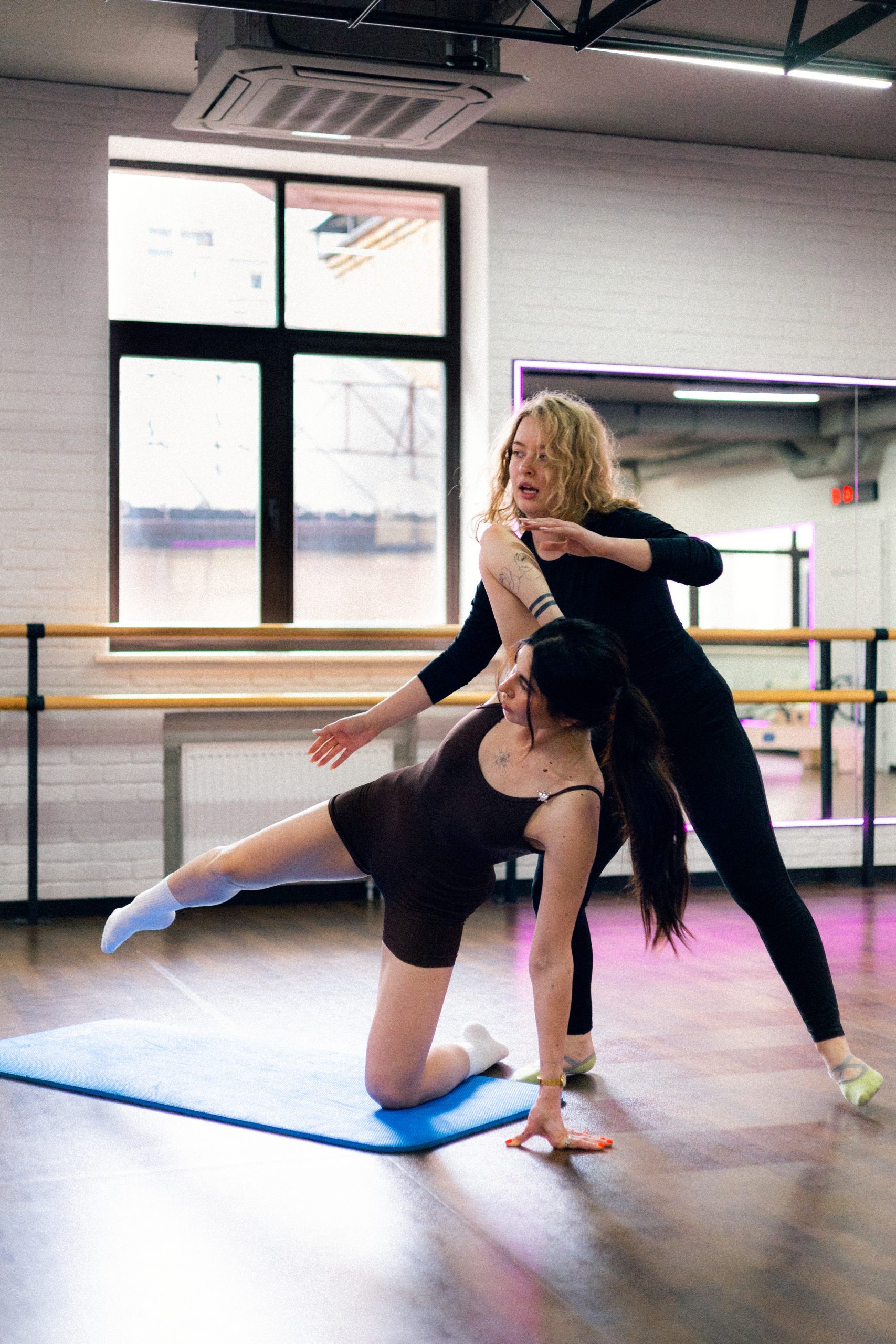
Groups are small, so the instructor has time to reach everyone: correct your pelvis, change the range, offer an easier option.
That is the main difference between a class in the studio and a video online: there you watch a screen and hope you’re doing it right. Here someone tells you and shows you on your own body — which is exactly why the small range works instead of being faked.
/ Schedule
When we
train
In the schedule the format is called Move Barre. Groups run at fixed hours; one-on-one sessions fit any slot in the working day.
None of these times work for you? Tell us when you’re free — we open new groups on request. We post open slots daily on Instagram @dynamica.kyiv.
/ Instructors
Who teaches
barre
The same instructors who teach reformer Pilates. So barre is not a separate fitness class on the side — it is part of the same system: the same language, the same principles of working with the body.
 Valeriia KonstantinovaPilates instructorPilates, barre · rhythmic gymnastics, CMS5 years+
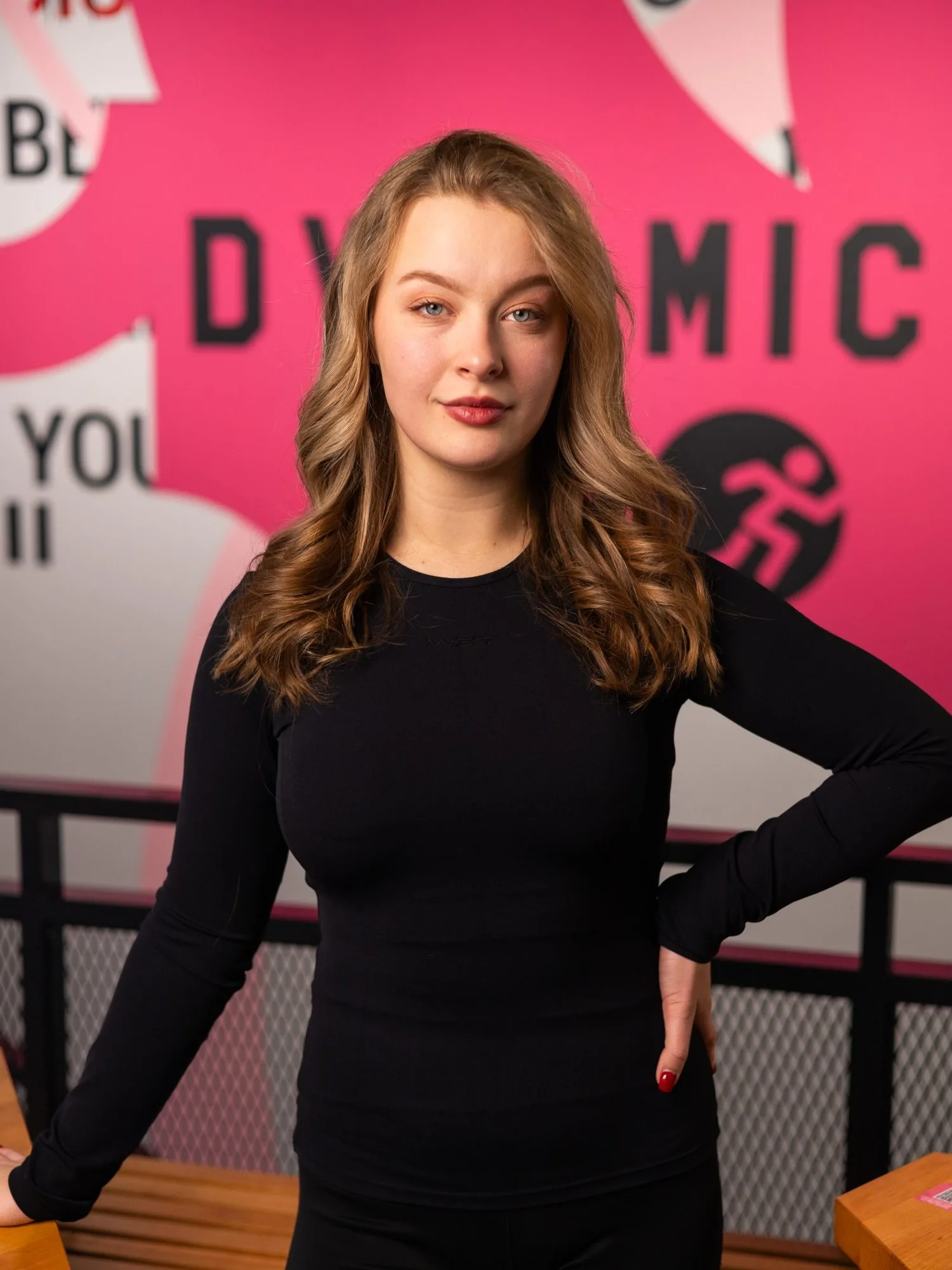 Yuliia LiashokPilates instructorDancers, movement restrictions4 years+
/ First step
Start with a trial class,
not with a package
One class — to understand the format, the pace and whether it’s yours at all. No package up front.
Trial class — UAH 1,200 · 60 min
/ Questions and answers
Frequently asked questions
Is this dancing? I’ve never danced+
No. From ballet we took only the barre itself and a few positions of the legs and arms — nothing else. There is no choreography, no sequences to memorise, and no need to “stay on the beat”.
The instructor demonstrates and names every movement out loud; you simply repeat it. If you have never danced, you won’t even notice it during the class.
Is this ballet?+
No. There are no jumps, no pointe shoes, no turnout and no splits. Ballet is the aesthetic the idea came from.
Barre is a fitness format: we work in a small range of motion for muscular endurance. The barre here is not for arabesques — it is support that keeps your balance safe.
Is this strength training?+
Yes, it is strength training — of its own kind. We use body weight, light weights and resistance bands: high repetitions, pulses, isometric holds. The load comes from time under tension, not from the weight.
It is not a heavy barbell, but your muscles will burn properly — especially glutes, thighs and core.
Will it be hard if it’s my first time?+
The first time will feel unfamiliar, but not “hard”. Your legs will shake — that is normal, it is how muscles work in an isometric hold, and it is not a sign that something is wrong.
Every exercise has an easier option, and you can stop at any moment. You set the pace, not the group. The first class is a trial one: the instructor watches how you move and picks the options that suit you.
Will it help me lose weight, build muscle, tone up?+
Weight loss is not about training. Weight comes off through food and daily routine, and no workout — barre included — replaces that. So, honestly: if the goal is kilograms, start with the plate, not with the barre.
What barre really does is give your muscles a reason to switch on. The areas that simply sleep in everyday life — glutes, the back and inner thigh, the core — work in every single exercise here. The body becomes more collected, tone and control appear, posture changes.
You will not build muscle mass here — barre solves other problems. Size requires heavy weights and progressive overload; that is a different format.
Can I do barre if my back or knee hurts?+
How is barre different from Pilates?+
What should I bring?+

/ Who is responsible for this area
Reviewed by Hanna IvakhnoPilates instructorPolestar Pilates method · 10 years of practiceSpecialist profile →1 October 2026