/ Where it hurts
Does your shin
or Achilles hurt?
The Achilles pulls, the calves get tight, “shin splints”. We look not only at where it hurts but at how the whole leg works.
We work step by step — from removing pain to building strength, under medical supervision.
Leave your number — then pick what suits you: Telegram or a call. No commitment.
/ Signs
What people come in
complaining about
Achilles pain after running
shows up during the run or the next day.
Morning stiffness
the first steps out of bed are the hardest.
Tight calves
the leg feels wooden after load.
Pain in the front of the shin
what runners call shin splints.
Pain along the inner side
after increasing mileage.
Fear of loading it
after an old injury the leg is “not right”.
/ What it means
An Achilles rupture is rare,
but you should know it by sight
This is the case where you go to a doctor immediately.
- sharp pain at the back of the shin
- a feeling of being hit, or a snap
- inability to rise on your toes
- sudden weakness in the leg
- swelling in the Achilles area
If this is you — do not wait for a physical therapist consultation, see a doctor.
/ Who it is for
This is for you if…
- you added mileage — and the Achilles started reminding you about itself
- the first steps in the morning are hard
- you say “the Achilles pulls” or “my calves get tight”
- after a run the shin feels wooden
- you are afraid to load the leg after an injury
- the pain comes back every time you return to running
People who come to us are not athletes — they are people who want to move, sleep and sit normally without pain.
/ The cause
Why it hurts right here
During running the Achilles works like a spring.
It stores and returns energy with every step — so when mileage grows, this area is the first to start hurting.
But the cause is often higher up: hip weakness, poor pelvic control, a change in running technique, a sudden jump in volume. So we assess the whole leg, not just the painful spot.
What happens,if you do nothing
The Achilles tendon does not tolerate “pushing through”. You reduce volume, change technique, adapt — and the pain seems to back off. But the tissue does not have time to recover, and every return to load starts from the same place. Early intervention is much simpler than working with a chronic tendinopathy.
/ First visit
What happens at the first visit
It will not hurt. This is not about enduring, it is about understanding your movement — 90 minutes at a comfortable pace, and you leave with a plan.
We check joint mobility and muscle strength, palpate the area you complain about, take your history and run functional tests.
We try the first exercises and watch how your body responds — without sharp pain.
What exactly is holding the pain, which movement patterns are off, and a clear route forward. No pushing.
/ Proof
What you take
at the first visit
Not an opinion “in words”, but a written report: complaints, examination data in numbers, a conclusion and recommendations. Here are three real ones — different cases.
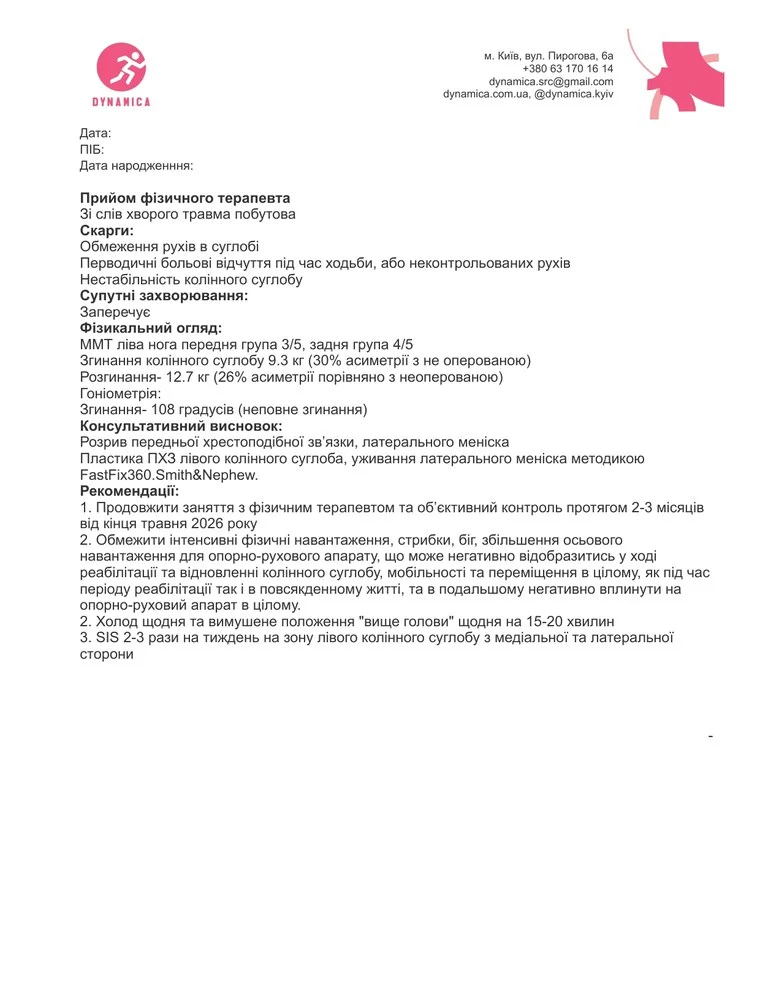
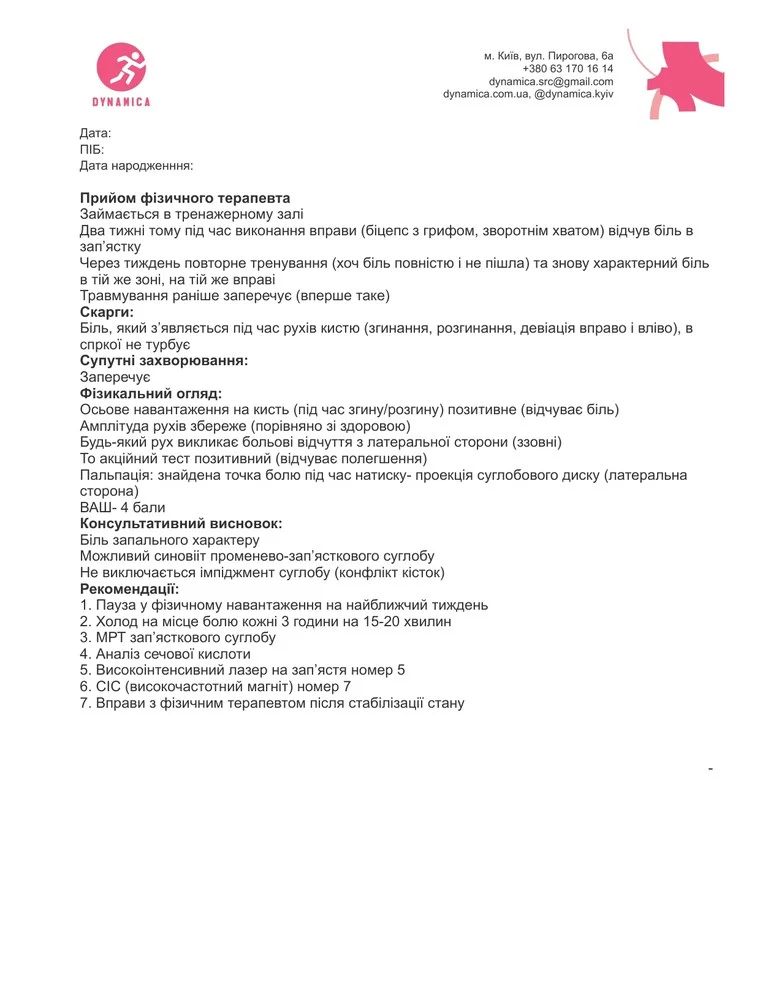
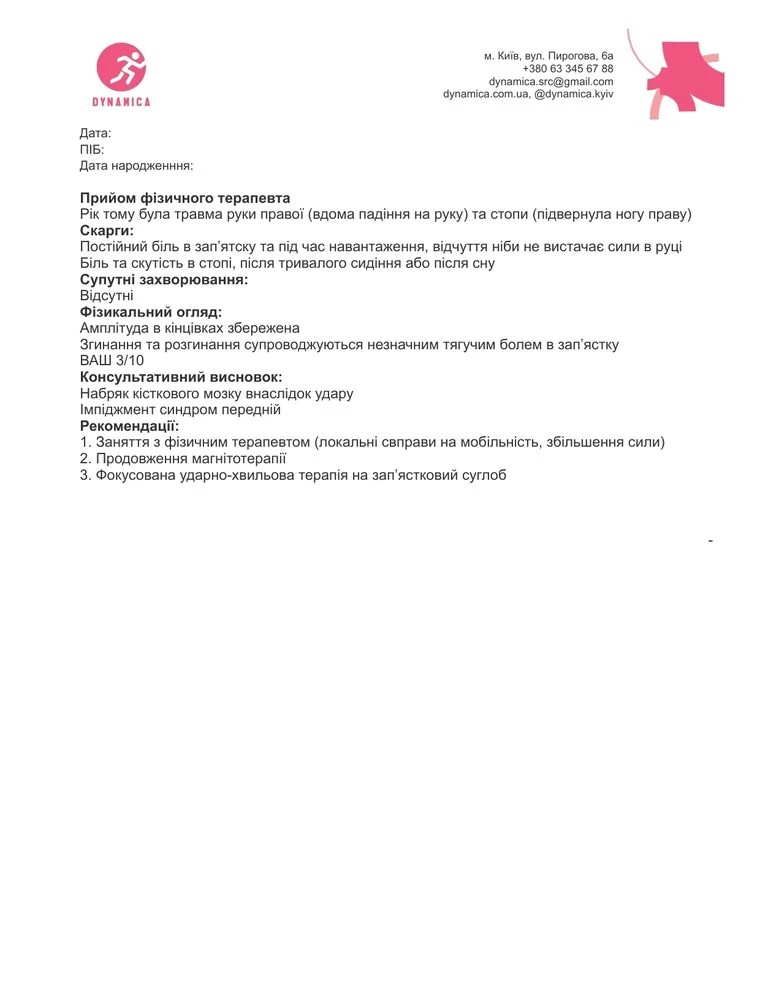
Real reports. Personal data hidden.
/ Recovery route
How we work:
from pain to strength
How long does it take? The first changes in movement control are noticeable within a few weeks. Strength and endurance are months of systematic work. We will be more precise after the assessment.
Stage 01 of 04 · REHAB
Settle the irritation
Create the conditions for the tendon to recover.
- We assess the Achilles and how much weight-bearing it tolerates.
- We reduce tissue irritation.
- Shockwave therapy — where indicated.
Stage 02 of 04 · MOVE SAFE
Movement without fear
Range and stability first, load second.
- We restore ankle range of motion.
- We work on stability of the support.
- We add basic calf work.
Stage 03 of 04 · MOVE SMART
Dose the load
The Achilles recovers under load that is dosed precisely.
- Eccentric protocols and gradual progression.
- We look at running technique and footwear.
- We control volume so there are no setbacks.
Stage 04 of 04 · MOVE STRONG
Running and jumping
The shin handles impact.
- We rebuild calf strength and elasticity.
- Return to running and jumping loads.
- Preventing the next flare-up.
/ Team
Who will work with you
The shin and Achilles are handled by those who work with running loads.
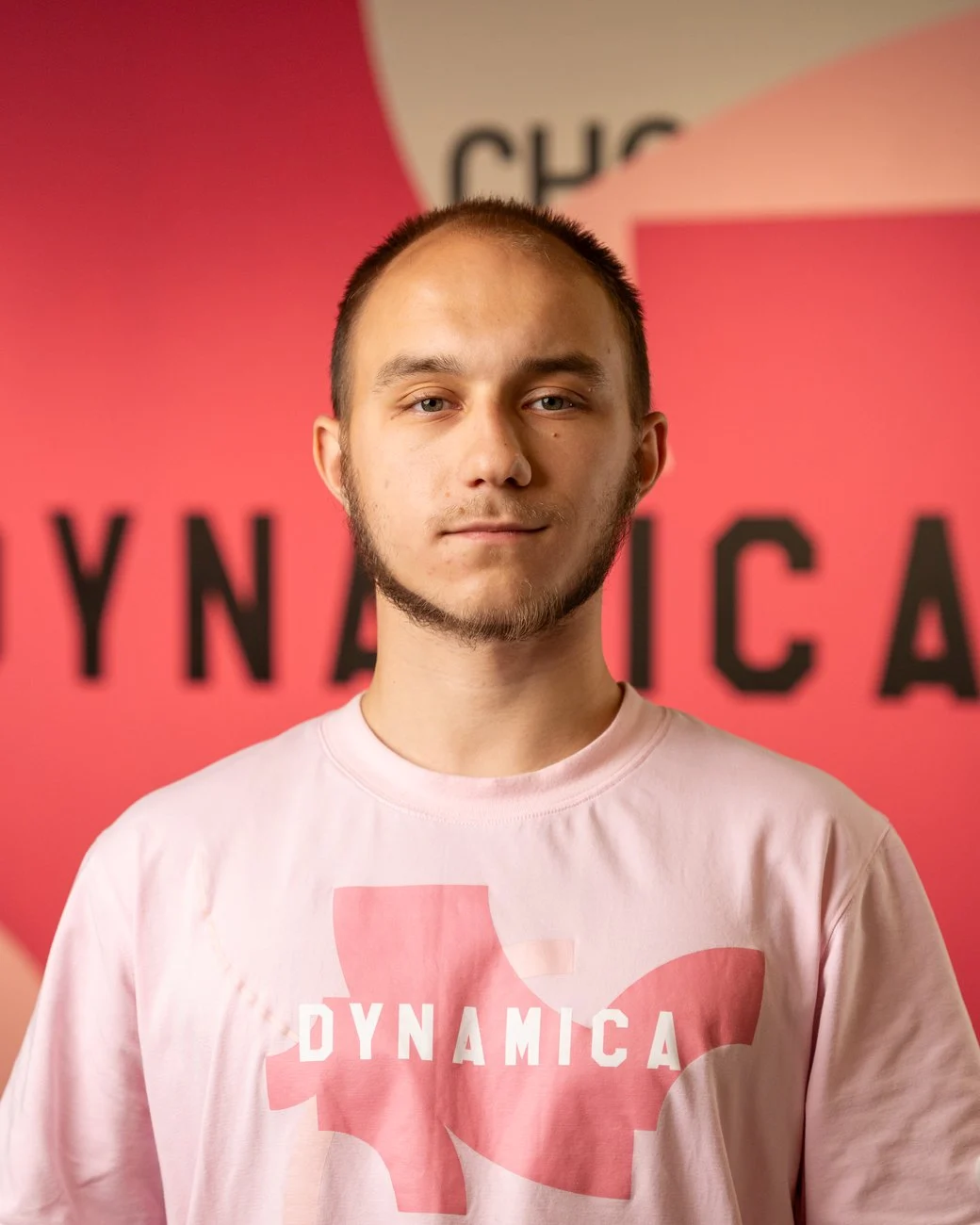 Mykyta ShutovRecovery specialistKnee, posture, foot · FC Zorya5 years+
 Valeriia CherniiRecovery specialistInjuries, arthrosis, chronic pain4 years+
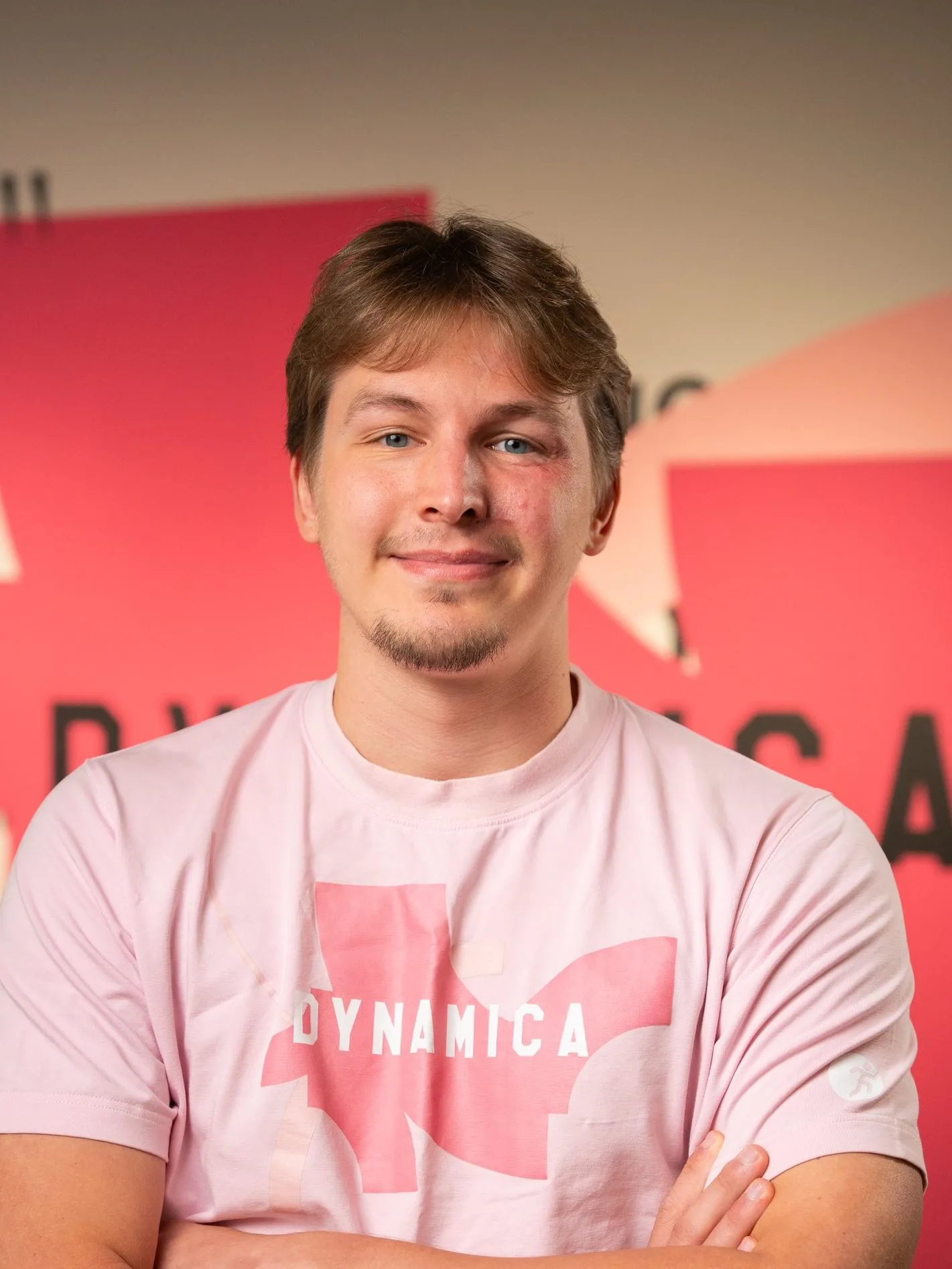 Denys SemerikRecovery specialistInjuries, training load, movement2 years+
/ Physical therapy
What can help
you get there faster
The Achilles and the shin bone take a long time to recover — the blood supply here is poor. The equipment speeds that up while we bring the load back gradually.
This is not a separate course of procedures. Everything works inside the plan — and at the first visit it is included in the price.
Four tools. Which of them you actually need is decided by the physical therapist after the movement assessment.
/ Red flags
When you need a doctor examination
These signs mean you need a doctor first:
/ Reviews
What people say about us
“I went through rehabilitation at the Dynamica center twice and both times I was very happy with the result. The first time I came in with an Achilles tendon injury, and the last time with bone swelling in my left leg.”
Андрій Іванюкfoot and Achilles“I want to share my impressions of going through rehabilitation and recovery after two leg injuries: a cruciate ligament tear, a fibula fracture and torn ligaments.”
Андрій Мельникfoot and Achilles“It was unexpected to find rehab specialists with equipment-based treatment and a spacious studio with quality Pilates equipment in one place. I came in with a shoulder and ankle injury, and got drawn into reformer sessions.”
Андрей Журбаfoot and Achilles“I have been through many physical recovery and rehabilitation centers; this one has the best approach and the best result.”
Євгеній Пивоваровrehabilitation program
/ First step
If the Achilles pulls —
start with an assessment
The assessment will show what exactly is being overloaded and why. The movement assessment does not commit you to further work.
Movement assessment — UAH 2,000 · sessions after that UAH 1,500
/ Questions and answers
Frequent questions
Is this tendinitis? I was told it is “inflammation”+
The modern term is tendinopathy — and it is more a change in tissue structure from overload than classic inflammation. That is why rest and anti-inflammatories give a temporary effect, while gradual, dosed loading works.
Can I keep running?+
Often yes, but with changed volume and pace. Giving up running completely is rarely the best decision — the Achilles needs load in order to recover. The question is the dose.
Why does it hurt specifically in the morning?+
Morning stiffness is a typical sign of Achilles overload. Overnight the tissue “sets”, and the first steps lack elasticity. This is usually one of the first signs to go once work begins.
Will orthotic insoles help me?+
Sometimes they are part of the solution, but rarely the whole solution. First you need to understand what exactly is overloaded — an insole changes your support, not your movement control.
How long does it take?+
The Achilles recovers more slowly than muscle — that is normal. We give exact timelines after the assessment, with intermediate criteria for returning to running.

/ Who is responsible for this area
Reviewed by Mykyta Shutovrehabilitation and physical therapistNUPESU, physical therapy · knee, posture, footSpecialist profile →19 September 2026