

/ Assessment
Physical therapist
consultation
90 minutes, after which you understand what is going on with your body and what to do about it.
This is the way into Dynamica. Everyone starts here — those in pain and those for whom something that used to work simply stopped working.
Leave your number — then pick what suits you: Telegram or a call. No commitment.
/ What is included
What the consultation
includes
30 minutes · examination
Measuring joint angles (goniometry), testing muscle strength (dynamometry), palpating the area you complain about, taking your history and running functional tests for a preliminary conclusion.
60 minutes · trial session
We try exercises right away — so you feel the difference during the visit, and we see how your body responds to load.
A procedure, if you need one
Not “from a list”, but the one that will help you specifically at the first visit. Included in the price.
A written report
Your complaints, examination data, what we found and what to do about it — on paper, not “in words”.
/ What it looks like
What you take
home with you
A written report: complaints, examination data, what exactly we found and what to do about it.
- what to change in daily life starting today
- whether you need procedures — and which ones
- how often to train
- roughly how long this stage will take
- whether you need a doctor — and which one to see
- 6A Pyrohova St — a five-minute walk from Universytet metro
- Mon–Fri 08:00–20:00, Sat–Sun 09:00–18:00
/ Proof
What you take
at the first visit
Not an opinion “in words”, but a written report: complaints, examination data in numbers, a conclusion and recommendations. Here are three real ones — different cases.
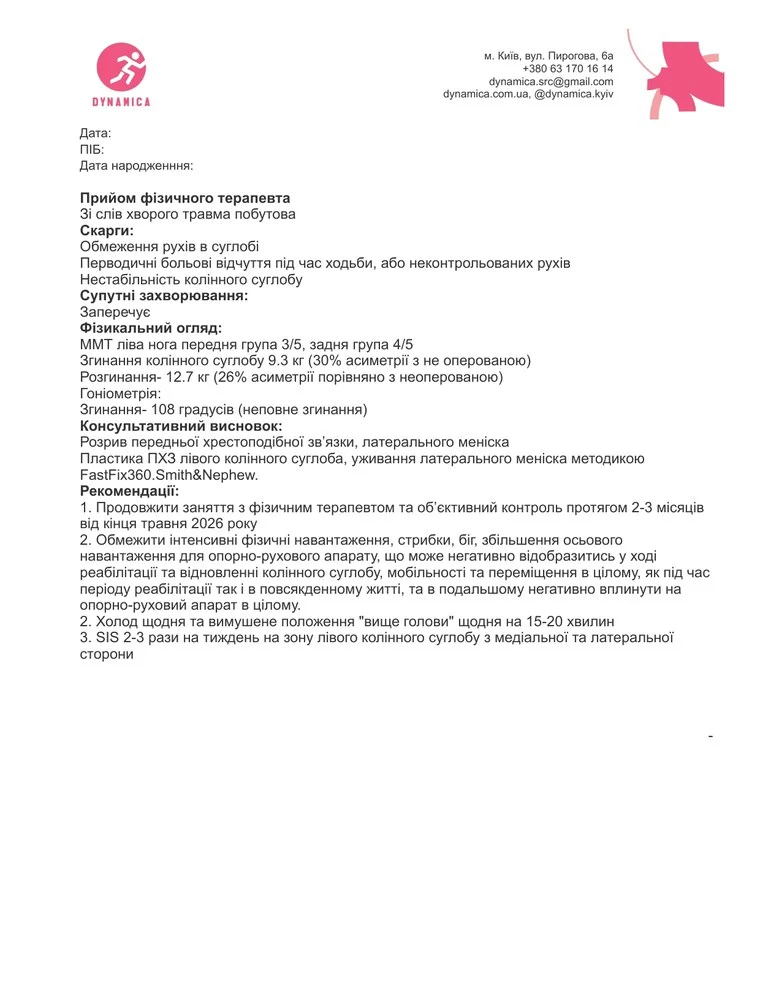
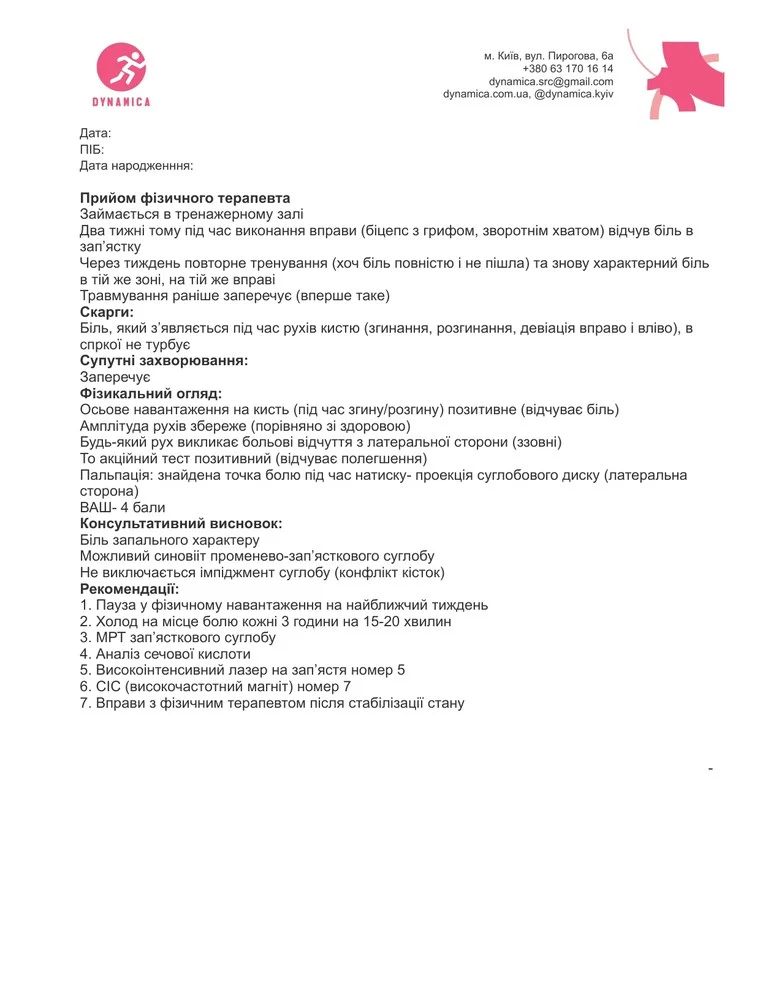
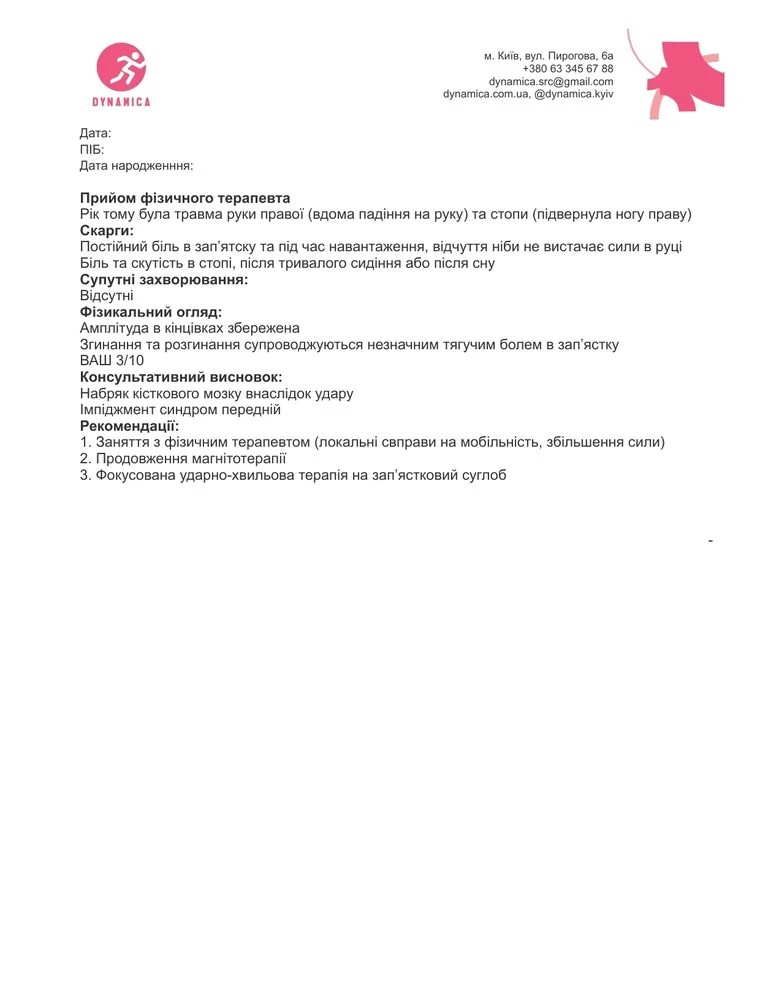
Real reports. Personal data hidden.
/ Format
This is not “a 15-minute
chat”
An hour and a half one-on-one with a physical therapist. We do not diagnose from an image and we do not prescribe procedures by eye.
- we watch how you move: where there is movement, where there is none, what compensates
- the cause of pain is often not where it hurts
- we do look at images and reports, but we base the conclusion on movement
- everything we find we explain in plain words
The assessment is not there to sell you a program. It is there so that both of us understand what we are taking on.
/ Who needs it
What people come
to the assessment with
- it hurts and it is unclear who to see
- there is an image and a report, but no plan of action
- after surgery or an injury — and it is scary to load it
- you are returning to sport after a break
- nothing hurts, but the body stopped obeying
- you had treatment, it got better, then it came back
/ The difference
How this differs
from the Physio Check-Up
In short: the assessment is for when something hurts or gets in the way. The check-up is for when nothing hurts, but you want to understand what is going on with your body and where it is heading.
The assessment focuses on your problem.
The check-up is the full picture of the whole body with measurements you can compare against in six months. People often take them in sequence: first deal with the pain, then look at the whole body.
Three different entry points — for different needs
PT consultation — when something hurts or gets in the way. Physio Check-Up — a full check, when nothing hurts. VO₂max test — your endurance and health reserve.
/ Hypothesis vs measurement
A chatbot answers on average. We measure yours
Every day someone arrives with an answer already worked out with AI. That is fine — it just has to be checked against your body.
A model sees what the internet says about knee pain in general. About your knee it knows nothing.
- it will not watch you squat, or see where the movement breaks down
- it will not feel which muscle fails to switch on and which one is working for two
- it will not notice that the knee hurts because of your foot or your hip
- it will not measure strength, range and endurance in numbers
- it will not change the plan when your body responds differently than expected
- it is not accountable for the outcome — we are
Come in with your AI hypothesis — bring it along. We will test it and tell you plainly what held up and what did not. Often part of it holds: the direction was right, but the cause sits somewhere else entirely.
/ How it works
What happens
at the visit
An hour and a half one-on-one with a physical therapist. Nothing “by eye”: every step has its purpose, and you understand what is happening the whole time.
Step 01 of 04
Conversation and history
We take your history: when it started, after what, what you have already tried.
- Injury history, related conditions and past surgeries.
- Images, MRI and reports — if you have them.
- Your sports background and what your day looks like.
Step 02 of 04
Examination and tests
We look not at the image but at how the body moves.
- Palpation of the area you complain about and functional tests.
- Joint angles — goniometry.
- Muscle strength and side-to-side symmetry — dynamometry.
Step 03 of 04
Trial session
We try exercises right away to see how the body responds.
- What brings relief right now.
- What is better not to do yet.
- If needed — a procedure that will help you specifically. Included in the price.
Step 04 of 04
Conclusion and plan
We explain it in plain words and agree on the next step.
- A written report to take with you.
- If you need physical therapy — we say why this particular method, how it works in your case, how often and how long the course takes.
- We put together a schedule and book you for the course you need.
/ Team
Who will work with you
Real specialists with medical education — not “just massage”.
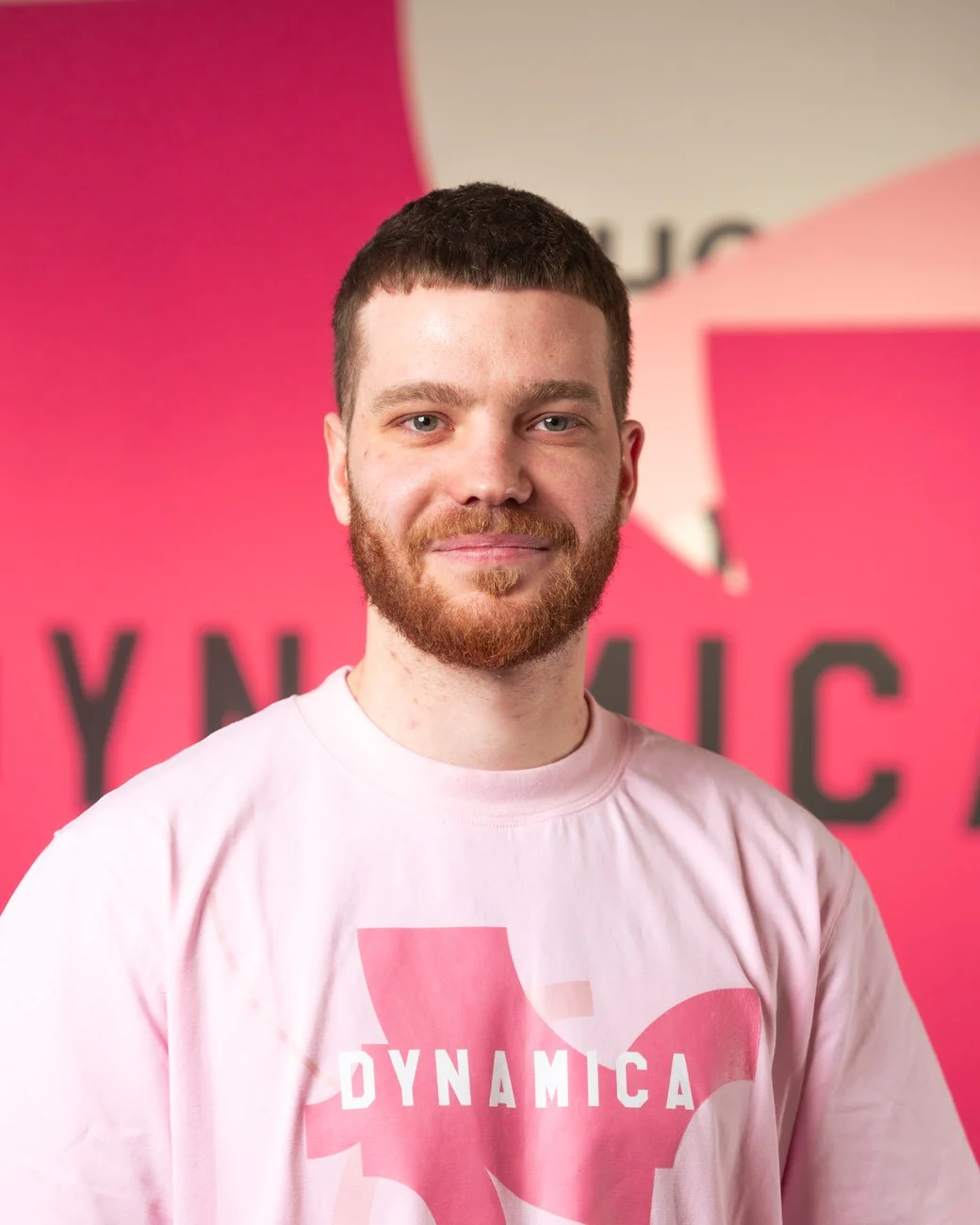 Valerii KutsaiRecovery specialistAfter heavy load, back, stability6 years+
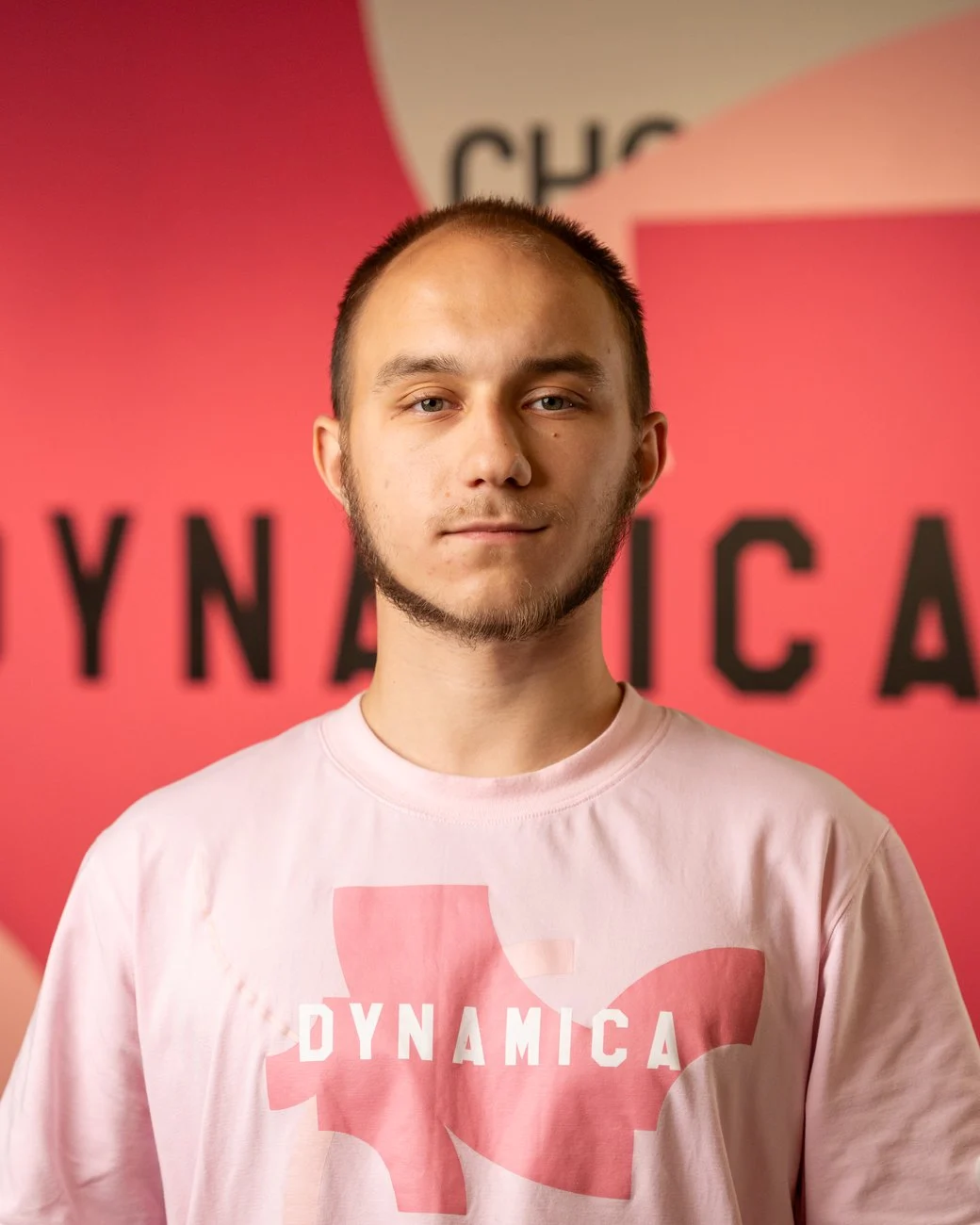 Mykyta ShutovRecovery specialistKnee, posture, foot · FC Zorya5 years+
 Valeriia CherniiRecovery specialistInjuries, arthrosis, chronic pain4 years+
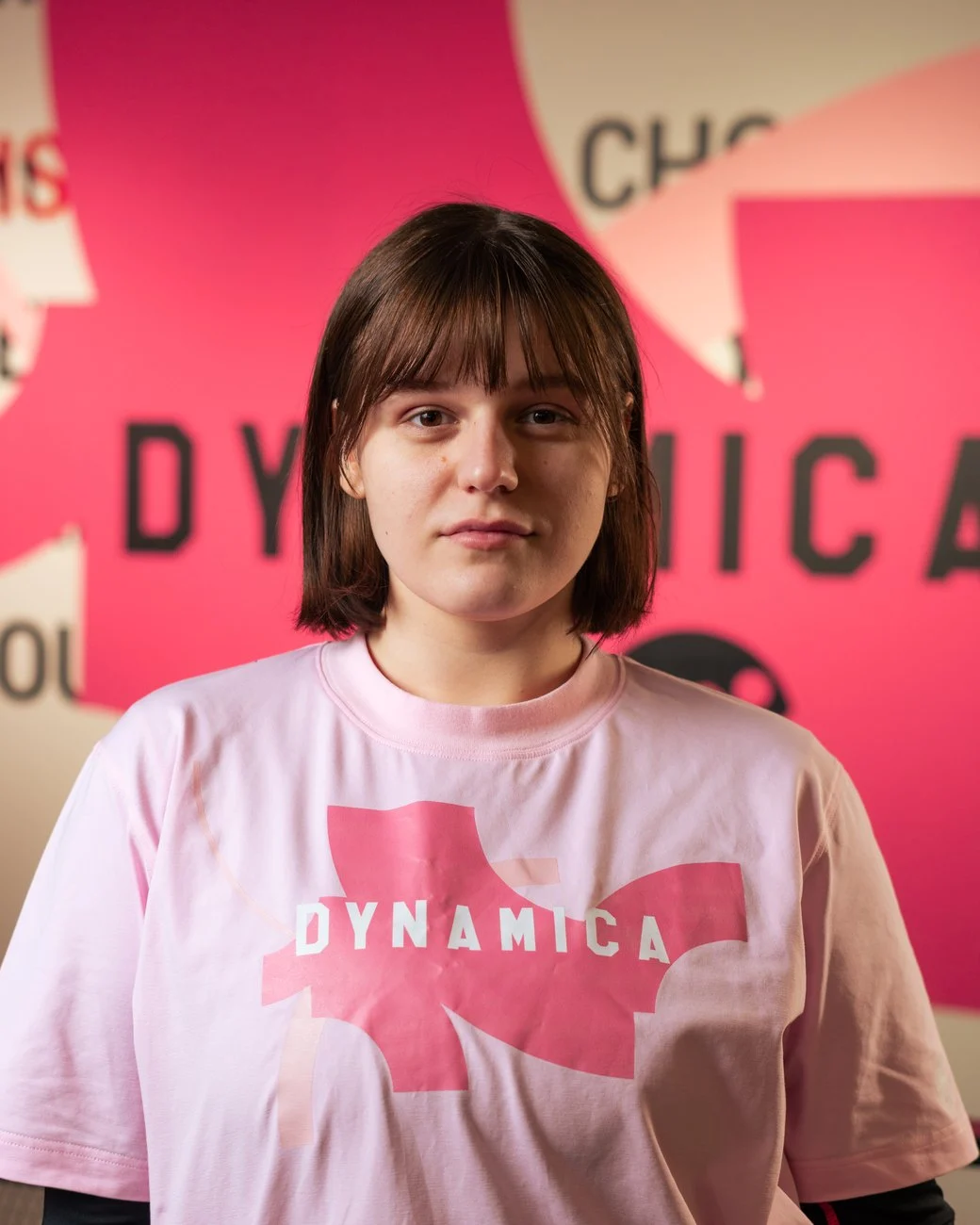 Tania HerasymivRecovery specialistRecovery after load, movement after injury4 years+
 Denys SemerikRecovery specialistInjuries, training load, movement2 years+
 Daryna PopovaRecovery specialistBack, shoulders, knees, postnatal recovery4 years+
/ Reviews
What people say about us
“We are incredibly grateful to Mykyta for his professionalism and his wonderful approach with our child! At the first consultation he saw everything on the X-ray, all the problem areas, explained the situation in detail and built an effective training program.”
Євдокія Голіцинаconsultation, child“I got all the consultations, they did the procedures and wrote out a training program. At a regular hospital they were starting to prepare me for joint replacement, and here they got me back — and I do not even think about the problem anymore.”
Dmitry Chizhikovinstead of surgery“I came here with my problems and did not even expect the result to be this noticeable.… He knows how to find the cause of the problem rather than just fighting the signs.”
Влад Захаровfound the cause
/ First step
Start by
understanding your body
The movement assessment commits you to nothing — but after it the main question, “what is actually going on”, is gone.
Movement assessment — UAH 2,000 · 90 min · sessions after that UAH 1,500
/ Questions and answers
Frequent questions
What should I bring?+
What if I do not have a diagnosis?+
Will you sign me up for a course right away?+
How long will recovery take?+
What if you cannot help me?+

/ Who is responsible for this area
Reviewed by Valeriia Cherniiphysical therapistBogomolets National Medical University · injuries, arthrosis, chronic pain · BTL-Ukraine schoolSpecialist profile →23 September 2026