/ Where it hurts
Does your foot
or ankle hurt?
Often the problem is not the injury itself. It is that the body lost control of its support.
We work step by step — from removing pain to building strength, under medical supervision.
Leave your number — then pick what suits you: Telegram or a call. No commitment.
/ Signs
What people come in
complaining about
Heel pain in the morning
the first steps out of bed are the most painful.
You rolled it — and it is not going away
the leg still does not hold.
Pain when walking or running
after a certain distance or on uneven ground.
Swelling
appears toward the evening or after load.
Fear of stepping on it
you avoid uneven surfaces.
The foot burns
after a long day on your feet.
/ What it means
“Rolled it and it passed” —
the most common trap
The pain is gone, the stability is not.
- after a sprain the ligament heals, but movement control does not come back automatically
- that is exactly why people roll the same ankle again and again
- each next sprain comes easier — and that is bad news
- we restore not only the tissue but the ability of the foot to manage support
Stability is a skill. You restore it, you do not wait for it.
/ Who it is for
This is for you if…
- you rolled your ankle and it still does not hold
- the first steps out of bed hurt, then it walks off
- you are afraid to step on uneven ground
- you changed shoes — and it got worse
- you walk a lot at work and by evening the foot burns
- you were told “flat feet” — and that was the end of it
People who come to us are not athletes — they are people who want to move, sleep and sit normally without pain.
/ The cause
Why it hurts right here
The foot is the first point of contact with the ground.
If it works poorly, the Achilles gets overloaded, pain appears higher up in the shin and knee, and movement efficiency drops.
We look at how the foot takes load, how the whole lower chain works and where the body loses control. The name of the problem does not solve the problem — what matters is changing the movement.
What happens,if you do nothing
When the foot does not hold, the body compensates: your gait changes, load shifts to the other leg, muscles that were not meant for it switch on. At first it works. Then the knee, the lower back or the other leg starts hurting — and the cause is looked for in the wrong place.
/ First visit
What happens at the first visit
It will not hurt. This is not about enduring, it is about understanding your movement — 90 minutes at a comfortable pace, and you leave with a plan.
We check joint mobility and muscle strength, palpate the area you complain about, take your history and run functional tests.
We try the first exercises and watch how your body responds — without sharp pain.
What exactly is holding the pain, which movement patterns are off, and a clear route forward. No pushing.
/ Proof
What you take
at the first visit
Not an opinion “in words”, but a written report: complaints, examination data in numbers, a conclusion and recommendations. Here are three real ones — different cases.
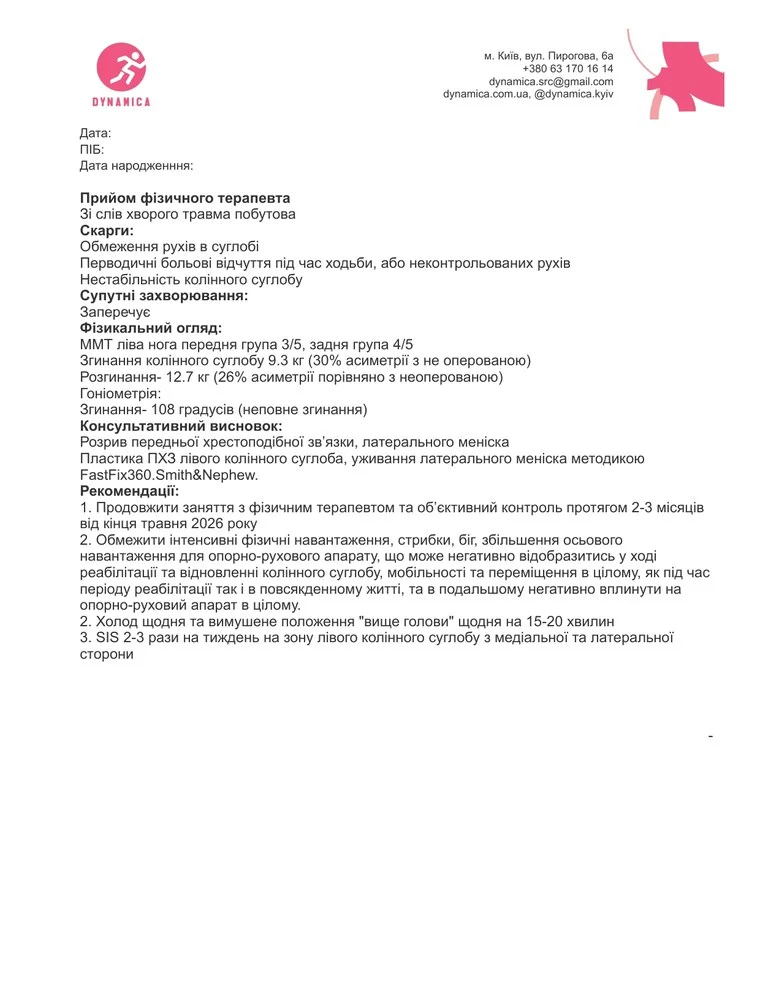
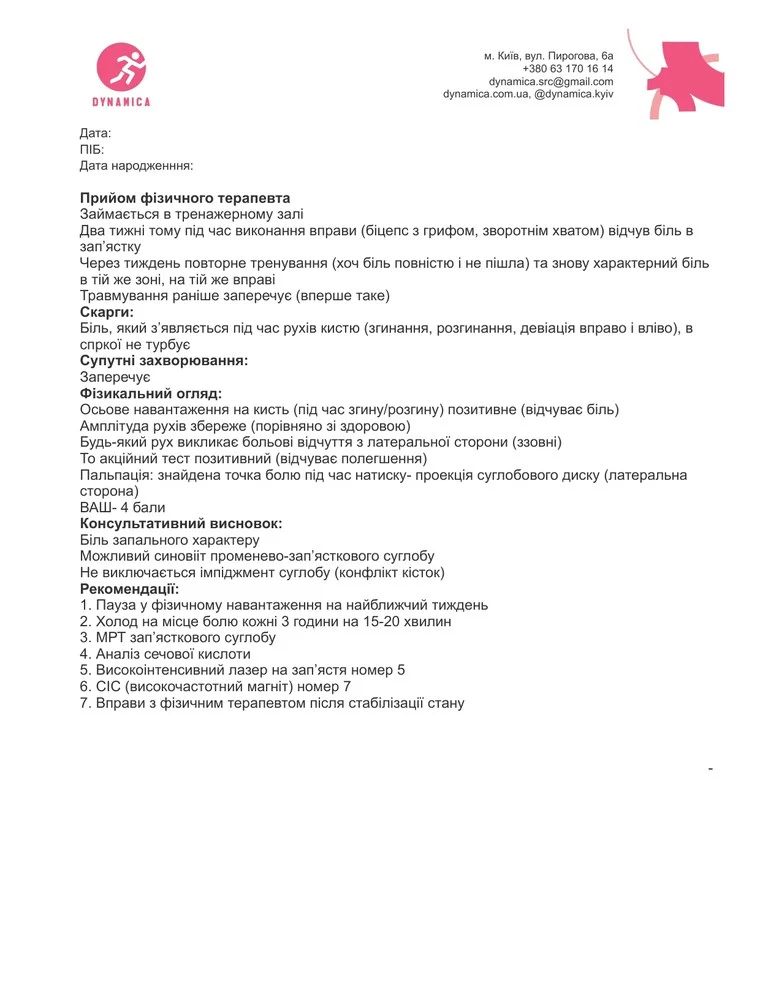
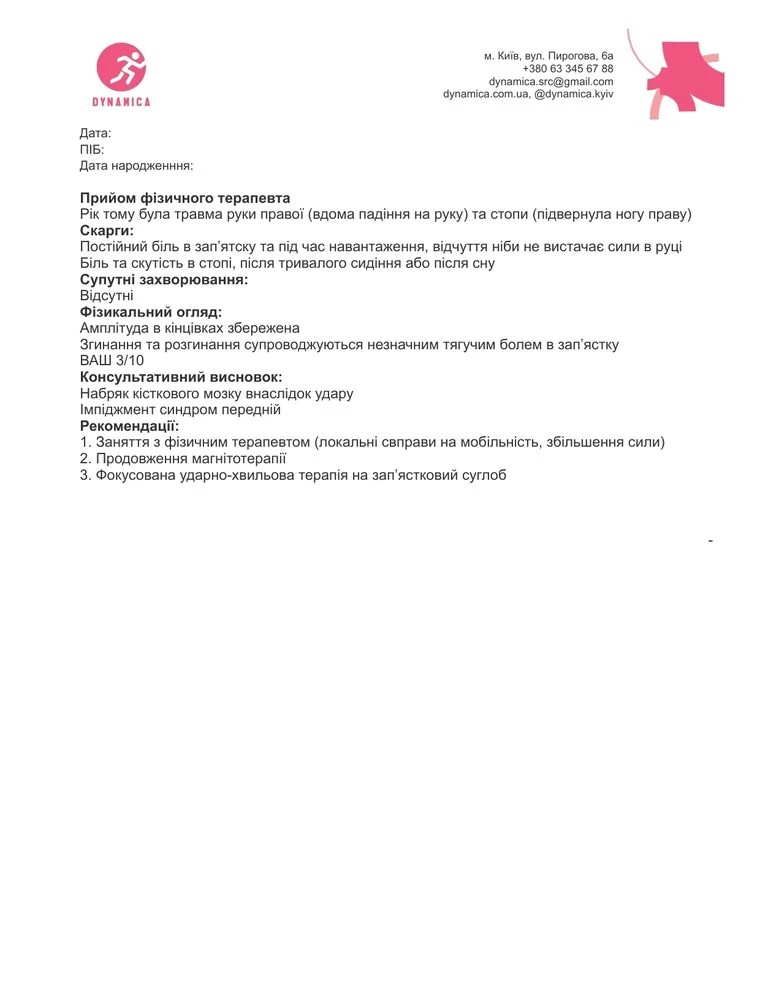
Real reports. Personal data hidden.
/ Recovery route
How we work:
from pain to strength
How long does it take? The first changes in movement control are noticeable within a few weeks. Strength and endurance are months of systematic work. We will be more precise after the assessment.
Stage 01 of 04 · REHAB
Restore weight-bearing
Reduce irritation and let the foot stand on the ground.
- We assess how the foot carries weight and what is overloaded.
- We settle the irritation — often the plantar fascia.
- Shockwave and laser — where indicated.
Stage 02 of 04 · MOVE SAFE
Remove compensations
The foot is the first point of contact with the ground.
- We restore a stable step pattern.
- We switch on the muscles of the foot and shin.
- We sort out footwear and, if needed, insoles.
Stage 03 of 04 · MOVE SMART
Dose the load
Walking and running volume grows to a plan.
- We work through running and landing technique.
- We control mileage and surface.
- We avoid setbacks through regular reassessment.
Stage 04 of 04 · MOVE STRONG
Strength and endurance
The foot handles both a working day and a session.
- Strength of the foot and calf, stability of the ankle.
- Return to running and sport.
- Preventing the pain from coming back.
/ Team
Who will work with you
The foot is handled by those who work with weight-bearing and running technique.
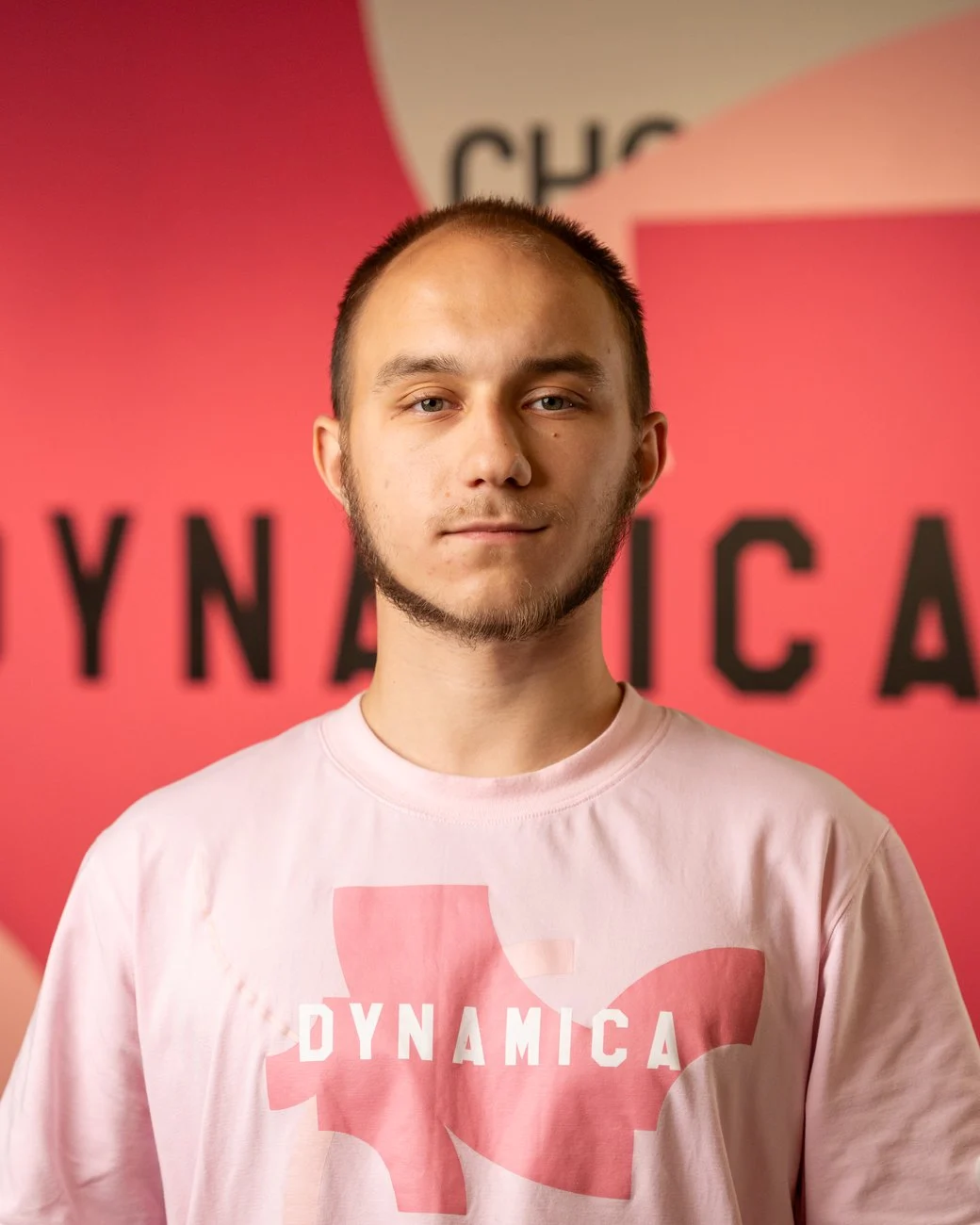 Mykyta ShutovRecovery specialistKnee, posture, foot · FC Zorya5 years+
 Valeriia CherniiRecovery specialistInjuries, arthrosis, chronic pain4 years+
 Daryna PopovaRecovery specialistBack, shoulders, knees, postnatal recovery4 years+
/ Physical therapy
What can help
you get there faster
The worst first steps in the morning are a classic sign of plantar fasciitis. The equipment takes the sharp pain down so the foot can be worked with load.
This is not a separate course of procedures. Everything works inside the plan — and at the first visit it is included in the price.
Four tools. Which of them you actually need is decided by the physical therapist after the movement assessment.
/ Red flags
When you need a doctor examination
These signs mean you need a doctor first:
/ Reviews
What people say about us
“After a cruciate ligament tear I went through rehabilitation at the Dynamica center — and I am sincerely grateful to the whole team for their professionalism, support and human attitude.… You could feel real care and genuine interest in the result.”
Sasha Nesterenkoknee“I had a tear of the cruciate, lateral and medial collateral ligaments, the meniscus and several other injuries.… We managed to make fast progress thanks to their professionalism and a well-developed rehabilitation methodology.”
Anton Dasyukknee“I chose this rehabilitation center on my surgeon recommendation — and I did not regret it! I had fairly complex foot surgery, so I took my first steps without crutches here, and quite quickly.”
Kateryna Shvedfoot and Achilles“I came here with an anterior cruciate ligament tear.… I could bend and straighten my leg again, and most importantly I started walking again.”
Слава Хавеньknee
/ First step
If your foot hurts —
start with an assessment
The assessment will show what exactly is being overloaded and why. The movement assessment does not commit you to further work.
Movement assessment — UAH 2,000 · sessions after that UAH 1,500
/ Questions and answers
Frequent questions
I have a heel spur. Is that what hurts?+
Most often it is not the spur that hurts but the plantar fascia. The spur is a consequence, not a cause, and many people have one with no pain at all. So we work with load, not with the “growth”.
Will orthotic insoles help me?+
Sometimes they are part of the solution, especially at the start. But an insole changes your support, not your movement control. Without working on the foot the effect usually lasts only while you wear them.
Are flat feet forever?+
The shape of the arch changes little. But how the foot works under load can be changed — and that is what decides whether it hurts or not.
I roll my ankle constantly+
That is the clearest sign that control was never restored after the first time. The good news: that is exactly what can be restored — and the risk of repeats drops noticeably.
Can I run?+
It depends on the condition. Often yes, but with changed volume and surface. We will tell you after the assessment, with criteria for returning.

/ Who is responsible for this area
Reviewed by Mykyta Shutovrehabilitation and physical therapistNUPESU, physical therapy · knee, posture, footSpecialist profile →19 September 2026