
/ Direction
Injury prevention
and preparation
Train consistently — without breakdowns and pain. We strengthen the weak links while they have not yet reminded you of themselves.
We work step by step — from removing pain to building strength, under medical supervision.
Leave your number — then pick what suits you: Telegram or a call. No commitment.
/ Causes
Injuries rarely appear
“out of nowhere”
A sudden jump in load
Volume grew faster than the body did.
Poor joint stability
The base does not handle the work.
Asymmetries
One side does the work of two.
Movement mechanics
An inefficient pattern repeated thousands of times.
Not enough endurance
Technique falls apart under fatigue.
/ What we look at
What we check
before you start
We are not looking for pain. We assess resilience.
- hip and knee joint stability
- balance between muscle groups
- how the shoulder girdle works
- foot control
- endurance
- the ability to handle progression
Every sport has its own risk areas. We assess the body with your specific load in mind.
/ Who it is for
This is for you if…
- you periodically break down when volume increases
- you have had injuries before
- you are starting strength training
- you are preparing for a run or a marathon
- you are returning to sport after a break
- you want to minimize risk before any signs appear
People who come to us are not only athletes but also those who simply want to train without breakdowns.
/ Why it matters
If you have already had
“it used to pass on its own”
Yes, pain can pass. But if the body regularly breaks down as volume grows, the base stability is not handling the work.
Repeat breakdowns turn into a chronic condition over time.
And that is a longer and harder road. We help close the weak spots earlier — while they cost a few sessions rather than a few months.
If you do not need sport
Even without athletic ambitions the body needs preparation. Injuries often come not from too much load but from the absence of it or from the wrong progression. We build a base for fitness, an active lifestyle and long-term movement.
/ First visit
What happens at the first visit
It will not hurt. This is not about enduring, it is about understanding your movement — 90 minutes at a comfortable pace, and you leave with a plan.
We check joint mobility and muscle strength, palpate the area you complain about, take your history and run functional tests.
We try the first exercises and watch how your body responds — without sharp pain.
What exactly is holding the pain, which movement patterns are off, and a clear route forward. No pushing.
/ Proof
What you take
at the first visit
Not an opinion “in words”, but a written report: complaints, examination data in numbers, a conclusion and recommendations. Here are three real ones — different cases.
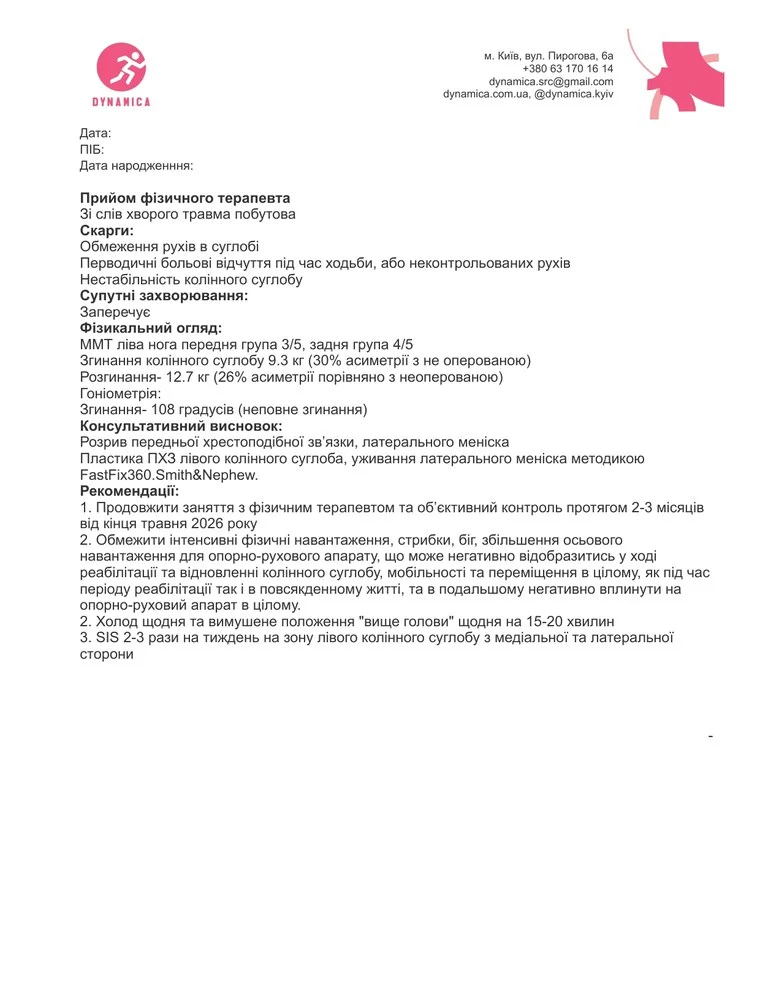
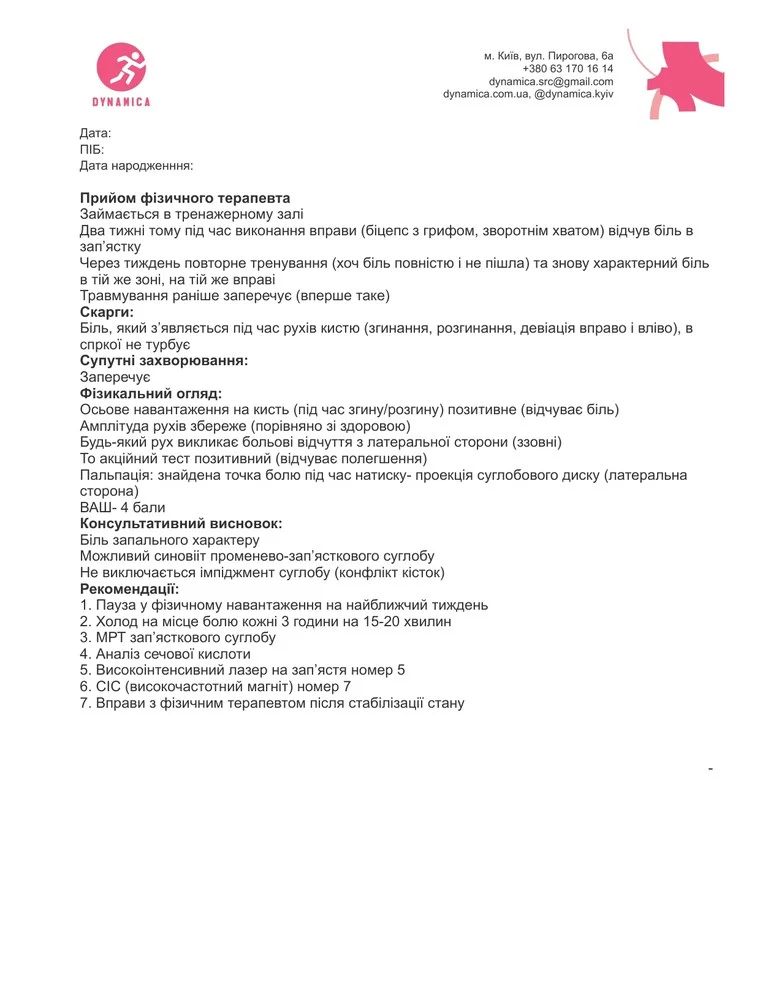
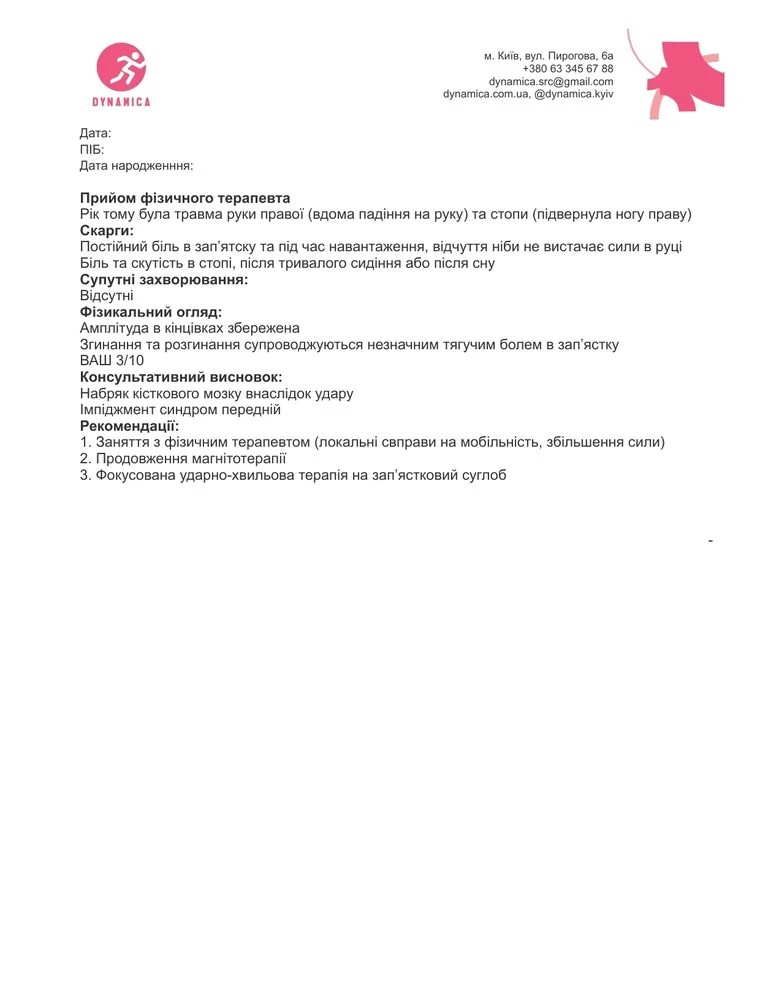
Real reports. Personal data hidden.
/ Recovery route
How we work:
from pain to strength
How long does it take? It depends on the base you are starting from and the volume ahead. After the assessment we give you a benchmark and criteria — the signs to move on by.
Stage 01 of 04 · REHAB
Find the weak links
Injuries rarely happen out of nowhere.
- We test the stability of the hip, knee and foot.
- We find asymmetries and strength deficits.
- We look at movement mechanics under load.
Stage 02 of 04 · MOVE SAFE
Close the deficits
Base first, volume second.
- We even out the sides.
- We restore full range where it is missing.
- We put movement control in place before adding weight.
Stage 03 of 04 · MOVE SMART
Progression without breakdowns
Most injuries are volume growing too fast.
- We plan load increases instead of adding them in jumps.
- We correct running and basic lift technique.
- Reassessment at checkpoints.
Stage 04 of 04 · MOVE STRONG
A margin of strength
So training is not interrupted by injuries.
- Strength and endurance above what your sport demands.
- Recovery as part of the plan, not the leftovers.
- A programme you run yourself.
/ how long it takes
HOW MANY SESSIONS
AND WHAT IT COSTS
Approximate average figures at the basic package level — so you can see the scale before your first visit.
After surgery or a fresh injury
REHAB → MOVE SAFE: on average about 12 weeks and UAH 60,000. At the maximum level — about 10 weeks.
Acute pain: disc herniation, tear
Acute phase → REHAB: on average 8–9 weeks and up to UAH 48,000.
Chronic pain, everyday discomfort
MOVE SAFE: on average six weeks and UAH 25,400.
/ Team
Who will work with you
Preparation for load is handled by those who work with athletes and runners.
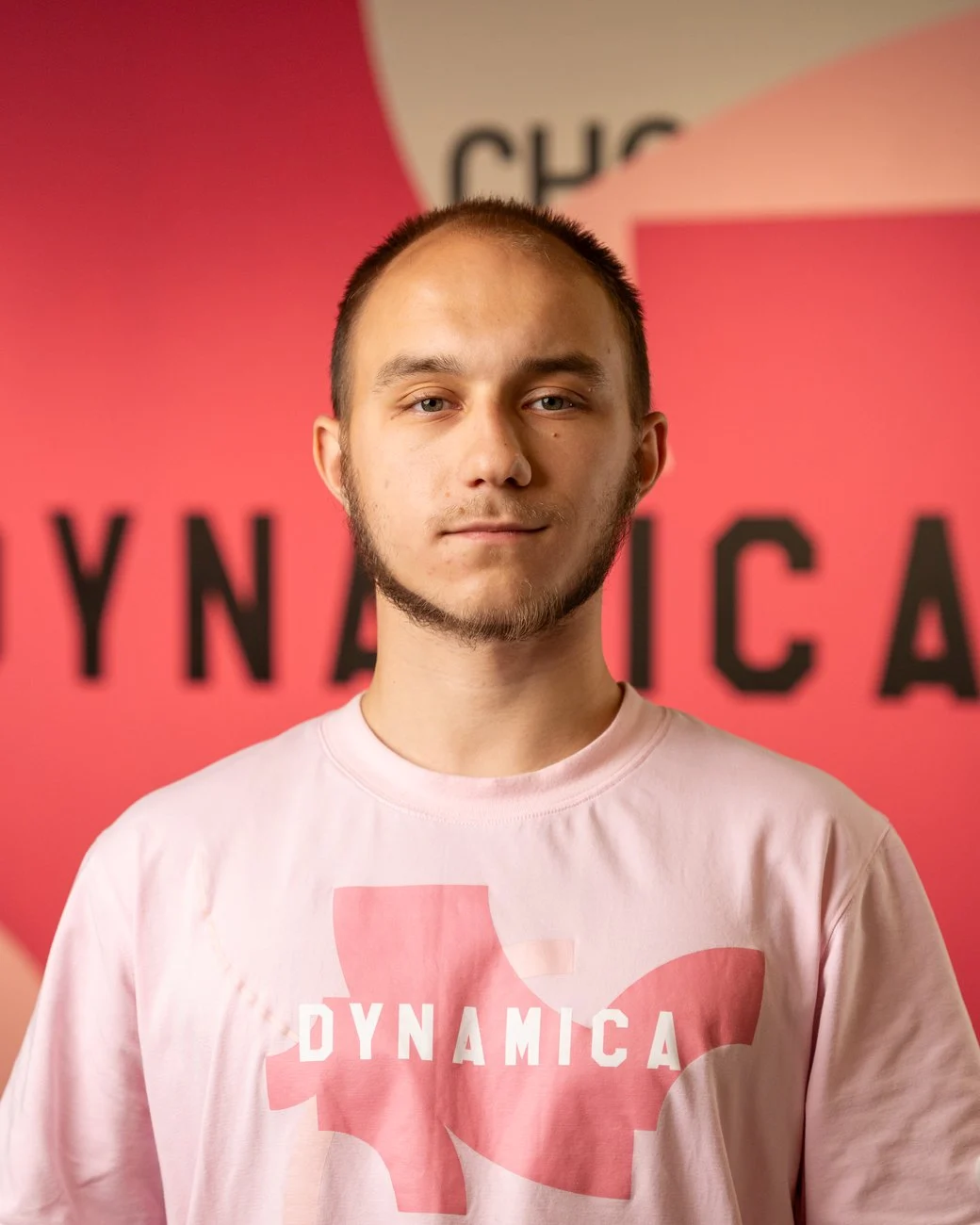 Mykyta ShutovRecovery specialistKnee, posture, foot · FC Zorya5 years+
 Daryna PopovaRecovery specialistBack, shoulders, knees, postnatal recovery4 years+
 Valeriia CherniiRecovery specialistInjuries, arthrosis, chronic pain4 years+
/ Physical therapy
What can help
you get there faster
Here the equipment is not treatment but recovery: so the body keeps up with the volume you are adding.
This is not a separate course of procedures. Everything works inside the plan — and at the first visit it is included in the price.
Three tools. Which of them you actually need is decided by the physical therapist after the movement assessment.
/ Red flags
When you should first
right away
Before starting the program it is worth ruling out:
/ Reviews
What people say about us
“I had a pinched sciatic nerve; after three weeks of active rehabilitation the pain was gone, now I only come in occasionally for prevention.”
Galina Mprevention“If you need prevention or treatment after injuries — I have not come across better specialists or equipment.”
Oleg Kravchenkoinjury prevention“I recommend it to everyone who leads an active lifestyle, for injury prevention and rehabilitation!”
Марина Любичactive lifestyle“A really top place, with quality equipment for rehabilitation and training, experienced specialists work here, you can both train and work on injuries.”
Aleksandr Aleksandrovtraining
/ First step
Start with an assessment
Injury prevention starts with understanding your base. The movement assessment does not commit you to further work.
Movement assessment — UAH 2,000 · sessions after that UAH 1,500
/ Questions and answers
Frequent questions
about preparation
I already train. Why do I need an assessment?+
Will this take time away from my training?+
Nothing hurts. Is it normal to come in?+
Do you work with my sport?+
How will I see the result?+
How many sessions will I need and what will it cost?+
Approximately, on average: after surgery or a fresh injury — about 12 weeks and UAH 60,000 (REHAB, then MOVE SAFE); acute pain — 8–9 weeks and up to UAH 48,000; chronic pain — six weeks and UAH 25,400. Everyone is different, so this is a guide, not a promise. The first step is a movement assessment for UAH 2,000; after it the therapist sets your stage and volume. All packages are on the Packages page.
/ Who is responsible for this area
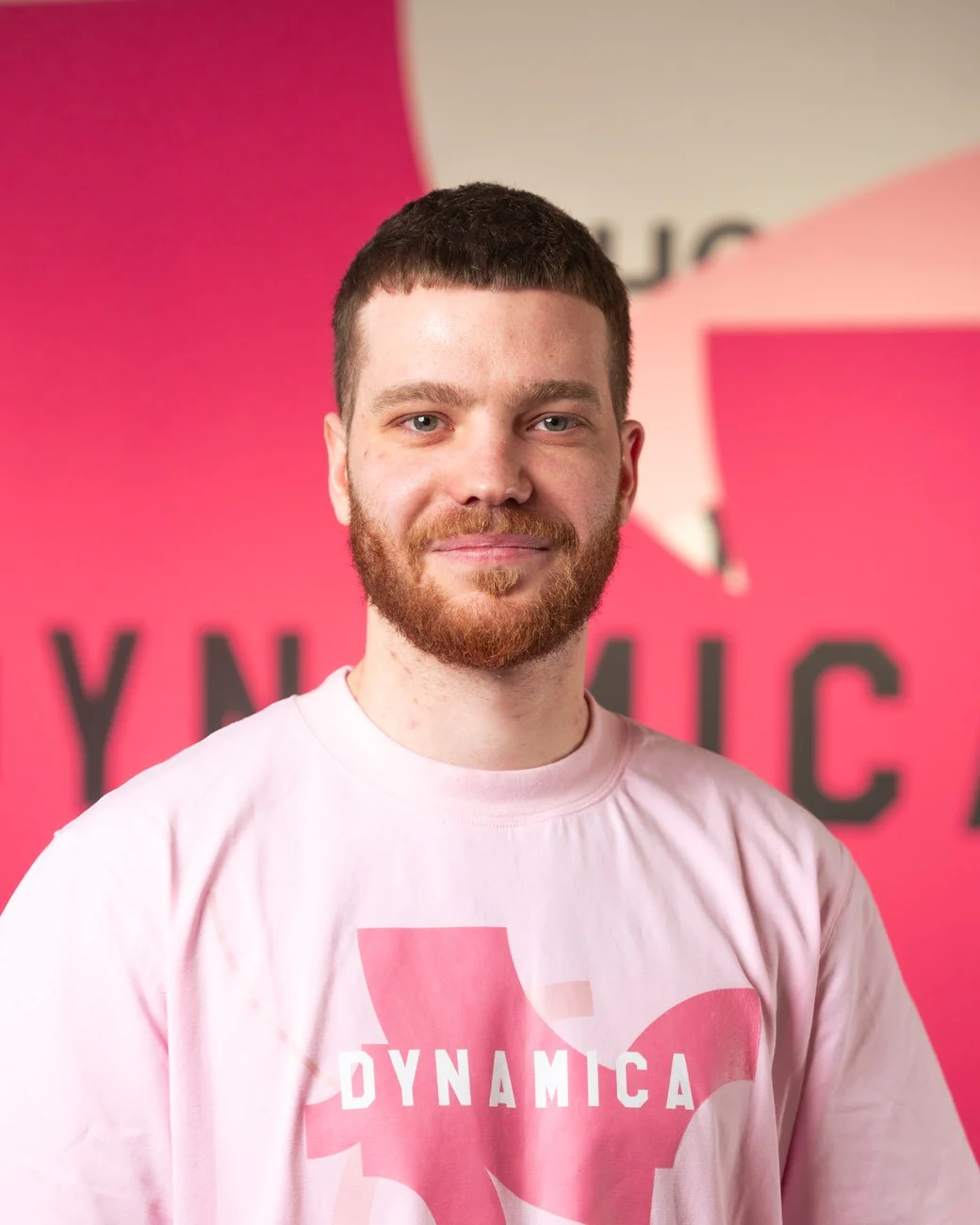
Reviewed by Valerii Kutsairehabilitation and physical therapist6 years of practice · post-surgery, discs, neurologySpecialist profile →1 October 2026