

/ Direction
Building strength
and endurance
Run faster. Lift more. Last longer. When “just without pain” is no longer enough.
We work step by step — from removing pain to building strength, under medical supervision.
Leave your number — then pick what suits you: Telegram or a call. No commitment.
/ Causes
Why progress
stops
Asymmetry
One side pulls for two.
Hidden instability
There is strength, there is no control.
Restricted movement
Technique runs into the limits of range.
Wrong progression
Volume grows faster than adaptation.
Not enough recovery
The nervous system does not keep up.
/ The limit
How not to
overtrain
Overtraining comes not only from high volume.
- load grows faster than recovery
- weak links do not hold
- intensity does not match the base
- the body works in the same movement patterns over and over
- the nervous system does not have time to recover
Monotony builds fatigue even without a sudden jump in volume. Without assessment you can work more — but not more effectively.
/ Who it is for
If you are 35+ and want
progress without overload
- with age the body forgives mistakes less
- the goal is not just to get stronger but to keep your joints healthy
- build strength with the state of your tissues in mind
- maintain stability, not only add weight
- raise endurance without accumulating problems
- train the long distance — for years, not for seasons
People who come to us are not only athletes but also those who want to train for years without setbacks.
/ Why
Strength is not about sport.
It is about reserve
VO₂max test — the single strongest predictor of all-cause mortality among measurable indicators.
The difference between low and elite fitness is roughly a fivefold difference in the risk of death.
Cleveland Clinic, 122,007 clients. No upper limit of benefit was found, and the biggest gain is not among athletes but at the bottom of the scale. That is why we take everyone into MOVE STRONG, not only the ambitious.
How we work
Assessment — a consultation and Physio Check-Up show your strength level, endurance, response to load and what is holding progress back. Progression — stability, control, systematic volume increases and regular reassessment. Correction — physical therapy reduces local overload and speeds up recovery. Progress should be predictable.
/ First visit
What happens at the first visit
It will not hurt. This is not about enduring, it is about understanding your movement — 90 minutes at a comfortable pace, and you leave with a plan.
We check joint mobility and muscle strength, palpate the area you complain about, take your history and run functional tests.
We try the first exercises and watch how your body responds — without sharp pain.
What exactly is holding the pain, which movement patterns are off, and a clear route forward. No pushing.
/ Proof
What you take
at the first visit
Not an opinion “in words”, but a written report: complaints, examination data in numbers, a conclusion and recommendations. Here are three real ones — different cases.
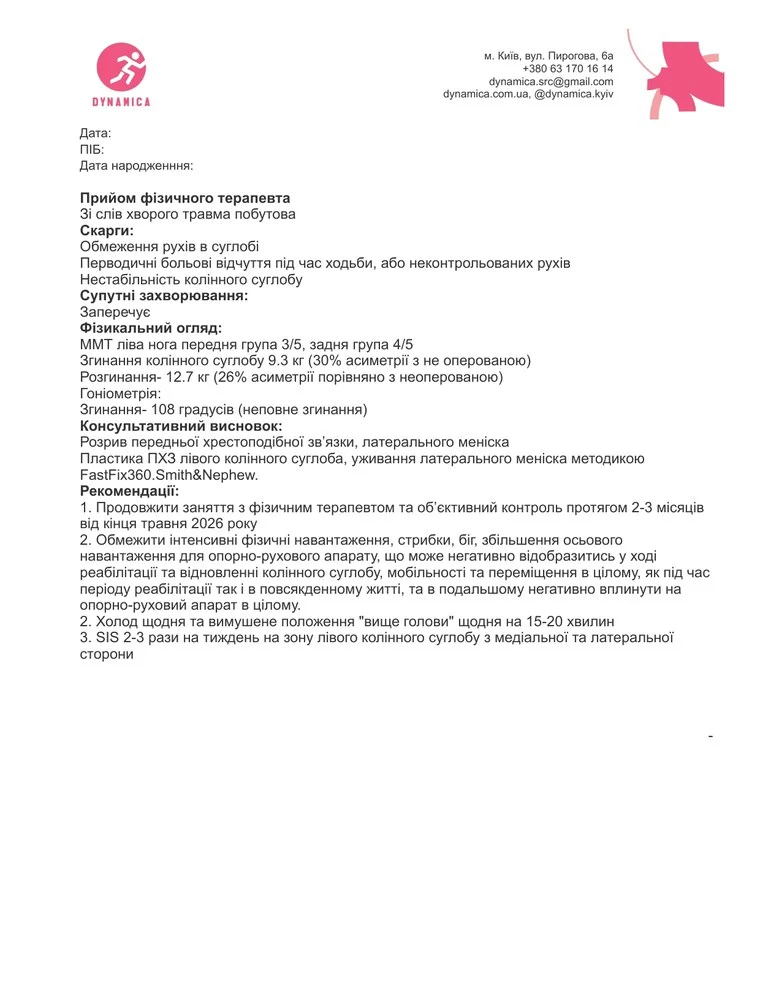
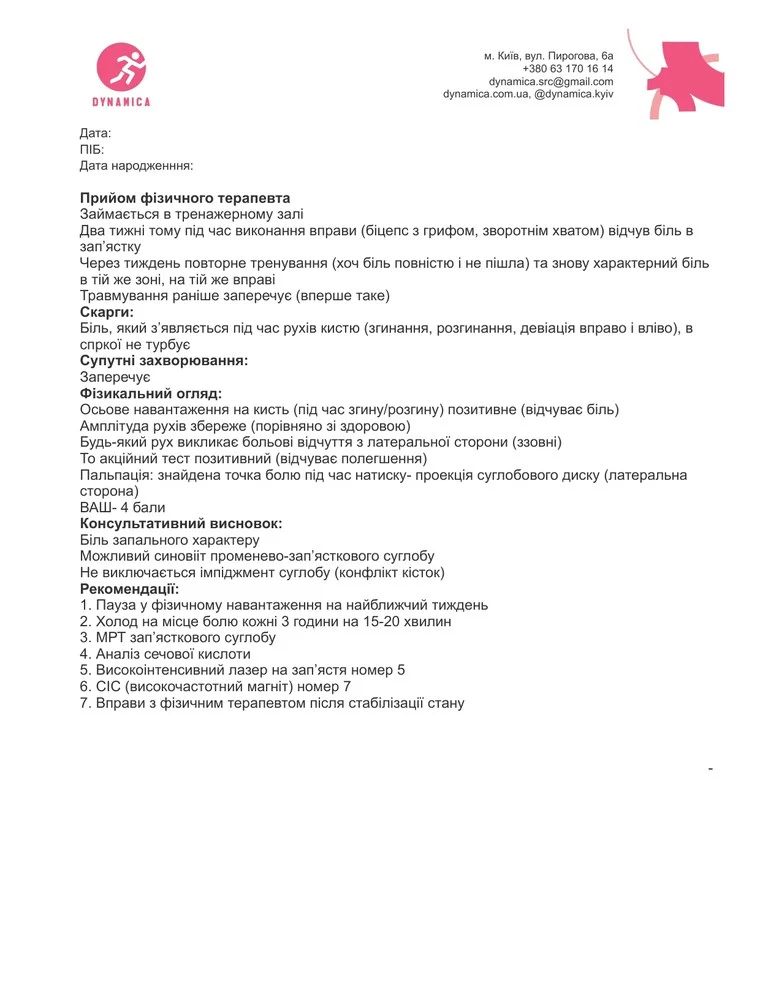
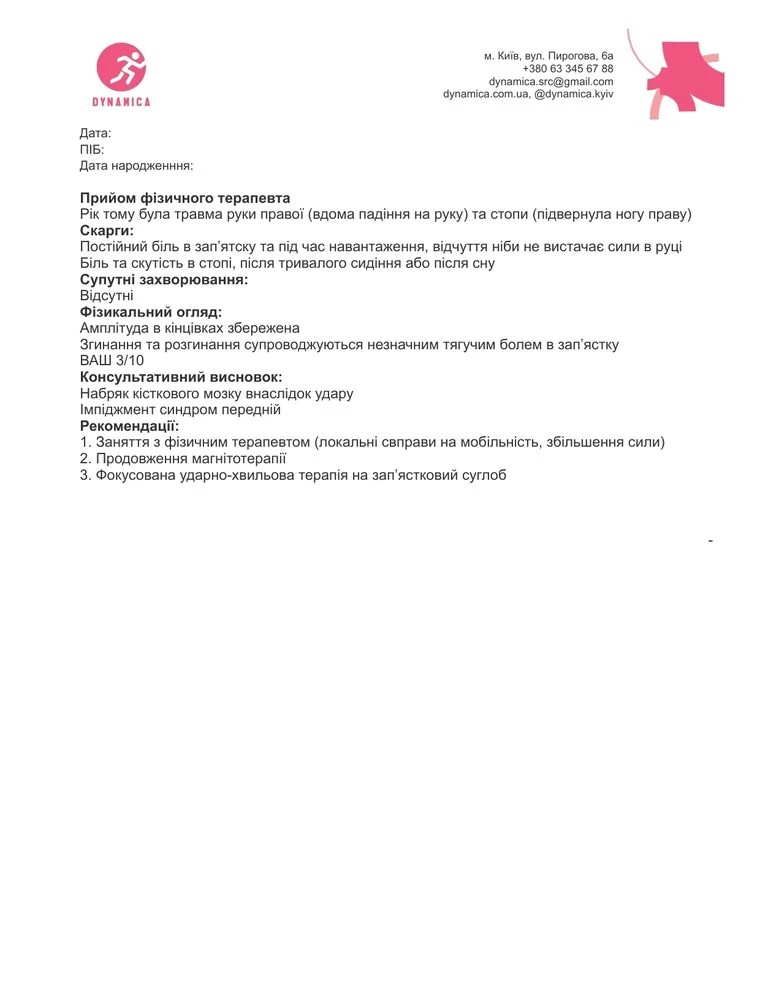
Real reports. Personal data hidden.
/ Recovery route
How we work:
from pain to strength
How long does it take? The first changes in movement control are noticeable within a few weeks. Strength and endurance are months of systematic work. We will be more precise after the assessment.
Stage 01 of 04
Level assessment
To see what exactly is holding progress back.
- Strength, endurance and response to load — in numbers.
- Asymmetries, instability, limits in range of motion.
- VO₂max test as a baseline for dosing intensity.
Stage 02 of 04
Removing the limits
The ceiling is usually not in motivation but in the base.
- We even out the sides and bring back range of motion.
- Movement control before adding weight.
- Work with stabilizers and weak links.
Stage 03 of 04
Progression
Systematic volume increases with reassessment.
- Planned load increases, not jumps.
- Regular reassessment — we move by the numbers.
- Physical therapy relieves local overload.
Stage 04 of 04
Endurance and reserve
So the body handles the volume for years.
- Work on the aerobic base and VO₂max.
- Recovery as part of the plan, not as leftovers.
- A program you run yourself between cycles.
/ how long it takes
HOW MANY SESSIONS
AND WHAT IT COSTS
Strength work has no typical timeline: it is MOVE STRONG — individual, at your own pace.
/ Team
Who will work with you
Strength and endurance are handled by those who work with healthy people on progression.
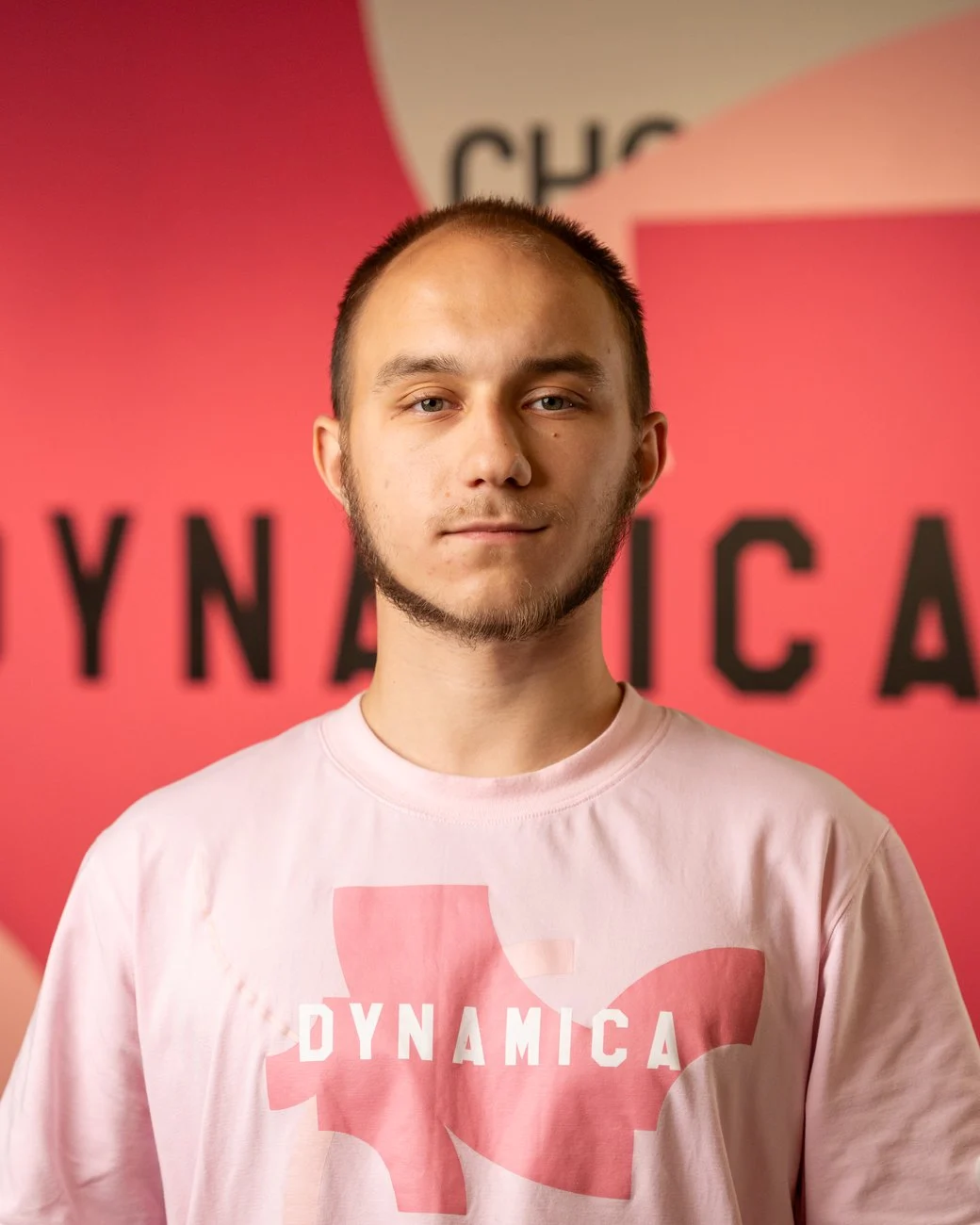 Mykyta ShutovRecovery specialistKnee, posture, foot · FC Zorya5 years+
 Daryna PopovaRecovery specialistBack, shoulders, knees, postnatal recovery4 years+
 Denys SemerikRecovery specialistInjuries, training load, movement2 years+
/ Physical therapy
What can help
you get there faster
The equipment here does not treat — it shortens the time between hard sessions so progression is not capped by recovery.
This is not a separate course of procedures. Everything works inside the plan — and at the first visit it is included in the price.
Four tools. Which of them you actually need is decided by the physical therapist after the movement assessment.
/ Red flags
When you should first
right away
Do not start a progression if you have:
/ Reviews
What people say about us
“I did the VO2max test and I was happy with the process, the specialists and the result!”
Иван ОрещенкоVO₂max test“It turned out that Pilates is not light exercise but a solid load on the whole body.”
Kristina Lezhninapilates“I am impressed by the professional approach: everything precise, well-grounded, with an understanding of biomechanics and anatomy. The program was adapted to my goals and the load was controlled at every stage.”
Дарья Очигаваstrength program“The instructors are professional, they explain clearly and watch your technique.… The studio is pleasant, warm and bright — training here is a pleasure.”
Валерія Іванченкоtraining
/ First step
Start with an analysis
How to increase strength and raise endurance is a question of system. The movement assessment does not commit you to further work.
Movement assessment — UAH 2,000 · sessions after that UAH 1,500
/ Questions and answers
Frequent questions
about strength and endurance
How is this different from a coach at the gym?+
I am 45. Is it too late?+
Why VO₂max if I do not compete?+
More about the VO₂max test →
I have trained for years. Do I need this?+
How long until I see a result?+
How many sessions will I need and what will it cost?+
Strength work has no fixed timeline — personal training at a pace that suits you. The first step is a movement assessment for UAH 2,000. If you need recovery first, physical therapy packages are on the Packages page.

/ Who is responsible for this area
Reviewed by Mykyta Shutovrehabilitation and physical therapistNUPESU, physical therapy · knee, posture, footSpecialist profile →1 October 2026