/ Where it hurts
Does your pelvis or
hip joint hurt?
Often the problem is not in the joint itself. It is in how the body works through it.
We work step by step — from removing pain to building strength, under medical supervision.
Leave your number — then pick what suits you: Telegram or a call. No commitment.
/ Signs
What people come in
complaining about
Pain in the groin
the most common and least obvious complaint.
It pulls on the side of the thigh
especially when you lie on that side.
Discomfort after sitting
hard to straighten up, you need to walk it off.
Pain when walking or running
appears after a certain distance.
Stiffness and clicking
restricted range in the joint.
Radiates into the leg or lower back
and it is unclear where it actually comes from.
/ What it means
After a hip replacement
life does not end
It starts again — and rehabilitation decides what it will be like.
- the implant gives back the joint — rehabilitation gives back function
- we work after the doctor clears you to move
- we coordinate the load if needed
- the goal is not to “walk carefully” but to get full control back
- there is an orthopedic trauma surgeon on the team who performs joint replacements
Caution is not a strategy. It is what we lead you out of.
/ Who it is for
This is for you if…
- you had a hip replacement and do not know what you can and cannot do
- it hurts in the groin, and you thought you had just pulled something
- you sit for a long time — and then it is hard to straighten up
- you run, and your lower back starts hurting instead of your hip
- you were told that in time you will need surgery
- you are past sixty and you do not want to give in
People who come to us are not athletes — they are people who want to move, sleep and sit normally without pain.
/ The cause
Why it hurts
right here
The hip is the central point of movement.
If control is lost here, the lower back gets overloaded, the knee suffers and movement efficiency drops.
And the other way around: the problem can come from above or below and hurt right here. So we look at how the hip works in movement, how the pelvis moves, what the lower back does and how the leg engages. The name of the problem does not solve the problem — what matters is changing the movement.
If you run
The hip is the key to efficient running. Without pelvic control the knee gets overloaded, lower back pain appears and economy drops. We bring back pelvic control, stabilize movement and help improve technique — so your mileage does not run into pain.
/ First visit
What happens at the first visit
It will not hurt. This is not about enduring, it is about understanding your movement — 90 minutes at a comfortable pace, and you leave with a plan.
We check joint mobility and muscle strength, palpate the area you complain about, take your history and run functional tests.
We try the first exercises and watch how your body responds — without sharp pain.
What exactly is holding the pain, which movement patterns are off, and a clear route forward. No pushing.
/ Proof
What you take
at the first visit
Not an opinion “in words”, but a written report: complaints, examination data in numbers, a conclusion and recommendations. Here are three real ones — different cases.
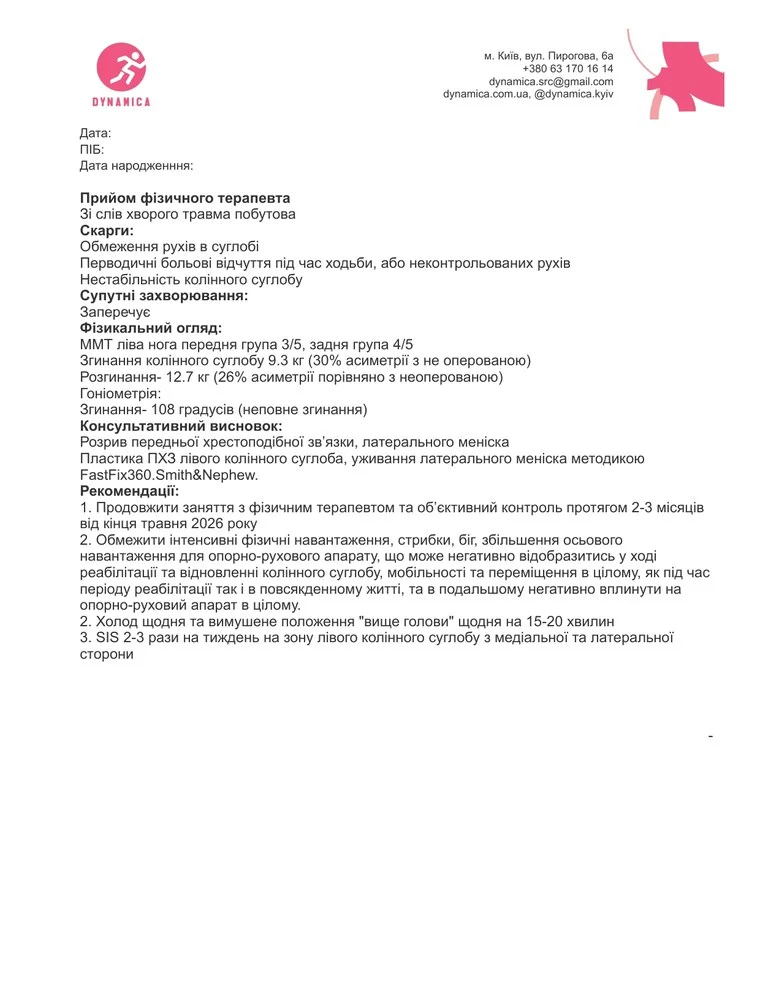
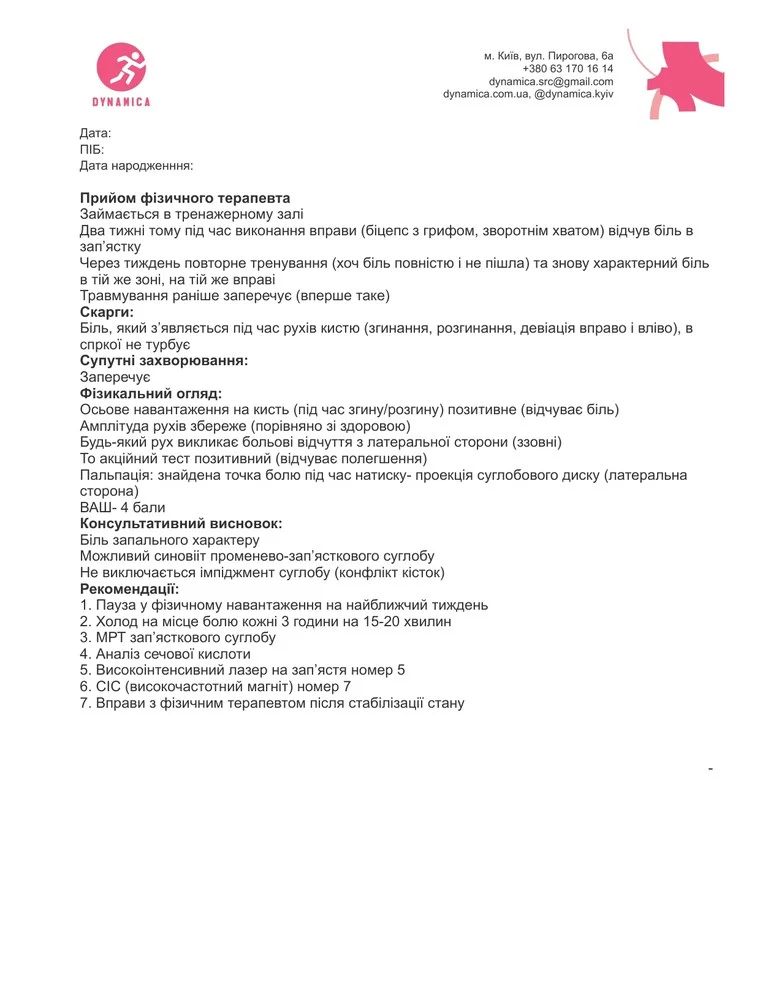
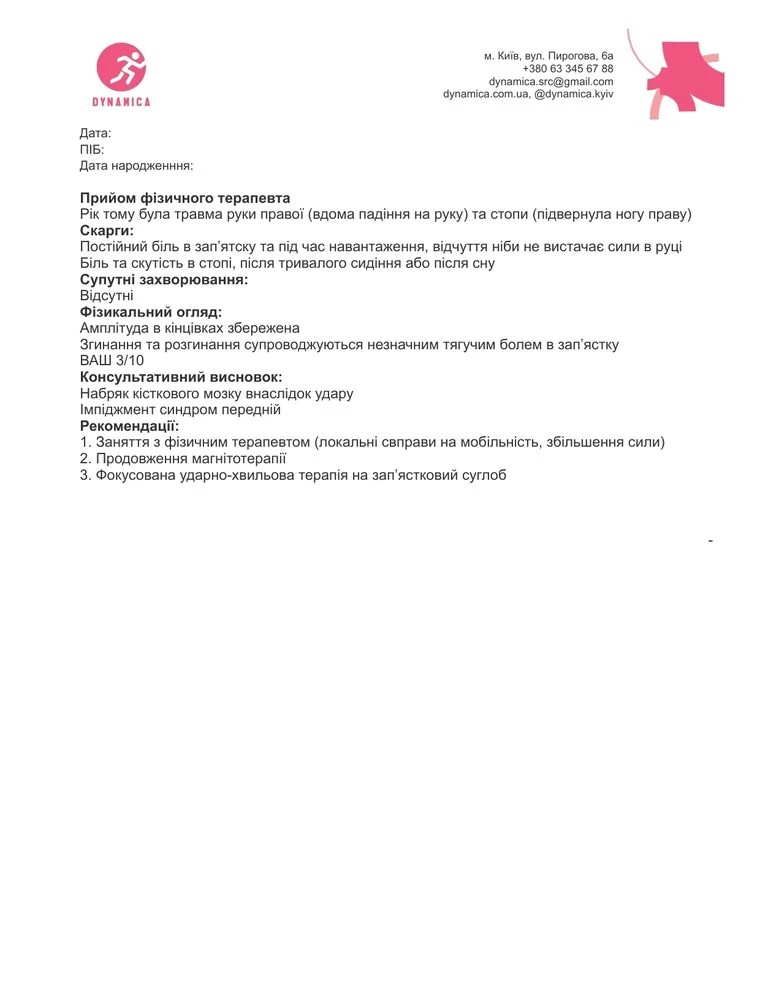
Real reports. Personal data hidden.
/ Recovery route
How we work:
from pain to strength
How long does it take? The first changes in movement control are noticeable within a few weeks. Strength and endurance are months of systematic work. We will be more precise after the assessment.
Stage 01 of 04 · REHAB
Settle the irritation
Get control back in simple movements.
- We work out where the pain comes from: joint, groin, glute or lower back.
- We reduce the tissue reaction.
- We restore basic pelvic stability.
Stage 02 of 04 · MOVE SAFE
Restore the pattern
The pelvis sets the work of the whole leg.
- We switch on the glutes.
- We remove compensations in the lower back and knee.
- We restore mobility without overload.
Stage 03 of 04 · MOVE SMART
Dose the load
Volume goes up — the pain does not come back.
- We work through gait, stairs and long sitting.
- We set intensity and pauses.
- Reassessment by the numbers, not by how it feels.
Stage 04 of 04 · MOVE STRONG
Strength and endurance
Stable movement without pain.
- Strength of the glutes and thigh muscles.
- Return to running and the gym.
- Preventing repeat breakdowns.
/ Team
Who will work with you
The hip and pelvis are handled by those who work with the lower limb and the lumbar spine.
 Valeriia CherniiRecovery specialistInjuries, arthrosis, chronic pain4 years+
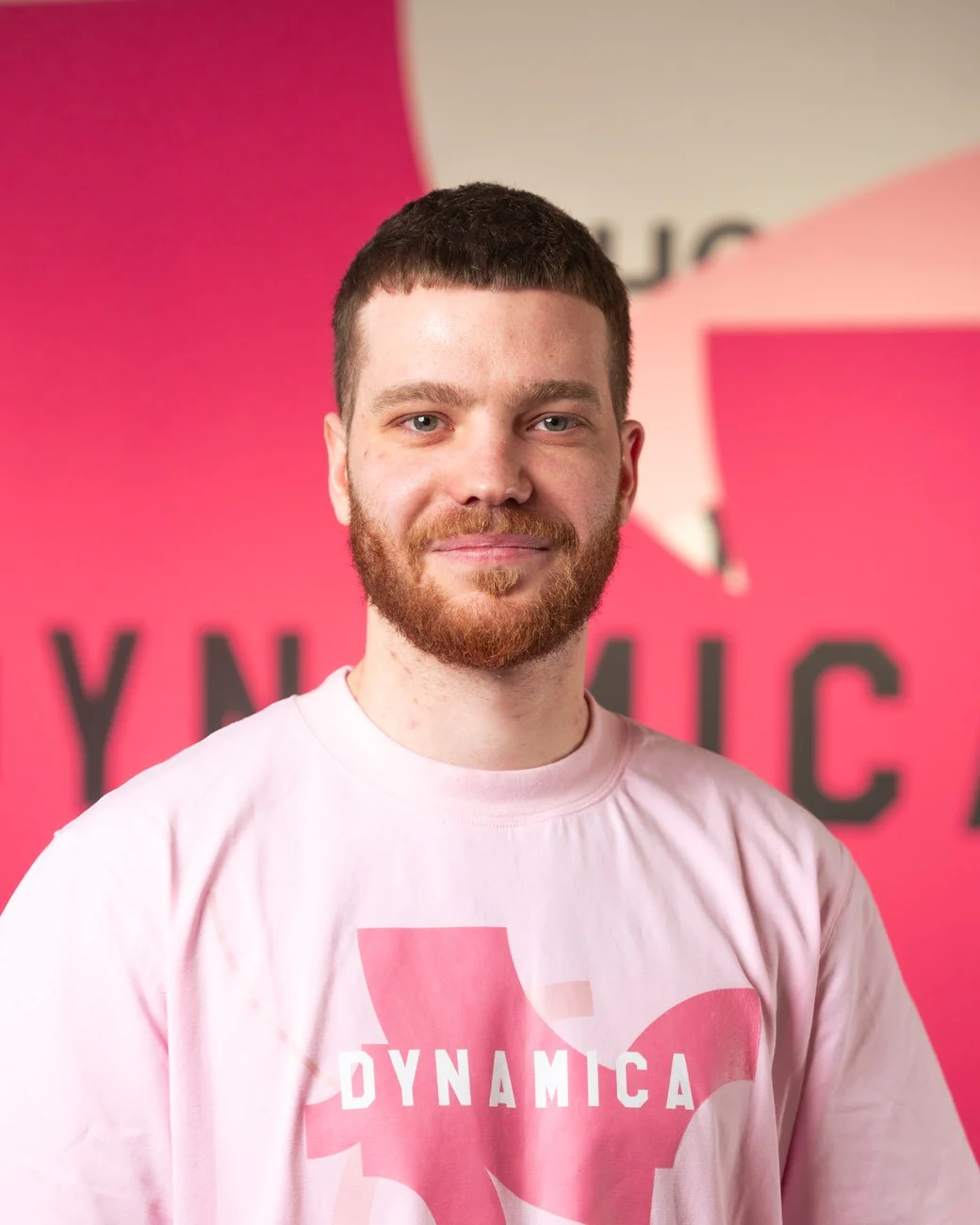 Valerii KutsaiRecovery specialistAfter heavy load, back, stability6 years+
 Daryna PopovaRecovery specialistBack, shoulders, knees, postnatal recovery4 years+
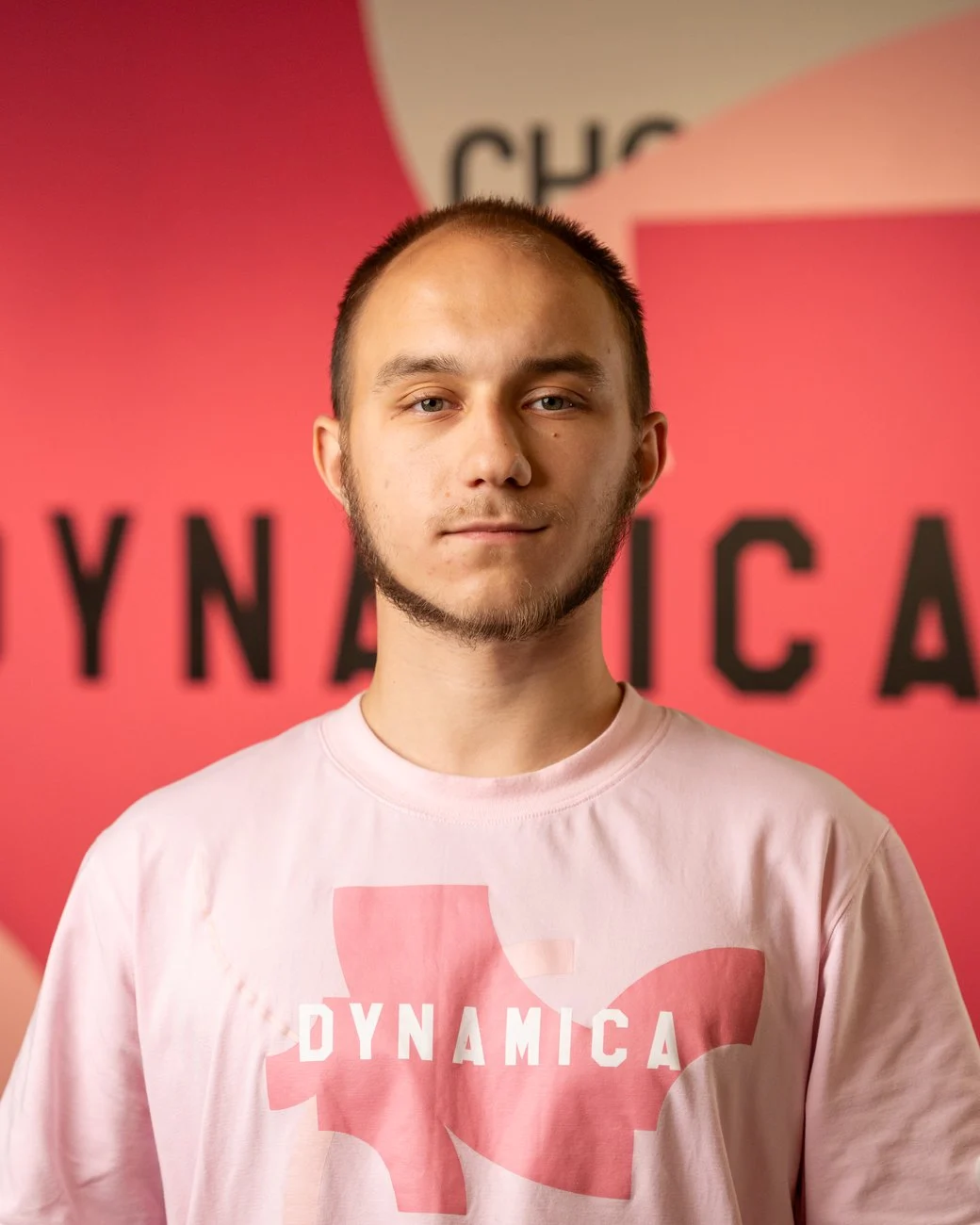 Mykyta ShutovRecovery specialistKnee, posture, foot · FC Zorya5 years+
/ Physical therapy
What can help
you get there faster
Groin or lateral hip pain is easily confused with the lower back. While the tissue reacts sharply, exercise does not land — the equipment removes that barrier.
This is not a separate course of procedures. Everything works inside the plan — and at the first visit it is included in the price.
Five tools. Which of them you actually need is decided by the physical therapist after the movement assessment.
/ Red flags
When you need a doctor examination
These signs need a doctor, not a physical therapist:
/ Reviews
What people say about us
“Quality equipment, very reasonable staff, professional specialists.… A special thank you to Valeriia — she literally gets you back on your feet.”
Vova RomanchukDynamica client“A wonderful team of professionals and incredibly comfortable conditions for training.”
Yulia KDynamica client“A true professional, she helped me get back on my feet, very attentive, tactful and professional. I also want to mention the pleasant atmosphere in the studio.”
Лексrehabilitation program“I am grateful for the attentive, high-quality, individual approach that helped me get back on my feet) boldly and confidently. Thank you so much for the patience and for taking my concerns into account (herniations and so on).”
Qwinta qwintaafter an injury
/ First step
Start with an assessment —
and see where the real cause is
You will understand why the pain is not going away and how to move forward. The movement assessment does not commit you to further work.
Movement assessment — UAH 2,000 · sessions after that UAH 1,500
/ Questions and answers
Frequent questions
I had a hip replacement. What can I do now?+
More than it seems. After your doctor clears you to move, we gradually bring back range, strength and confidence. The goal is not a limited “careful” life but a normal one: stairs, walks, cycling, travel.
When should rehabilitation after a replacement start?+
After your doctor clears you to move. The first weeks are the most valuable — that is when the movement pattern forms that you then live with for years.
I was told I need surgery. Can I avoid it?+
Sometimes yes, sometimes no — the doctor decides based on the state of the joint. We assess function and will tell you honestly whether we see room for conservative work. If surgery is needed, we prepare your body for it, which noticeably shortens recovery.
Is groin pain always the hip?+
Not always. Groin pain can come from the spine, from muscles, from other structures. That is exactly why we start with an assessment rather than an assumption.
Piriformis syndrome — do you work with that?+
Yes. But what matters more than the name is why the muscle is overloaded. Usually the cause is pelvic control, and that is what has to be worked with.
I am 70. Is it too late?+
No. Age affects the speed, not the possibility itself. Our clients come back to brisk walking and cycling after a replacement — it is a question of consistency, not year of birth.

/ Who is responsible for this area
Reviewed by Valeriia Cherniiphysical therapistBogomolets National Medical University · injuries, arthrosis, chronic pain · BTL-Ukraine schoolSpecialist profile →19 September 2026