/ Direction
Return
to sport
The body no longer hurts. But going back is scary. We work out when you actually can — and how not to slide back.
We work step by step — from removing pain to building strength, under medical supervision.
Leave your number — then pick what suits you: Telegram or a call. No commitment.
/ Sound familiar?
After a break
or an injury
The injury healed
Your confidence did not.
The break dragged on
Months or years without load.
You tried to come back
And broke down again.
Your shape dropped
The body is not the one you remember.
The doctor said “you can”
But did not say where to start.
You have a goal
A race, a run, a season — and a deadline.
/ What is going on
Why “just start
gradually” does not work
The tissue healed. Function did not necessarily.
- after a break the first thing to drop is not strength but movement control
- the body remembers the technique but no longer handles the volume
- the compensations picked up during the injury have not gone anywhere
- motivation brings you back to the old numbers faster than the body gets back to its old base
- this is exactly where repeat injuries happen — not in the acute phase
So coming back is not “adding a little at a time”. It is a managed progression with checkpoints.
/ Who it is for
This is for you if…
- you were in shape, dropped out and do not dare go back
- enough time has passed since the injury, but the fear stayed
- you have already tried to come back and broke down
- you have a date — a race, a run, a season — and you need to make it
- you do not want to “start from zero”, but you do not want to break either
- you need someone who will say honestly: too early, or you can now
People who come to us are not only athletes but also those who simply want their usual load back without setbacks.
/ Method
Load management
and volume progression
The decision is based on how ready the body is, not on the calendar.
Every stage has an exit criterion.
We look not only at the absence of pain but at strength, stability and functional tests. Then we build volume progression with checkpoints: how much to add, when to stop and by which signs to tell that the body is not keeping up.
Preventing repeat injuries
A repeat injury happens not because a person is weak, but because they went back to the old volume with the old compensations. We remove exactly those — and only then increase the load. The task is not to “make it to the start line” but to get you through the next season without breaks.
/ First visit
What happens at the first visit
It will not hurt. This is not about enduring, it is about understanding your movement — 90 minutes at a comfortable pace, and you leave with a plan.
We check joint mobility and muscle strength, palpate the area you complain about, take your history and run functional tests.
We try the first exercises and watch how your body responds — without sharp pain.
What exactly is holding the pain, which movement patterns are off, and a clear route forward. No pushing.
/ Proof
What you take
at the first visit
Not an opinion “in words”, but a written report: complaints, examination data in numbers, a conclusion and recommendations. Here are three real ones — different cases.
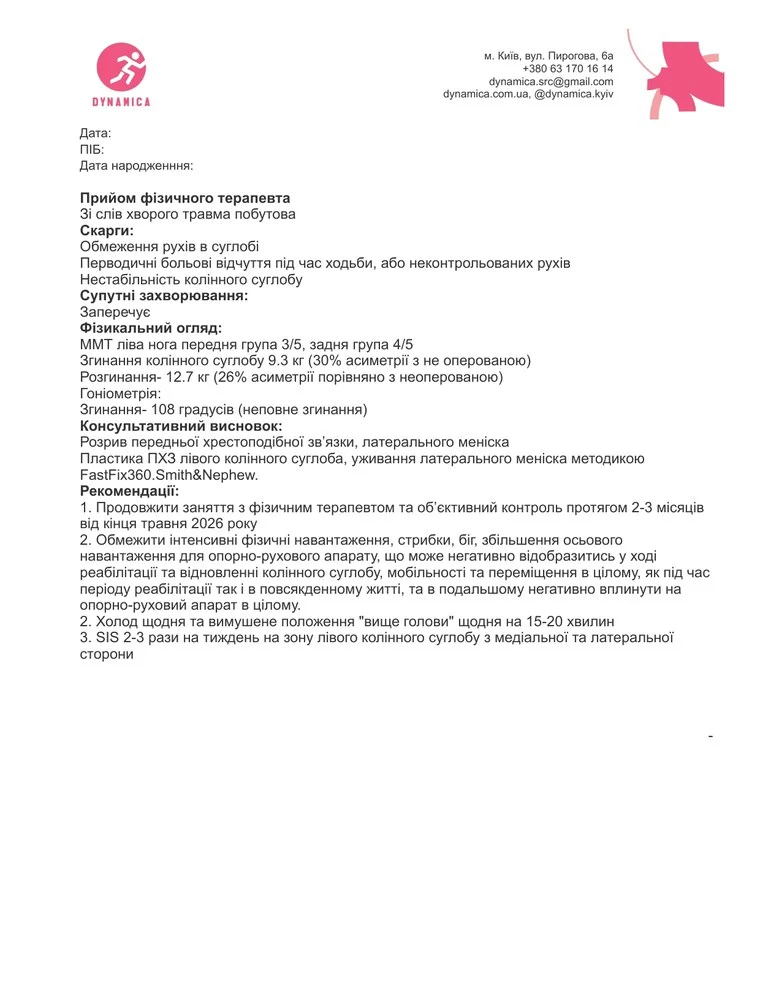
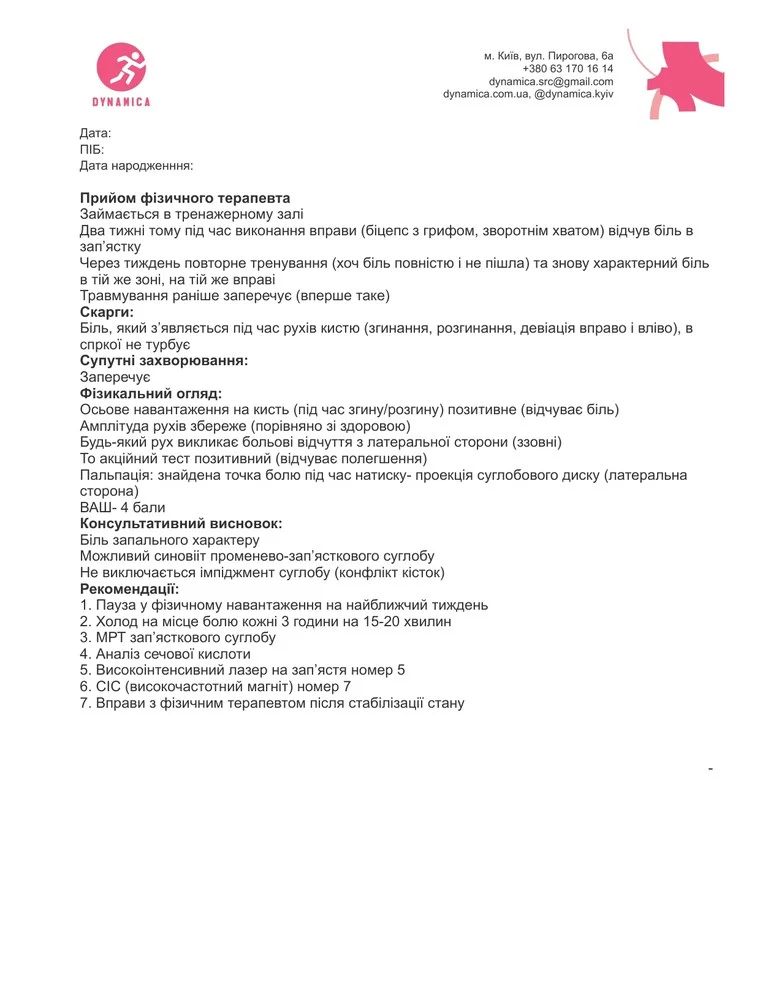
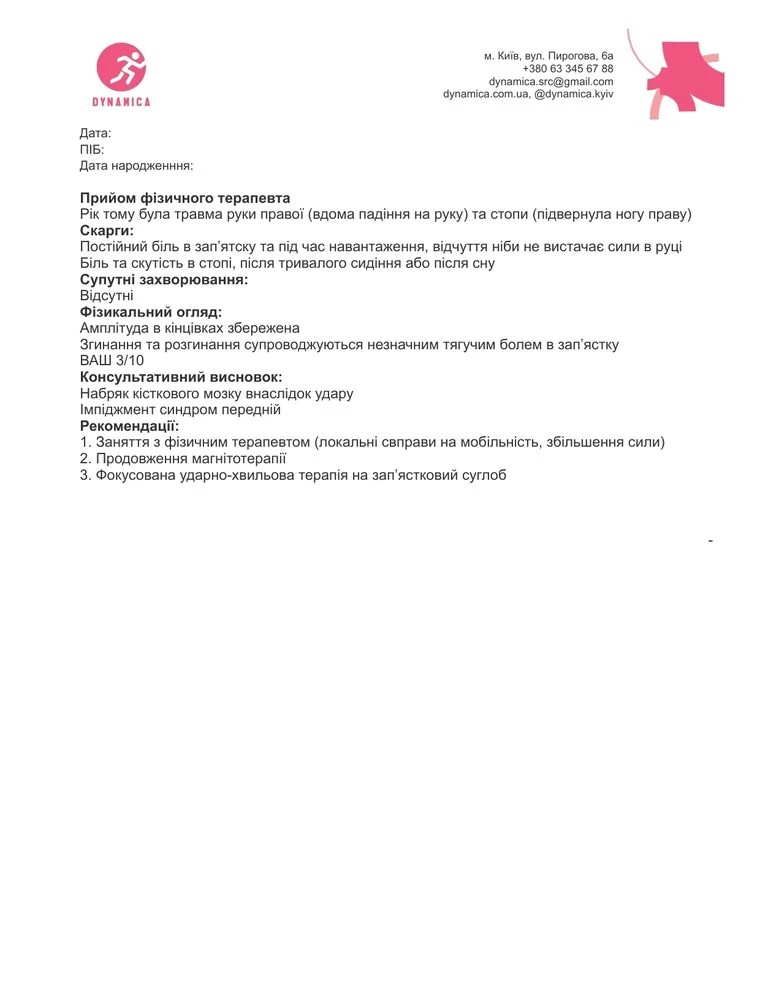
Real reports. Personal data hidden.
/ Recovery route
How we work:
from pain to strength
How long does it take? It depends on how long the break lasted and what came before it. After the assessment we give approximate timelines and, more importantly, criteria — the signs that tell you to move on, rather than the calendar.
Stage 01 of 04 · REHAB
Readiness assessment
An honest picture first, not a wish.
- We test strength, symmetry and response to load.
- We look at what is still holding the return back.
- We decide what volume you can start from.
Stage 02 of 04 · MOVE SAFE
Close the deficits
Going back to sport with a side-to-side gap is the next injury.
- We even out the sides for strength and control.
- We restore full range and stability.
- We rebuild confidence in movement.
Stage 03 of 04 · MOVE SMART
Sport-specific work
We prepare you for your kind of load.
- Acceleration, deceleration, change of direction, jumping.
- We work through technique and dose intensity.
- Progression by the numbers, not by the calendar.
Stage 04 of 04 · MOVE STRONG
Full volume
We return to sport with a margin, not right on the edge.
- Readiness tests before clearance for full load.
- Endurance to last to the end of the game or the distance.
- A plan for preventing a repeat injury.
/ how long it takes
HOW MANY SESSIONS
AND WHAT IT COSTS
Approximate average figures at the basic package level — so you can see the scale before your first visit.
After surgery or a fresh injury
REHAB → MOVE SAFE: on average about 12 weeks and UAH 60,000. At the maximum level — about 10 weeks.
Acute pain: disc herniation, tear
Acute phase → REHAB: on average 8–9 weeks and up to UAH 48,000.
Chronic pain, everyday discomfort
MOVE SAFE: on average six weeks and UAH 25,400.
/ Team
Who will work with you
Return to sport is handled by those who work with teams and competitive loads.
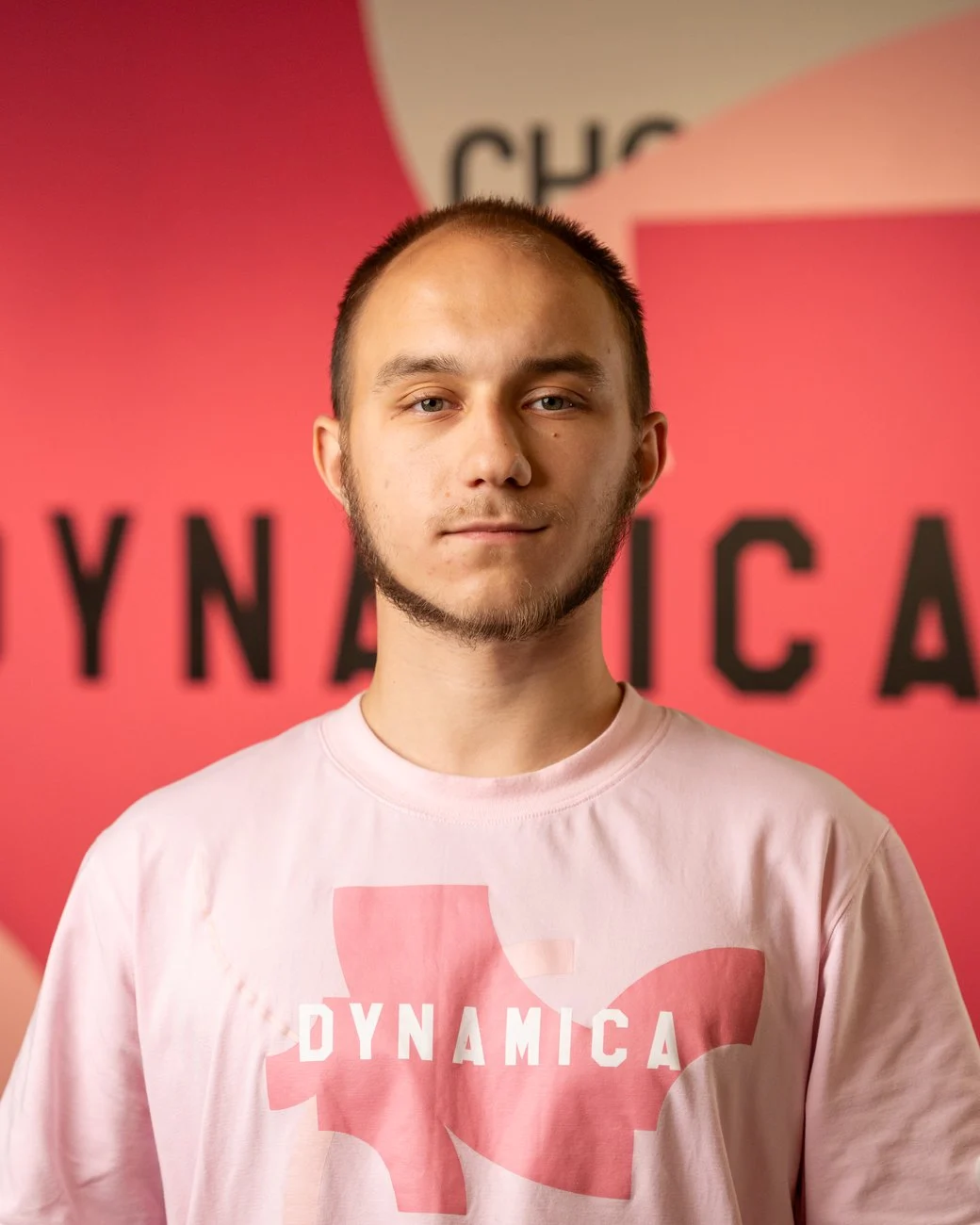 Mykyta ShutovRecovery specialistKnee, posture, foot · FC Zorya5 years+
 Valeriia CherniiRecovery specialistInjuries, arthrosis, chronic pain4 years+
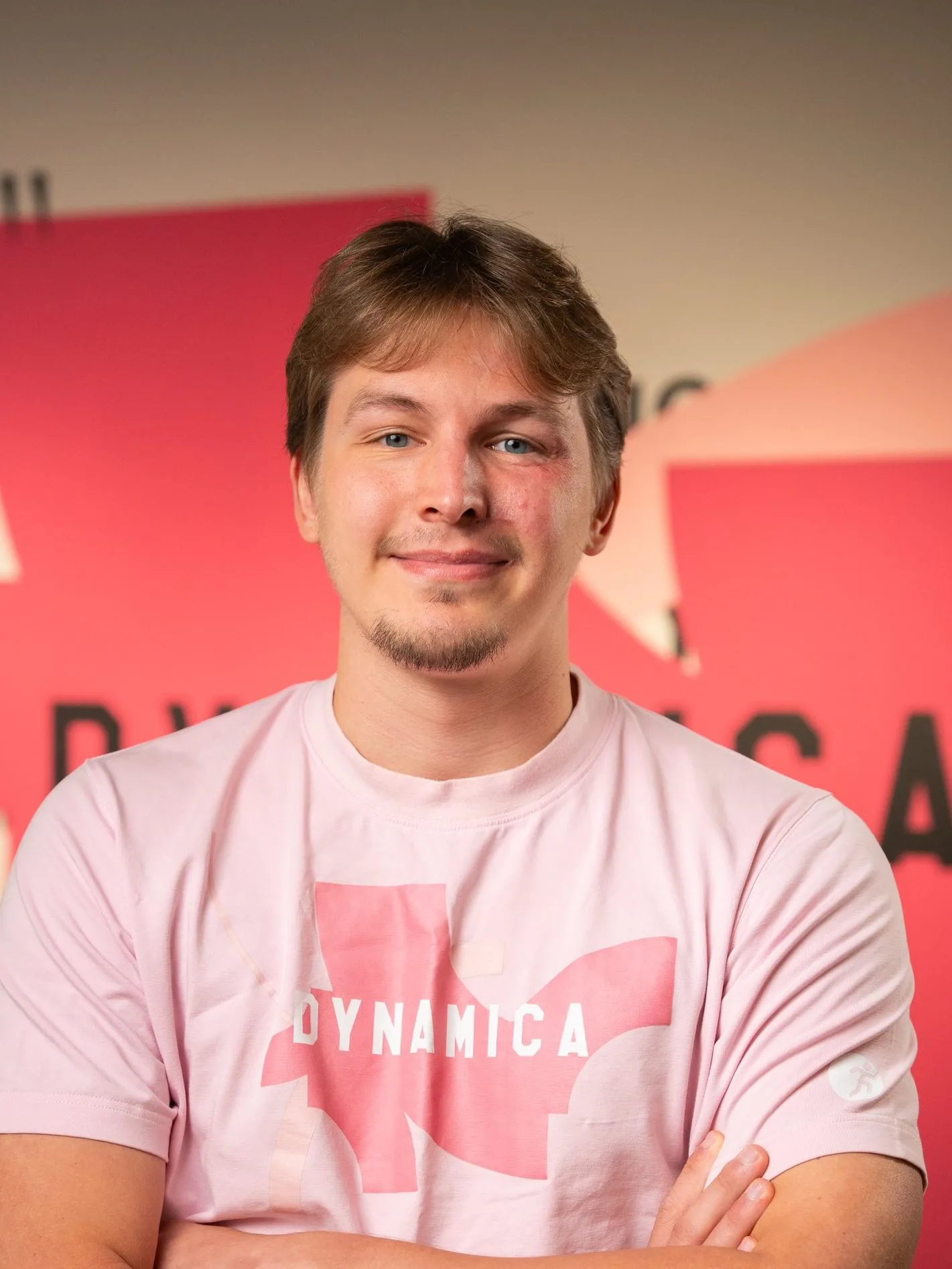 Denys SemerikRecovery specialistInjuries, training load, movement2 years+
/ Physical therapy
What can help
you get there faster
At the return stage the equipment is not there to treat but to recover between sessions — so tissue keeps up with the progression.
This is not a separate course of procedures. Everything works inside the plan — and at the first visit it is included in the price.
Four tools. Which of them you actually need is decided by the physical therapist after the movement assessment.
/ Red flags
When it is still
too early to come back
These signs mean the load has to wait:
/ Reviews
What people say about us
“As a professional athlete I always have high standards for the quality of rehabilitation.… Thanks to your work I not only came back to sport quickly but was able to improve my results.”
Sasha Budarevreturn to sport“I really liked the session, I felt muscles I rarely feel; I want to come back to Pilates, because I run and need to add stretching and strength work.”
Svetlana Frankovarunning“A really cool place, we came with our running team for an intro session and realized everything here covers recovery, rehabilitation and strength prep for races.”
Максим Аненкоrunning team“I ran for 5 years without testing and without understanding my capacity.… On top of that, I could potentially run marathons much faster.”
Mykola Kizilovmarathon
/ First step
Find out whether your body is ready —
before you go back
The assessment will show what volume you personally should start from. The movement assessment does not commit you to further work.
Movement assessment — UAH 2,000 · sessions after that UAH 1,500
/ Questions and answers
Frequent questions
about coming back
How long until I am back in shape?+
Can I train at my own gym right away?+
I have a race in two months. Will I make it?+
I am afraid the injury will happen again+
How is this different from rehabilitation after an injury?+
How many sessions will I need and what will it cost?+
Approximately, on average: after surgery or a fresh injury — about 12 weeks and UAH 60,000 (REHAB, then MOVE SAFE); acute pain — 8–9 weeks and up to UAH 48,000; chronic pain — six weeks and UAH 25,400. Everyone is different, so this is a guide, not a promise. The first step is a movement assessment for UAH 2,000; after it the therapist sets your stage and volume. All packages are on the Packages page.

/ Who is responsible for this area
Reviewed by Mykyta Shutovrehabilitation and physical therapistNUPESU, physical therapy · knee, posture, footSpecialist profile →1 October 2026