/ Direction
So an injury does not
become chronic
Pain after a fall or a sudden movement is a signal. Timely rehabilitation brings back movement and full load.
We work step by step — from removing pain to building strength, under medical supervision.
Leave your number — then pick what suits you: Telegram or a call. No commitment.
/ Signals
When it is worth
getting in touch
After a fracture
When the cast or brace comes off — and you do not know where to start.
After a dislocation
The joint does not hold, or the fear of it happening again stayed.
After a ligament tear
Or a muscle strain — even if you avoided surgery.
The pain does not go away
For days or longer, even though “nothing serious was found”.
Swelling or restriction
Movement is not coming back to its usual range.
/ Our profile
Which injuries
we work with
We do rehabilitation after:
- fractures — once you are cleared for load
- dislocations and subluxations
- muscle or ligament tears and strains
- ligament sprains
- sports and running injuries
- joint instability
- tendon overload
If needed we bring in a trauma surgeon. An early assessment helps avoid the problem becoming chronic.
/ Who it is for
This is for you if…
- you rolled your ankle a month ago and it is still “not right”
- the cast came off — and you do not know what to do next
- you are afraid to load it after the injury
- the doctor said “it healed”, but movement has not come back
- the injury keeps happening in the same place
- you want to get back to sport but do not know when you can
People who come to us are not athletes — they are people who want to move, sleep and sit normally without pain.
/ The goal
Our goal is not
just to reduce pain
Recovery does not end when signs ease.
The goal is to make you resilient to load.
We work to the point where the joint is stable, the muscles handle load, movement is controlled — and you move without fear.
When you can go back to sport
The return happens in stages. We look not only at pain but at strength, stability and functional tests. The decision is based on how ready the body is, not on the calendar.
/ First visit
What happens at the first visit
It will not hurt. This is not about enduring, it is about understanding your movement — 90 minutes at a comfortable pace, and you leave with a plan.
We check joint mobility and muscle strength, palpate the area you complain about, take your history and run functional tests.
We try the first exercises and watch how your body responds — without sharp pain.
What exactly is holding the pain, which movement patterns are off, and a clear route forward. No pushing.
/ Proof
What you take
at the first visit
Not an opinion “in words”, but a written report: complaints, examination data in numbers, a conclusion and recommendations. Here are three real ones — different cases.
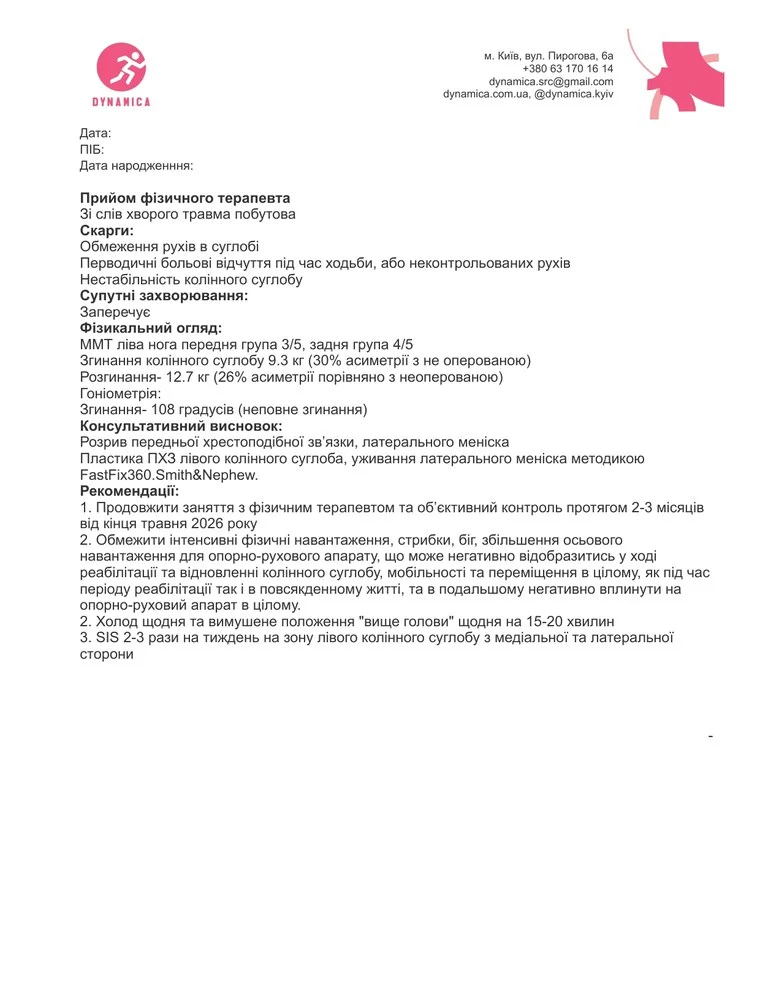
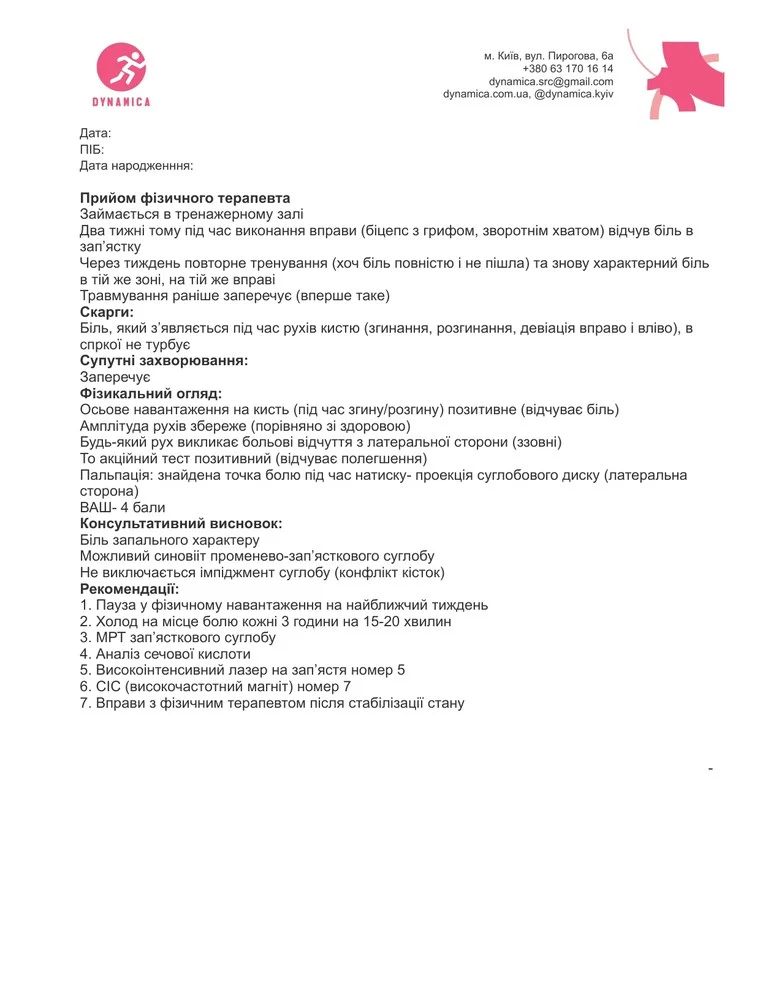
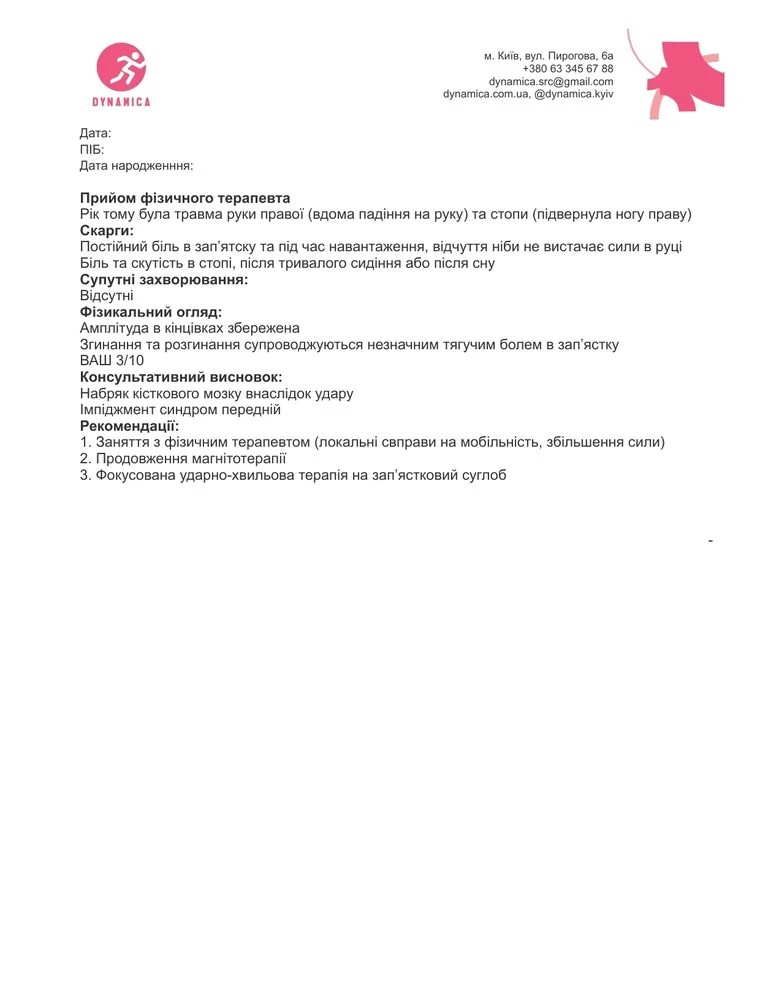
Real reports. Personal data hidden.
/ Recovery route
How we work:
from pain to strength
How long does it take? It depends on the injury and on how much time has passed. We name the exact number of sessions only after the movement assessment, with no promises upfront — but you always know what stage you are at.
Stage 01 of 04 · REHAB
Acute phase
Stop the injury from becoming chronic.
- We assess the extent of the damage and what is safe to do now.
- We reduce swelling and pain.
- If serious damage is suspected — we refer you for imaging.
Stage 02 of 04 · MOVE SAFE
Get movement back
The earlier you start, the simpler the recovery.
- We restore range without overloading.
- We switch on the muscles the body shut down because of pain.
- We remove compensations before they set in.
Stage 03 of 04 · MOVE SMART
Load and technique
Tissue is rebuilt by the right load.
- We build volume to a plan, with reassessment.
- We correct the technique of the movement that caused the injury.
- We avoid setbacks and repeat flare-ups.
Stage 04 of 04 · MOVE STRONG
Coming back
Readiness to return is a number, not a feeling.
- We test strength and symmetry between sides.
- We return to sport or your usual load.
- Preventing a repeat injury.
/ how long it takes
HOW MANY SESSIONS
AND WHAT IT COSTS
Approximate average figures at the basic package level — so you can see the scale before your first visit.
After surgery or a fresh injury
REHAB → MOVE SAFE: on average about 12 weeks and UAH 60,000. At the maximum level — about 10 weeks.
Acute pain: disc herniation, tear
Acute phase → REHAB: on average 8–9 weeks and up to UAH 48,000.
Chronic pain, everyday discomfort
MOVE SAFE: on average six weeks and UAH 25,400.
/ Team
Who will work with you
Fresh injuries are handled by those who can quickly work out what is safe to do right now.
 Valeriia CherniiRecovery specialistInjuries, arthrosis, chronic pain4 years+
 Denys SemerikRecovery specialistInjuries, training load, movement2 years+
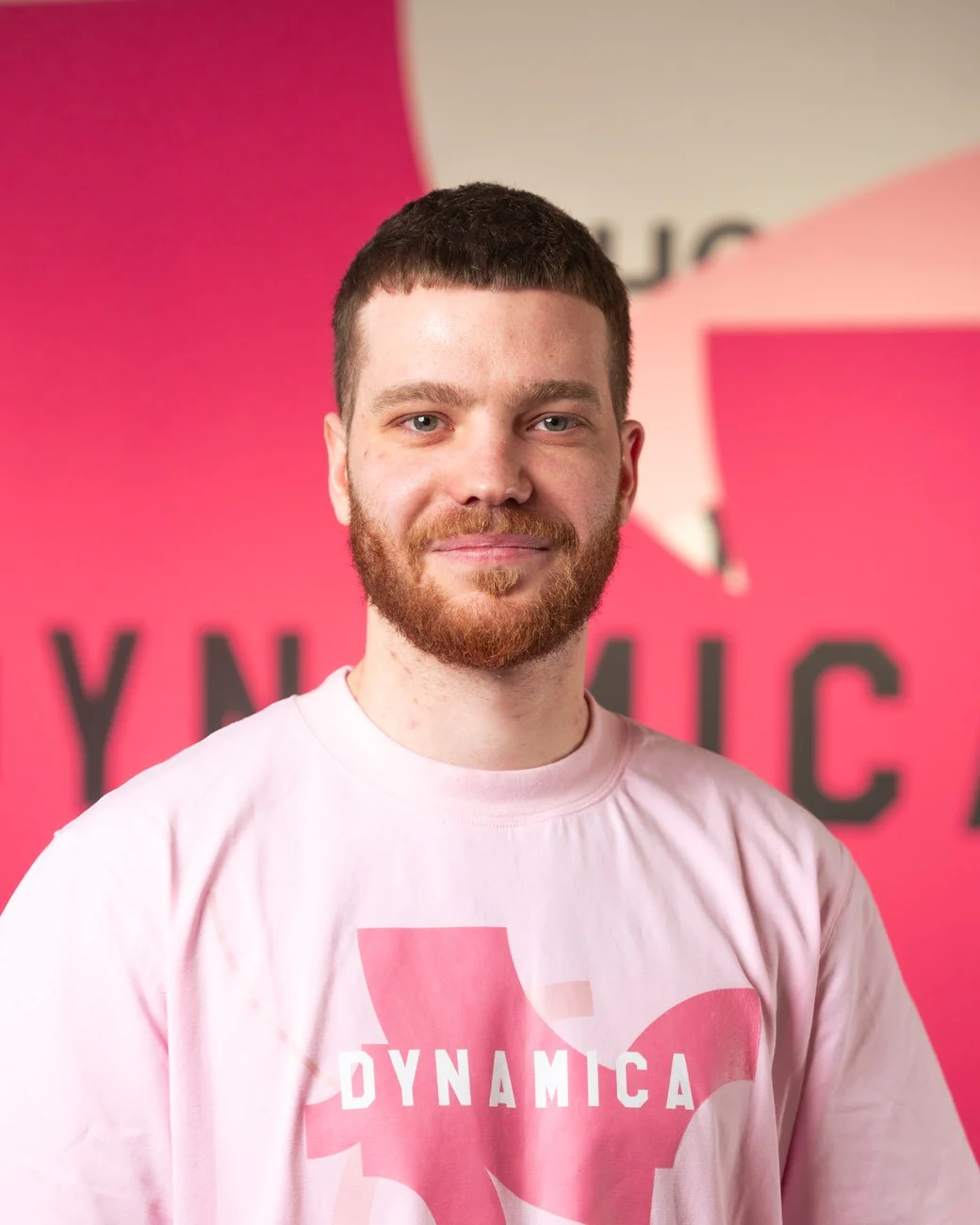 Valerii KutsaiRecovery specialistAfter heavy load, back, stability6 years+
/ Physical therapy
What can help
you get there faster
In the first weeks after an injury, swelling and pain prevent movement — and that is exactly when the compensations form that take longest to undo later. The equipment shortens that period.
This is not a separate course of procedures. Everything works inside the plan — and at the first visit it is included in the price.
Five tools. Which of them you actually need is decided by the physical therapist after the movement assessment.
/ Red flags
When to see a doctor
right away
Do not wait for a physical therapist consultation if you have:
/ Reviews
What people say about us
“Thank you for managing to combine professionalism with humanity! You helped me get my fitness back after many injuries and return to sport!”
Oleksandr Levchukafter an injury“After long and persistent work we finally got the result! The arm has recovered and works the way it did before the injury.”
Людмила Чорновілafter an arm injury“The center uses modern and very effective equipment for recovery, and it really delivers. All the specialists are qualified and take an individual approach to each client and to the specifics of their injury.”
Вікторія Чернявськаafter an injury“After breaking my fifth metatarsal I went for rehabilitation — and it was genuinely great. Everything professional, the exercises were matched to me, they explained what to do and how.”
o stetsafter a fracture
/ First step
Rehabilitation after an injury
starts with an assessment
We assess your condition, determine a safe level of load and build a plan. The movement assessment does not commit you to further work.
Movement assessment — UAH 2,000 · sessions after that UAH 1,500
/ Questions and answers
The most common fears
after an injury
If it hurts, is it better not to move?+
What if it becomes chronic?+
Will the injury happen again?+
Do I need an MRI or extra imaging?+
How long will recovery take?+
How many sessions will I need and what will it cost?+
Approximately, on average: after surgery or a fresh injury — about 12 weeks and UAH 60,000 (REHAB, then MOVE SAFE); acute pain — 8–9 weeks and up to UAH 48,000; chronic pain — six weeks and UAH 25,400. Everyone is different, so this is a guide, not a promise. The first step is a movement assessment for UAH 2,000; after it the therapist sets your stage and volume. All packages are on the Packages page.

/ Who is responsible for this area
Reviewed by Valerii Kutsairehabilitation and physical therapist6 years of practice · post-surgery, discs, neurologySpecialist profile →1 October 2026