
/ Direction
Rehabilitation
after surgery
Surgery is one stage. Rehabilitation decides the result.
We work step by step — from removing pain to building strength, under medical supervision.
Leave your number — then pick what suits you: Telegram or a call. No commitment.
/ The result
Will I be able to live
a full life after surgery
Full range of motion
or the maximum possible in your case.
Stability without fear
not keeping “what if it happens again” in your head.
Strength in daily life
stairs, bags, a child in your arms.
Return to activity
sport, if you did it. Life — definitely.
/ Our profile
Which surgeries
we work with
Most often these are:
- spine — cervical, thoracic, lumbar
- knee joint — meniscus, ligaments, ACL
- shoulder joint — ligaments, labrum, tendons, biceps
- hip joint, including joint replacement
- ankle and Achilles tendon
- elbow joint and hand
If your surgery is not on the list, we will still assess your condition and tell you honestly whether we can help. There is one main condition: your doctor clearance to move.
/ Who it is for
This is for you if…
- you were discharged with a recommendation to “work it out”, but nobody explained how
- you are afraid to load the operated area
- the limb has lost muscle and looks weaker than the other one
- a few weeks have passed and movement is not coming back
- you want to return to sport but do not know when you can
- rehabilitation was prescribed, but nobody told you where to do it
People who come to us are not athletes — they are people who want to move, sleep and sit normally without pain.
are looking for a quick fix without any effort on your side · want “just a massage” or “to have it put back in place” · are not ready to work with your body systematically
/ Timing
When to start
rehabilitation
We start after clearance to move. That is the main limit and the main answer.
It matters not to lose the first weeks.
Early rehabilitation reduces the risk of contractures, helps keep muscle tone, supports movement control and shortens the time it takes to get back to activity.
We work as a team with a doctor
The doctor is responsible for the medical part. We are responsible for function and movement control.
/ First visit
What happens at the first visit
It will not hurt. This is not about enduring, it is about understanding your movement — 90 minutes at a comfortable pace, and you leave with a plan.
We check joint mobility and muscle strength, palpate the area you complain about, take your history and run functional tests.
We try the first exercises and watch how your body responds — without sharp pain.
What exactly is holding the pain, which movement patterns are off, and a clear route forward. No pushing.
/ Proof
What you take
at the first visit
Not an opinion “in words”, but a written report: complaints, examination data in numbers, a conclusion and recommendations. Here are three real ones — different cases.
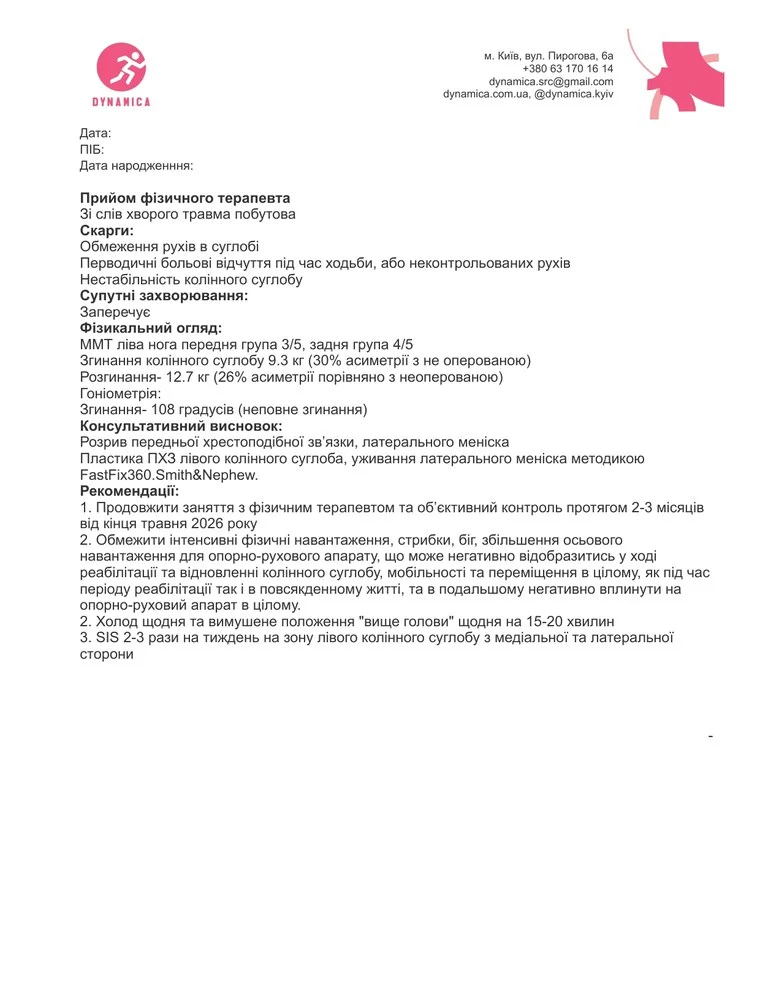
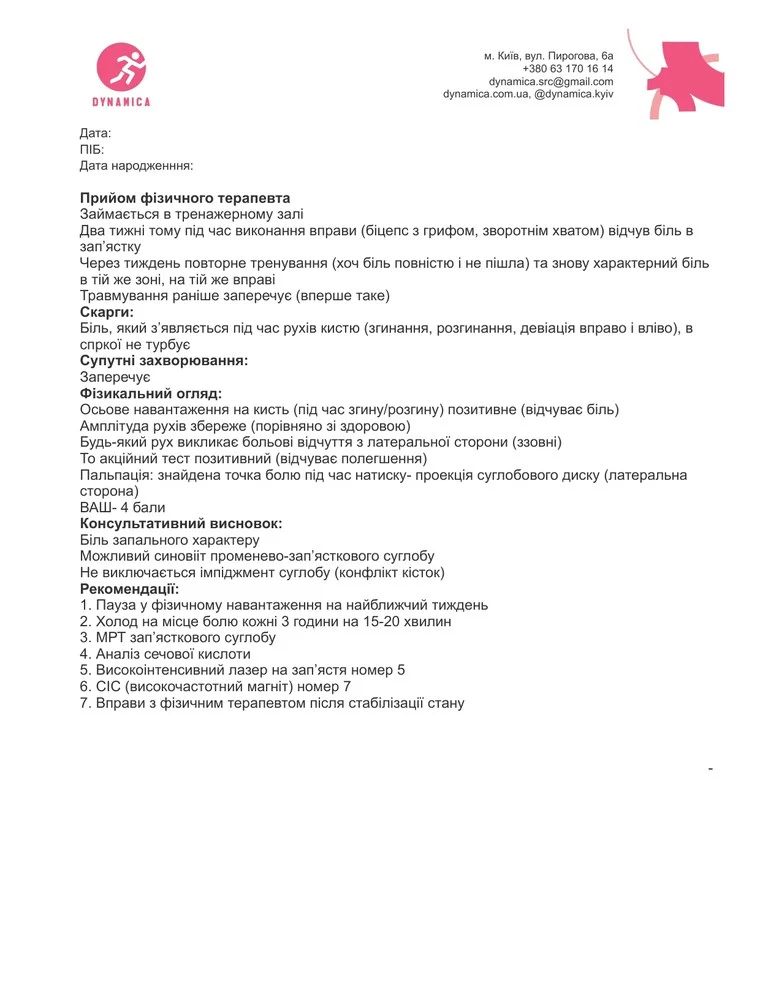
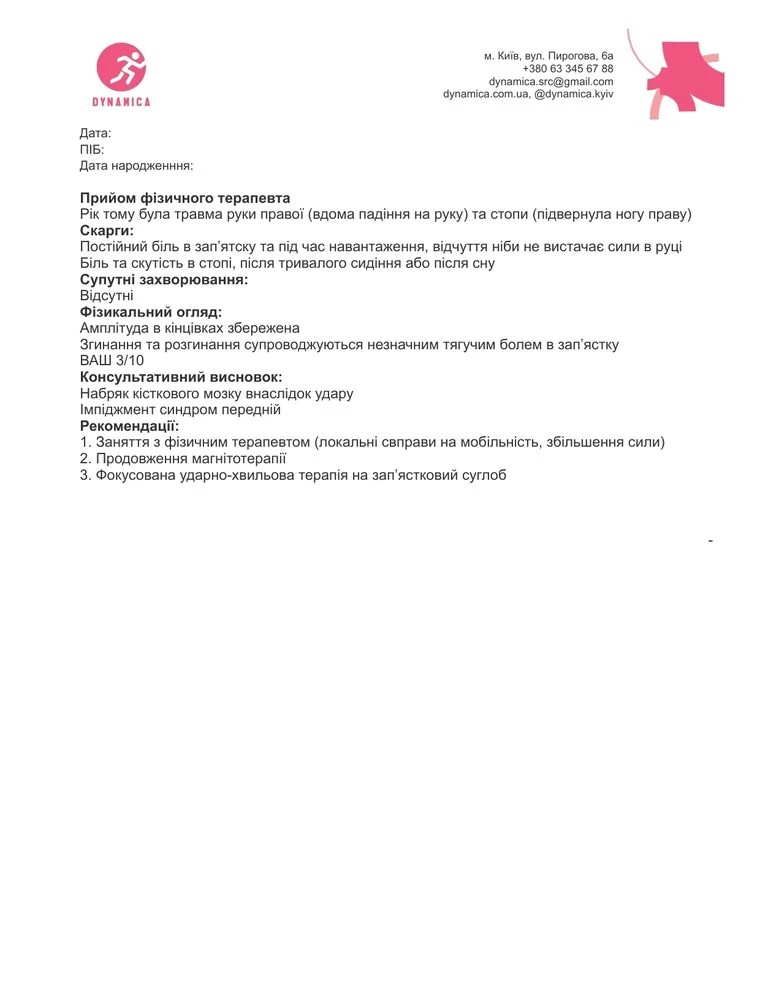
Real reports. Personal data hidden.
/ Recovery route
How we work:
from pain to strength
How long does it take? Honestly — it depends on your condition. We name the exact number of sessions only after the movement assessment, with no promises upfront.
Stage 01 of 04 · REHAB
Early phase
We work within the limits your surgeon set.
- We check against your doctor’s protocol and timeline.
- We manage swelling — pressotherapy and lymphatic drainage where indicated.
- We restore range and basic muscle activation.
Stage 02 of 04 · MOVE SAFE
Restore weight-bearing
Learning to move and load without fear.
- We restore full range of motion.
- We switch on the muscles that shut down after surgery.
- We remove limping and compensations.
Stage 03 of 04 · MOVE SMART
Strength and symmetry
The operated side has to catch up with the healthy one.
- We measure the difference between sides and close it.
- Planned load increases with reassessment.
- We restore technique for everyday and sporting movements.
Stage 04 of 04 · MOVE STRONG
Full load
Back to life without restrictions.
- We test readiness for running and sport by the numbers.
- A margin of strength to avoid a repeat injury.
- A maintenance programme after the course ends.
/ how long it takes
HOW MANY SESSIONS
AND WHAT IT COSTS
Approximate average figures at the basic package level — so you can see the scale before your first visit.
After surgery or a fresh injury
REHAB → MOVE SAFE: on average about 12 weeks and UAH 60,000. At the maximum level — about 10 weeks.
Acute pain: disc herniation, tear
Acute phase → REHAB: on average 8–9 weeks and up to UAH 48,000.
Chronic pain, everyday discomfort
MOVE SAFE: on average six weeks and UAH 25,400.
/ Team
Who will work with you
Post-operative cases are handled by those who work to protocol alongside the surgeon.
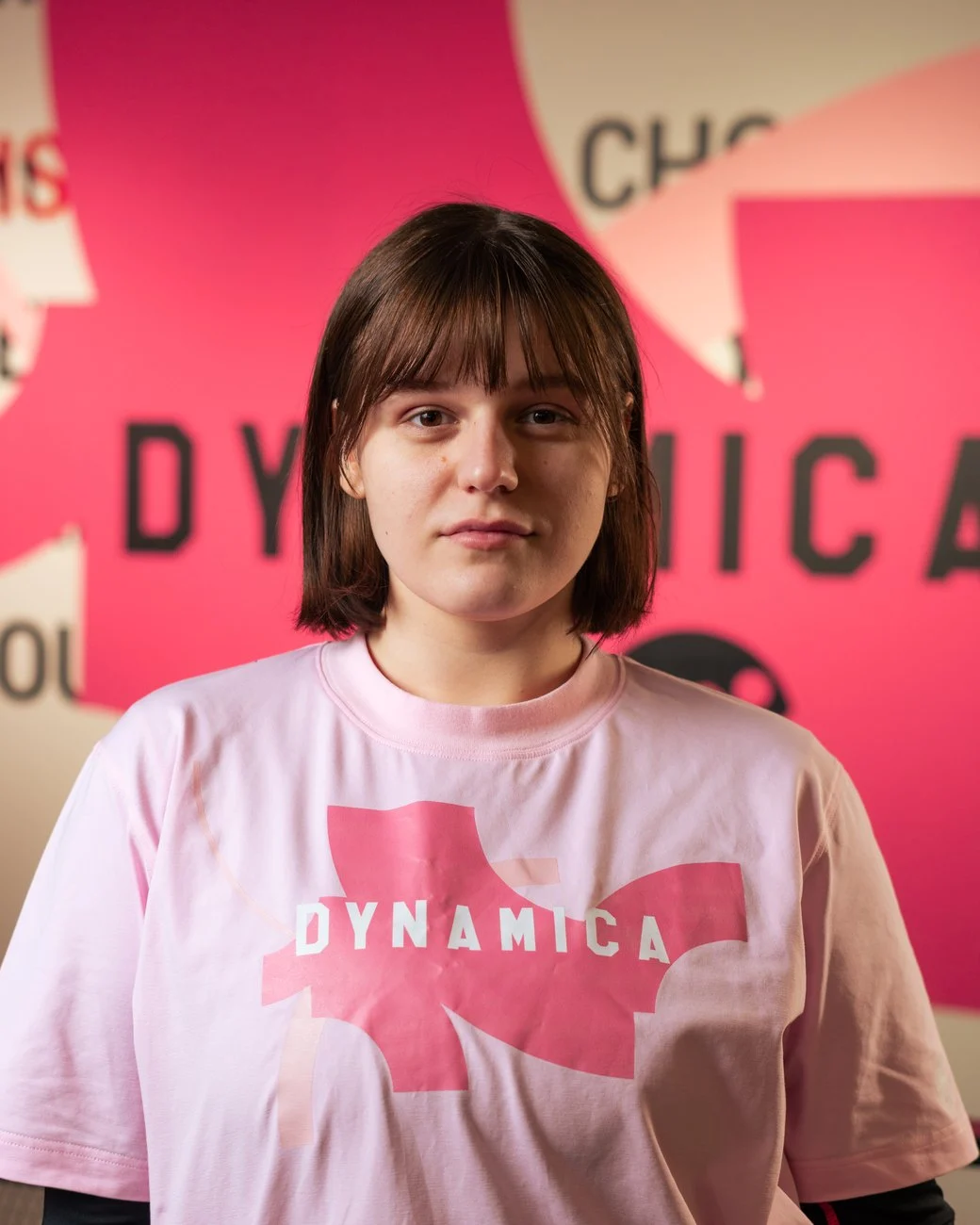 Tania HerasymivRecovery specialistRecovery after load, movement after injury4 years+
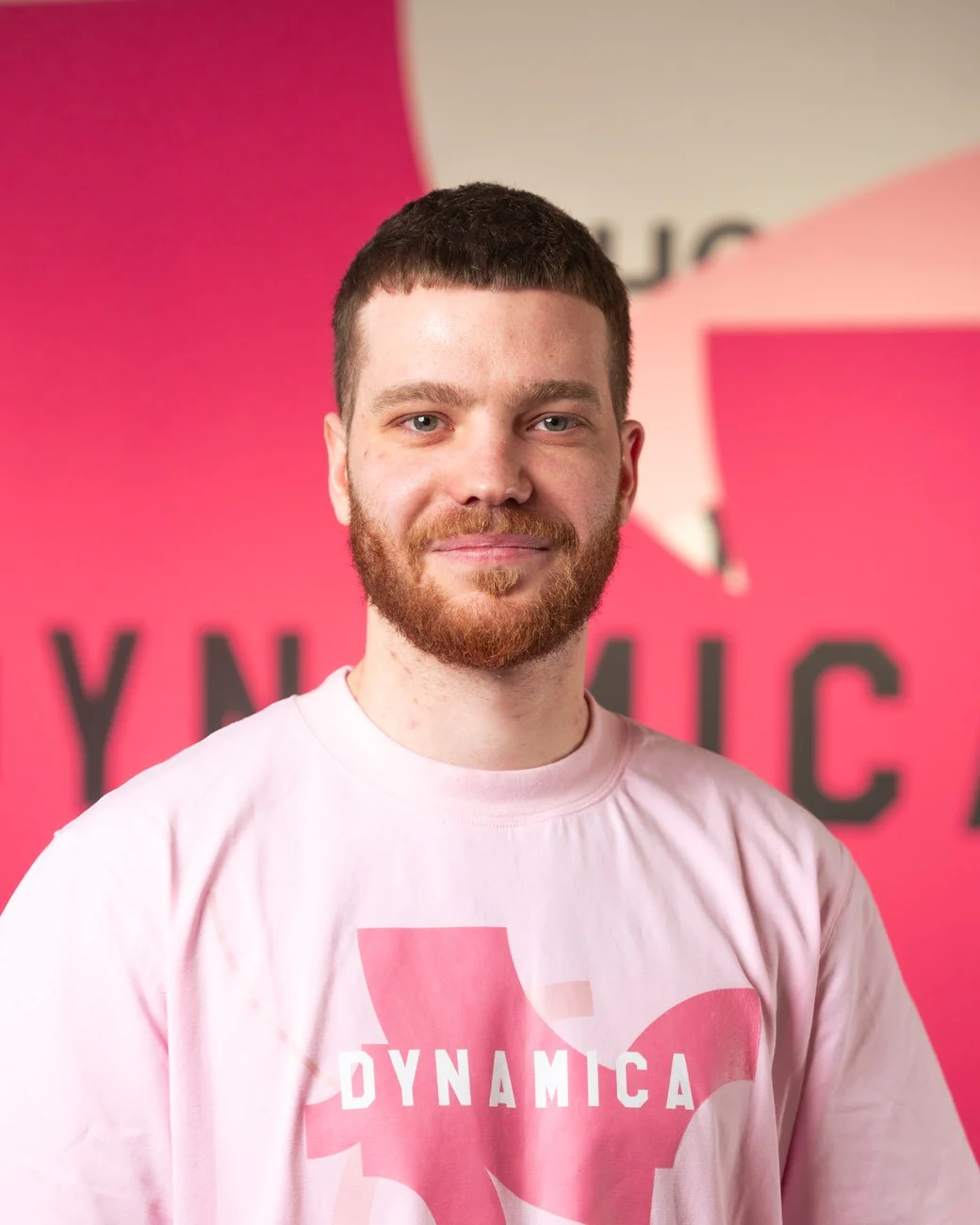 Valerii KutsaiRecovery specialistAfter heavy load, back, stability6 years+
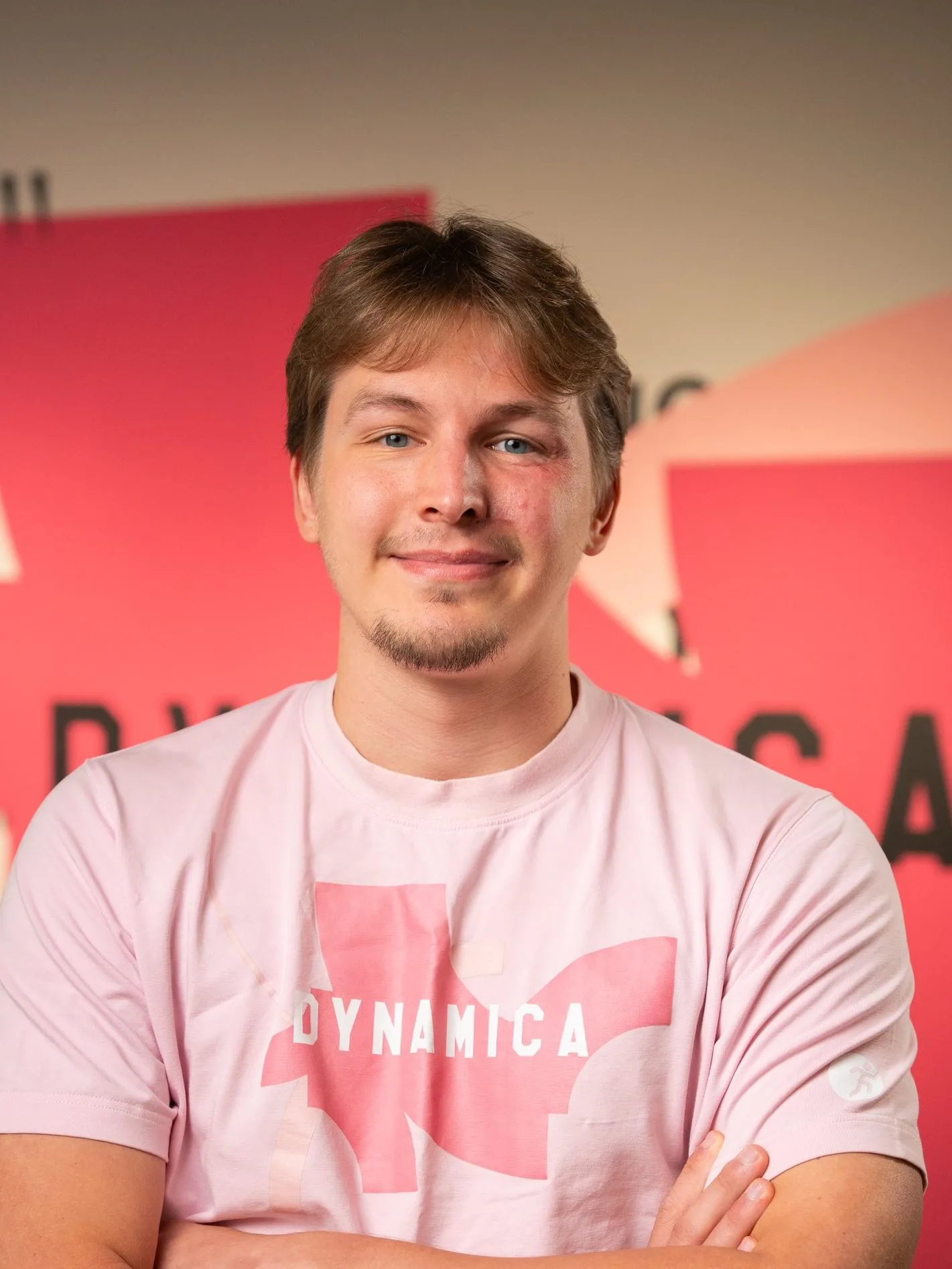 Denys SemerikRecovery specialistInjuries, training load, movement2 years+
/ Physical therapy
What can help
you get there faster
After surgery the enemy of the first weeks is swelling: it blocks range and slows everything else. That is exactly what the equipment works on.
This is not a separate course of procedures. Everything works inside the plan — and at the first visit it is included in the price.
Five tools. Which of them you actually need is decided by the physical therapist after the movement assessment.
/ Red flags
When to see a doctor
right away
Do not wait for a scheduled consultation if you have:
/ Reviews
What people say about us
“The rehab specialists approach is as hands-on with you as it gets, and I have tried plenty, so this is the real thing if you want people to work with you specifically and give quality sessions.… I recommend trying it to anyone who needs proper recovery after surgery or injuries.”
Dyurii Lociyovichafter surgery“In 4 months they restored my gait and the muscles in my leg that had started to waste away, and prevented a pelvic tilt.… The day after surgery I was already in rehab on the magnet.”
Оксана Донafter surgery“I came to the center after arthroscopy on a friend recommendation — she had gone through rehabilitation there too. Six months after surgery I could not run, jump or take stairs normally, even though I followed the surgeon recommendations.”
Інна Сломчинськаafter arthroscopy“My husband went through rehabilitation after knee surgery. Professional rehab, modern equipment and service at a high level.”
Евгения Педенкоafter knee surgery
/ First step
The right start decides what life after surgery will be like
Start with a consultation. The movement assessment does not commit you to further work.
Movement assessment — UAH 2,000 · sessions after that UAH 1,500
/ Questions and answers
Frequent questions
after surgery
Will the full range of motion come back?+
My limb has lost a lot of muscle. Will it become normal again?+
When will the swelling go down?+
What is normal during rehabilitation?+
How will I see progress?+
Can I train if it still hurts?+
How many sessions will I need and what will it cost?+
Approximately, on average: after surgery or a fresh injury — about 12 weeks and UAH 60,000 (REHAB, then MOVE SAFE); acute pain — 8–9 weeks and up to UAH 48,000; chronic pain — six weeks and UAH 25,400. Everyone is different, so this is a guide, not a promise. The first step is a movement assessment for UAH 2,000; after it the therapist sets your stage and volume. All packages are on the Packages page.

/ Who is responsible for this area
Reviewed by Tania Herasymivphysical therapistBogomolets National Medical University · post-surgery care, prostheticsSpecialist profile →1 October 2026