/ Where it hurts
Does your back
or neck hurt?
This is not a verdict. It is a signal.
We work step by step — from removing pain to building strength, under medical supervision.
Leave your number — then pick what suits you: Telegram or a call. No commitment.
/ Signs
Which signs
we work with
Pain in the lower back and sacrum
sharp (a shooting pain), aching, radiating into the leg, buttock or groin.
Pain in the cervical spine
hard to turn your head, the neck “locked up”, it pulls into the shoulder or arm.
Thoracic spine
pain between the shoulder blades, a feeling of a band around the chest, pain on a deep breath.
Neurological signs
numbness in the fingers or toes, pins and needles, weakness in the limbs.
Headaches
tension headaches and dizziness related to the state of the cervical spine.
/ What it means
A herniated disc is not a verdict.
It is a stage in the life of a spine
Most people come to us with MRI results and the words: “I have a herniated disc”. We explain what that actually means:
- A protrusion is not a disease you caught somewhere. It is part of how the spine changes over the years. A herniation is a more pronounced stage of the same process.
- Such changes are present in most people who have no complaints at all. A review of 3,110 people examined with no signs whatsoever: disc degeneration was found in 37% of twenty-year-olds and in 96% of eighty-year-olds (Brinjikji et al., AJNR, 2015).
- So the question is not whether there are changes on the image. The question is whether the body copes with them.
- They do not need to be “put back in place”. In 90% of cases surgery is not required.
If the muscles hold and the load is distributed properly, people live full lives with these changes, train and never think about them. If not, the changes start reminding them.Living with this fully or suffering through it depends not on the image but on what you do with your body. And that you can influence.We work just as effectively with spondyloarthrosis, vertebral displacement and inflammation of the facet joints.
/ Who it is for
This is for you if…
- back or neck pain keeps coming back
- a desk job, many hours at a computer or behind the wheel
- massage and painkillers help only for a short while
- the MRI says “herniation” or “protrusion” — and you do not know what to do
- you are afraid it will get worse, so you keep putting it off
- any age and fitness level — you do not have to be an athlete
People who come to us are not athletes — they are people who want to move, sleep and sit normally without pain.
/ The cause
Why does it hurt?
The back as one system
It often hurts where the system of compensations gave out.
Lower back pain can be the result of a stiff thoracic spine or blocked hip joints.
Neck pain is often linked to poor breathing and tension in the shoulders. So we do not treat “an MRI image” or a single vertebra — we assess how the whole body moves.
Medical supervision
At Dynamica we work with back and neck pain under medical supervision: we analyze MRIs and assess neurological signs. If needed, we refer you to our orthopedic trauma surgeon.
/ First visit
What happens at the first visit
It will not hurt. This is not about enduring, it is about understanding your movement — 90 minutes at a comfortable pace, and you leave with a plan.
We check joint mobility and muscle strength, palpate the area you complain about, take your history and run functional tests.
We try the first exercises and watch how your body responds — without sharp pain.
What exactly is holding the pain, which movement patterns are off, and a clear route forward. No pushing.
/ Proof
What you take
at the first visit
Not an opinion “in words”, but a written report: complaints, examination data in numbers, a conclusion and recommendations. Here are three real ones — different cases.
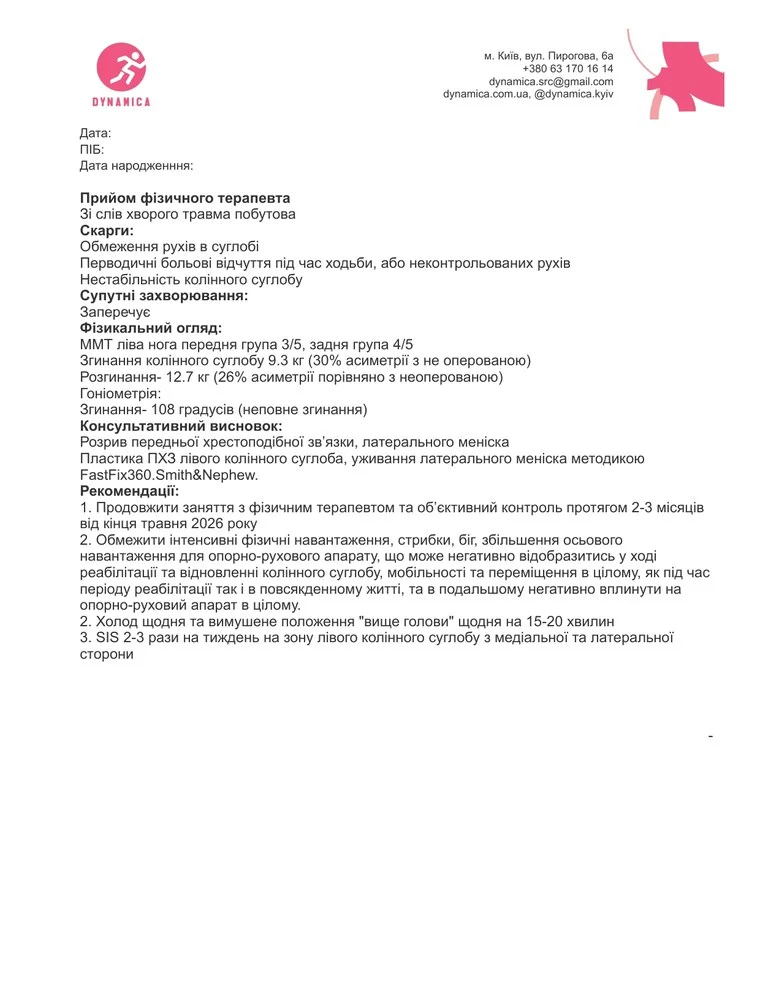
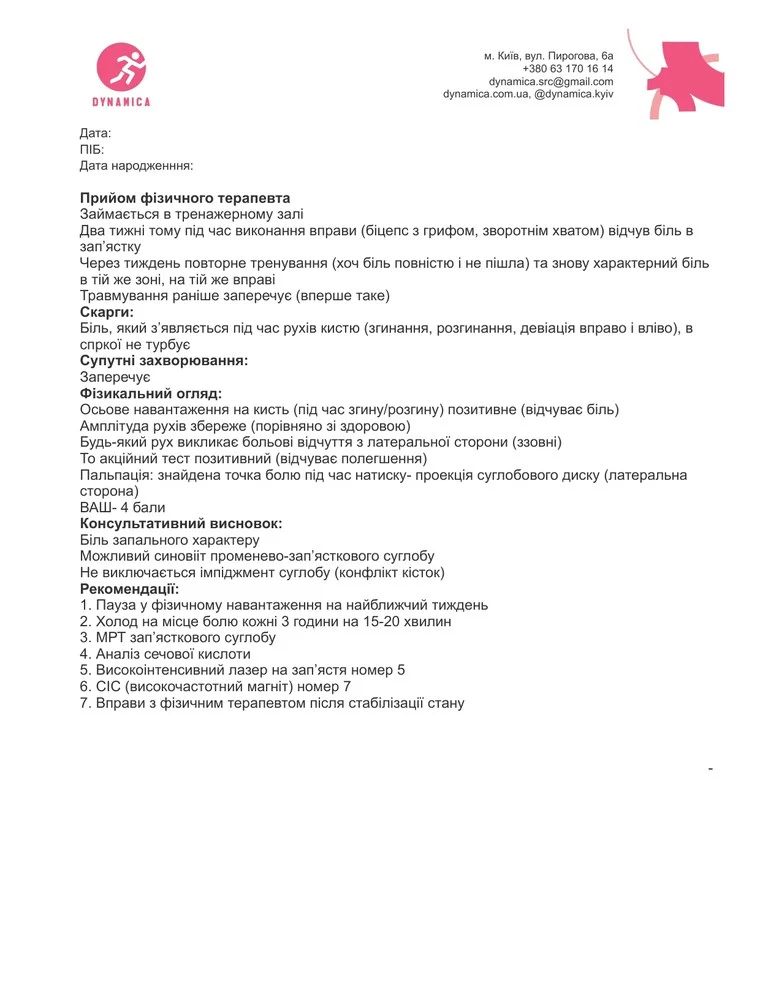
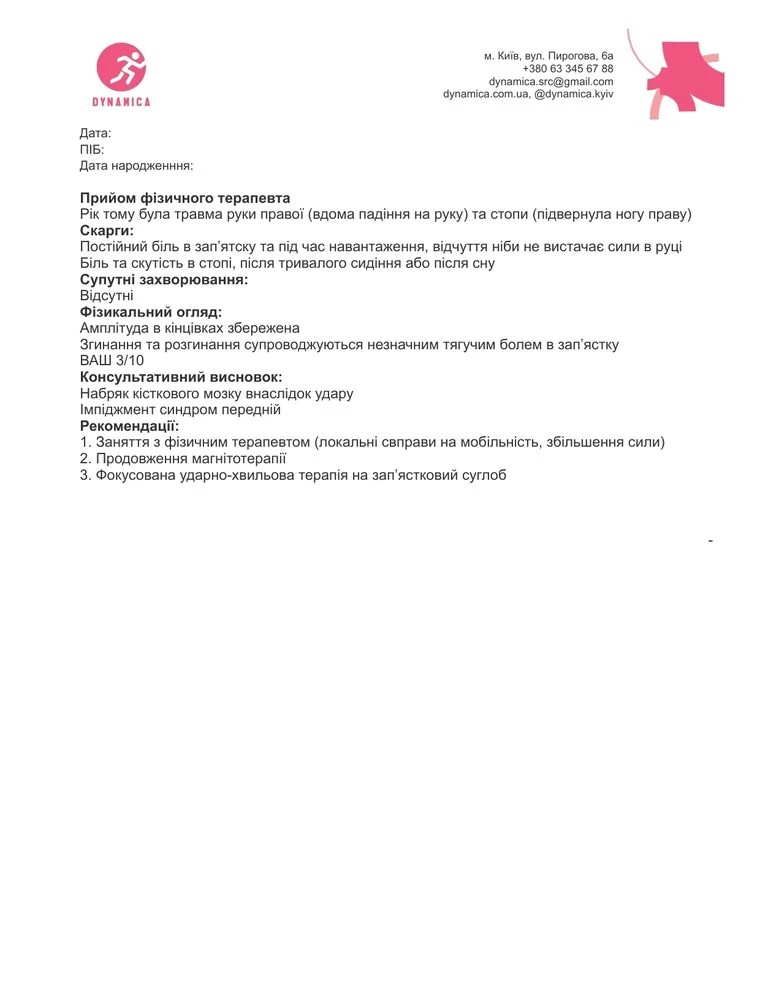
Real reports. Personal data hidden.
/ Recovery route
How we work:
from pain to strength
How long does it take? The first changes in movement control are noticeable within a few weeks. Strength and endurance are months of systematic work. We will be more precise after the assessment.
Stage 01 of 04 · REHAB
Take the load off
Get movement back without a flare-up.
- We assess which segment is overloaded and why that one.
- We release muscle spasm and tissue irritation.
- Spinal traction and physiotherapy — where appropriate.
Stage 02 of 04 · MOVE SAFE
Rebuild stability
Your back should hold you without constant tension.
- We switch on the deep core stabilisers.
- We restore thoracic mobility — without it the neck and lower back do double duty.
- We remove compensations fixed in place during the painful period.
Stage 03 of 04 · MOVE SMART
Load and daily life
What matters happens outside the gym, across your day.
- We work through bending, lifting and desk posture.
- We gradually add strength work for the back.
- Regular reassessment — we move by the numbers.
Stage 04 of 04 · MOVE STRONG
A margin of strength
So the back handles the volume for years.
- Strength and endurance of the trunk muscles.
- Return to training and physical work.
- A plan you run yourself between cycles.
/ Team
Who will work with you
The back and neck are handled by those who work with the spine and discs.
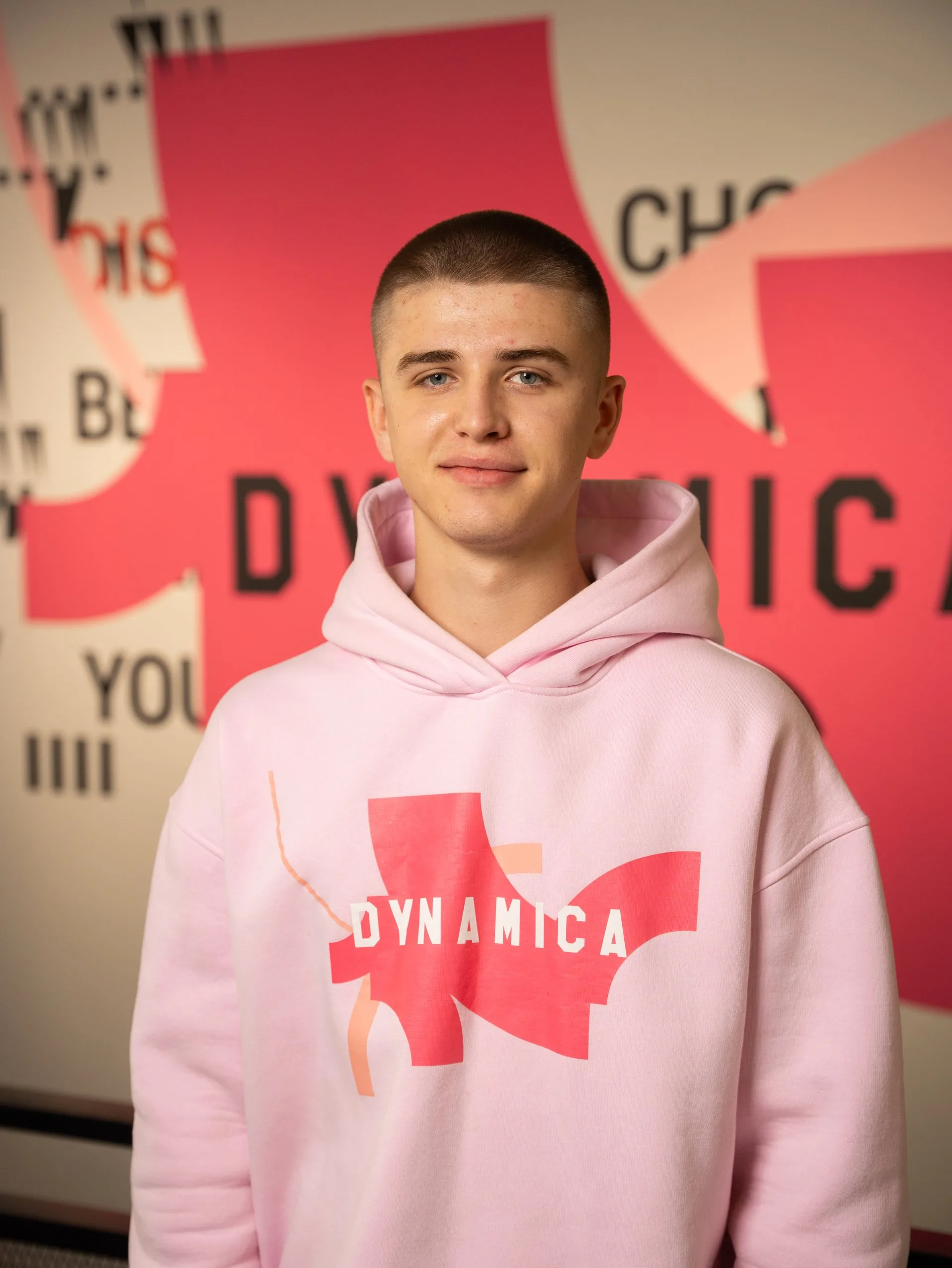 Mykola ZarvanskyiSports massage therapistBack, neck, recovery massage4 years+
 Daryna PopovaRecovery specialistBack, shoulders, knees, postnatal recovery4 years+
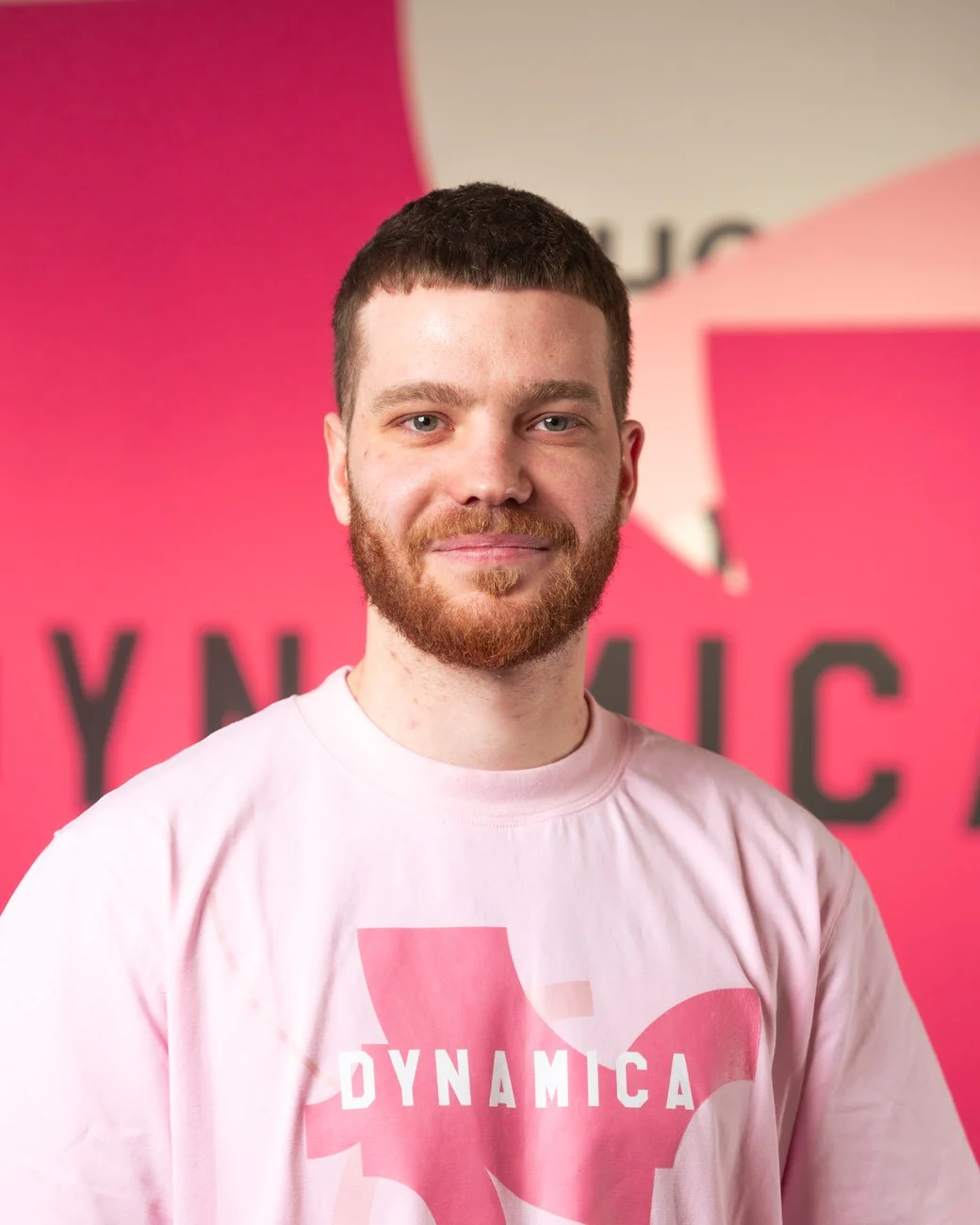 Valerii KutsaiRecovery specialistAfter heavy load, back, stability6 years+
/ Physical therapy
What can help
you get there faster
When the lower back or neck locks up, movement is physically impossible — the muscle is holding the segment. The equipment releases that spasm so we can start working on the cause.
This is not a separate course of procedures. Everything works inside the plan — and at the first visit it is included in the price.
Six tools. Which of them you actually need is decided by the physical therapist after the movement assessment.
/ Red flags
When to see a doctor immediately
If you notice these signs, seek medical help right away:
/ Reviews
What people say about us
“I came in with back pain; after a few sessions with the physical therapist it became noticeably easier to move. Thank you to the DYNAMICA team for their attention and a clear recovery plan.”
Євгеній Валеркоback pain“Finally there is a place where I could start actually dealing with my back! I have been through many doctors and finally found people who love what they do and know it beyond just words.”
Olena Shyiataback pain“I want to thank the Dynamiсa center for its atmosphere of care and professionalism.… Thanks to his work I managed to deal with my back pain and get back to normal life.”
anastasiiaback pain“Lately, from heavy loads, I started having problems with my sciatic nerve and my lower back began to hurt, so I decided to take strengthening my body before the new season more seriously.”
Алексій Писаревback pain
/ First step
Do not endure pain. Start with a movement assessment.
One consultation shows what exactly is holding the pain and which route will bring you back to normal movement.
Movement assessment — UAH 2,000 · sessions after that UAH 1,500
/ Questions and answers
Frequent questions
Will the consultation hurt?+
No. A consultation is not about enduring, it is about understanding movement. We work within a range that is comfortable for you; if anything feels unpleasant, we adjust right away.
What if it is not right for me?+
That happens, and it is fine. We assess whether we can solve your problem with physical therapy. If you need a doctor, we refer you to our orthopedist. Either way you will not leave empty-handed.
How many sessions do I need?+
We name the exact number only after the assessment and tests — promises made upfront are guesses. After the consultation we give an approximate forecast, without pressure and without “magic timelines”.
My MRI shows a herniated disc — will you take me?+
Yes. In most cases a herniated disc is not an indication for surgery. Our goal is to take pressure off the disc and teach the muscles to hold your back. If we see you need a doctor, we will refer you.
Do I need a doctor referral?+
No, it is not required — you can come on your own with pain or a movement restriction. If you already have an MRI or X-ray, it helps assess the situation more precisely.
Can I train online?+
Yes, we work offline and online. The first movement assessment can be done online too; after that we match the format to your condition and goals.
How soon can I book?+
Most often we see people the same day they contact us, with no weeks of waiting. Every day on Instagram @dynamica.kyiv we post the free slots.
Is a protrusion or herniation forever?+
It is not a disease but part of how the spine changes over the years. Such changes are found in 96% of eighty-year-olds who have no complaints at all (Brinjikji et al., AJNR, 2015).
The question is not the image but whether the body copes. If the muscles hold and movement is distributed properly, people live full lives with this and train. Living with it normally or suffering through it depends on what you do with your body.
I was told it is my age and nothing can be done+
Age affects the speed of recovery but does not cancel it. We work with function, not with your year of birth.
The term “osteochondrosis” is barely used in modern medicine as a standalone diagnosis — most often it describes age-related or overload changes. It is not a ban on movement but a reason to move smarter.

/ Who is responsible for this area
Reviewed by Valeriia Cherniiphysical therapistBogomolets National Medical University · injuries, arthrosis, chronic pain · BTL-Ukraine schoolSpecialist profile →23 September 2026