
/ Direction
Chronic pain
and restricted movement
It does not hurt sharply — it hurts constantly. For months. And you have already learned to avoid the movements that are “better not to do”.
We work step by step — from removing pain to building strength, under medical supervision.
Leave your number — then pick what suits you: Telegram or a call. No commitment.
/ Sound familiar?
Do you recognize
yourself?
It hurts every day and has for a long time
Not badly, but constantly — and you no longer remember when it was different.
You have to “walk it off” in the morning
The first steps are the hardest, the body takes half an hour to get going.
You avoid certain movements
And have quietly rebuilt your life around them — how you sit, how you bend, how you sleep.
Painkillers and massage
Help for a few days, then everything comes back.
You have had an MRI
There are words in the report, but nobody explained what to do with them.
You were told “it is your age”
Or “everyone has this”. And the conversation ended there.
/ What is going on
Why “it used to pass on its own”
stopped working
The pain passes. The cause does not.
- the body learned to go around the problem movement
- some muscles switched off, others took on double the work
- it gets easier — but the load simply moved somewhere else
- which is why the pain comes back here and there
Chronic pain is not “a stronger version of acute pain”. It is a different task: not to mute the sign, but to give the body back its ability to distribute load.
/ Who it is for
This is for you if…
- you sit at a computer and by evening your back turns to wood
- the pain comes back every time you pick up the pace a little
- you are past forty and have started to think this is forever
- you have never done sport — and it feels like this place is not for you
- you have tried massage, injections, the pool — it does not hold for long
- you just want to sleep, sit and walk normally
People who come to us are not athletes — they are people who want to move, sleep and sit normally without pain.
/ The goal
Where we are
taking you
The goal is not “so it stops hurting”. The goal is for your body to handle life.
“No pain” is the middle of the road, not the finish line.
The finish line is a margin of strength you spend over the next thirty years: your back handles a workday, your knee handles stairs, your shoulder handles a suitcase on the overhead rack.
Why muting the sign is not enough
Pain can be shut off quickly. But if the body keeps going around the problem movement, the load simply moves to the neighboring joint — and the pain comes back somewhere else. So we work with the cause, not with the spot.
/ First visit
What happens at the first visit
It will not hurt. This is not about enduring, it is about understanding your movement — 90 minutes at a comfortable pace, and you leave with a plan.
We check joint mobility and muscle strength, palpate the area you complain about, take your history and run functional tests.
We try the first exercises and watch how your body responds — without sharp pain.
What exactly is holding the pain, which movement patterns are off, and a clear route forward. No pushing.
/ Proof
What you take
at the first visit
Not an opinion “in words”, but a written report: complaints, examination data in numbers, a conclusion and recommendations. Here are three real ones — different cases.
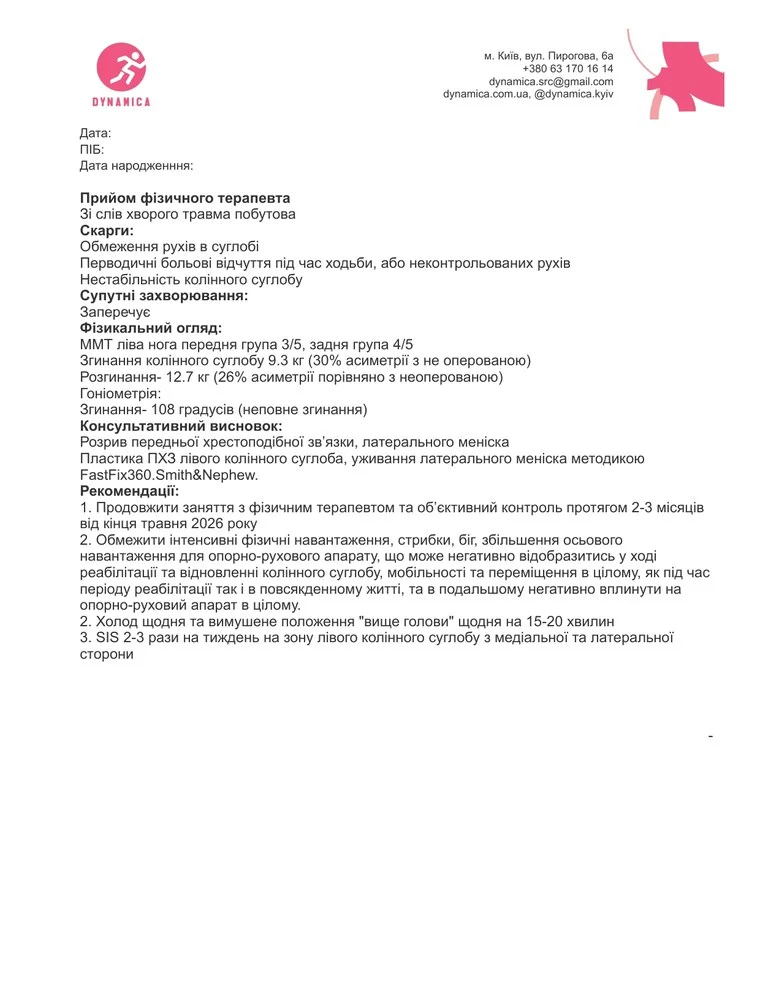
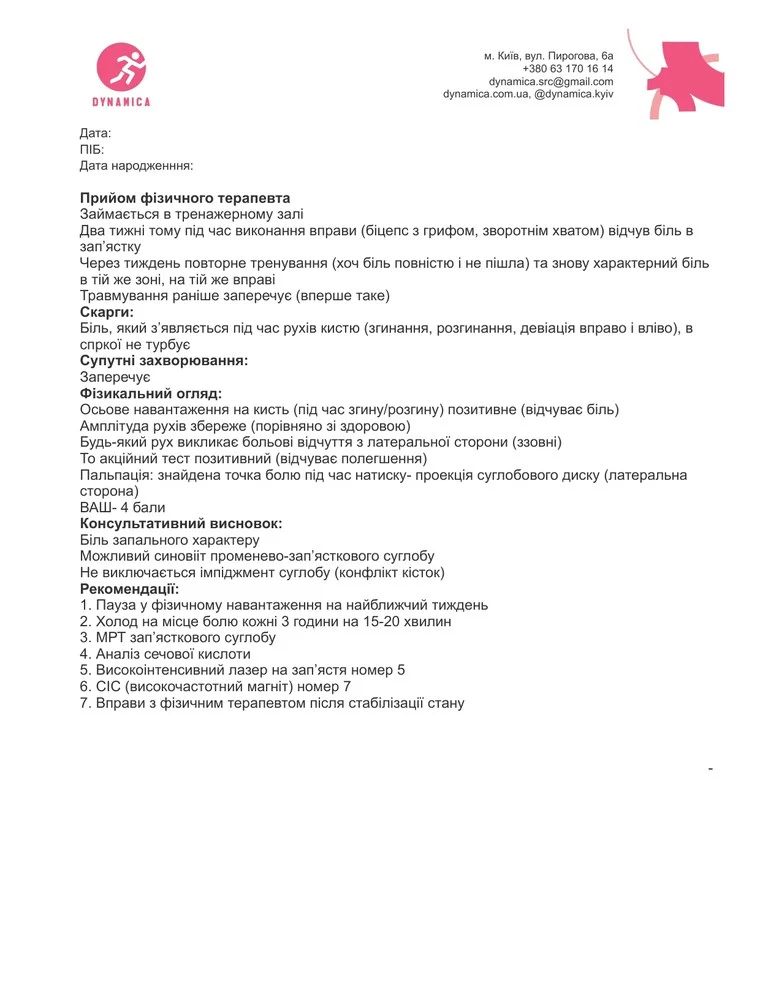
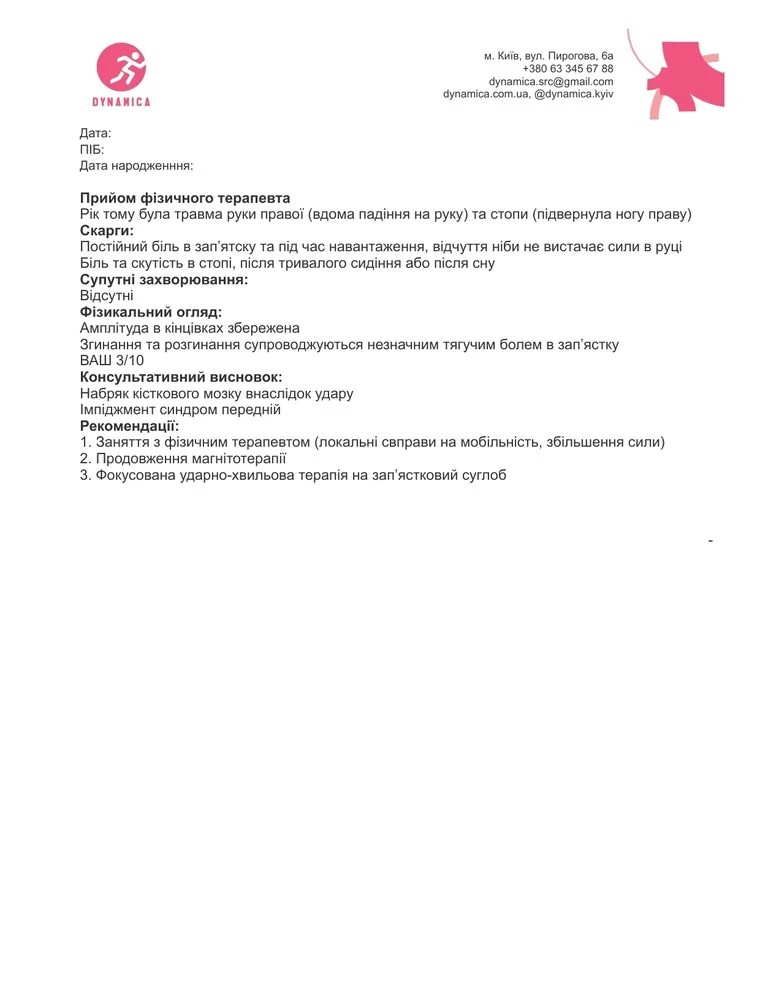
Real reports. Personal data hidden.
/ Recovery route
How we work:
from pain to strength
How long does it take? Honestly — it depends on your condition. We name the exact number of sessions only after the movement assessment, with no promises upfront. Some people feel relief within a few weeks, others need a longer route — but you always know what stage you are at.
Stage 01 of 04 · REHAB
Lower the sensitivity
Get movement back without flare-ups.
- We go through the history of the pain and what keeps it going.
- We reduce the tissue reaction and the load on the painful area.
- Physiotherapy — to lift the barrier to movement.
Stage 02 of 04 · MOVE SAFE
Rebuild trust in movement
With chronic pain, fear of moving does as much harm as the injury.
- We start with a volume your body definitely tolerates.
- We remove compensations built up over years.
- We show that movement is safe — using your own numbers.
Stage 03 of 04 · MOVE SMART
Dose the load
No more flare-up, rest, flare-up cycle.
- We plan volume instead of reacting to pain.
- Reassessment every few weeks.
- We learn to tell pain apart from ordinary overload.
Stage 04 of 04 · MOVE STRONG
Resilience
So life stops being organised around pain.
- Strength and endurance — the margin that damps the swings.
- Return to your usual loads.
- A self-managed plan between cycles.
/ how long it takes
HOW MANY SESSIONS
AND WHAT IT COSTS
Approximate average figures at the basic package level — so you can see the scale before your first visit.
After surgery or a fresh injury
REHAB → MOVE SAFE: on average about 12 weeks and UAH 60,000. At the maximum level — about 10 weeks.
Acute pain: disc herniation, tear
Acute phase → REHAB: on average 8–9 weeks and up to UAH 48,000.
Chronic pain, everyday discomfort
MOVE SAFE: on average six weeks and UAH 25,400.
/ Team
Who will work with you
Chronic pain is handled by those who work with long histories and several previous attempts.
 Valeriia CherniiRecovery specialistInjuries, arthrosis, chronic pain4 years+
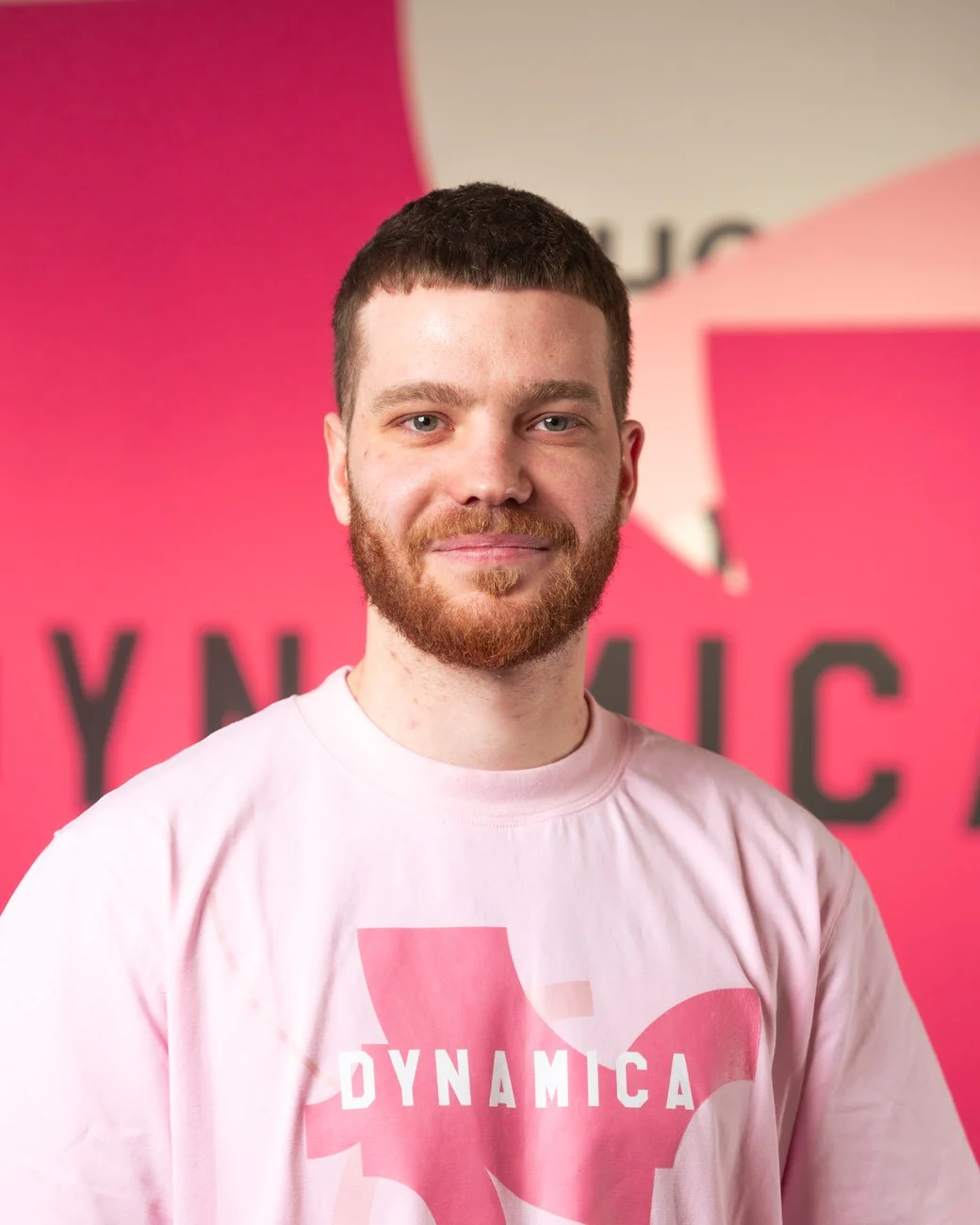 Valerii KutsaiRecovery specialistAfter heavy load, back, stability6 years+
 Mykola ZarvanskyiSports massage therapistBack, neck, recovery massage4 years+
/ Physical therapy
What can help
you get there faster
When pain has been there a long time, tissue reacts to any movement. The equipment lowers that sensitivity — not instead of movement work, but so it can begin.
This is not a separate course of procedures. Everything works inside the plan — and at the first visit it is included in the price.
Five tools. Which of them you actually need is decided by the physical therapist after the movement assessment.
/ Red flags
When you need not us,
but a doctor
These signs need a doctor, not a physical therapist:
/ Reviews
What people say about us
“The result, in my view, came very fast: after 1.5 months of sessions the constant pain almost completely disappeared, even though at first we expected rehabilitation to take much longer.”
Michaelchronic back pain“At the very first session I was impressed by how rational the assessment was and how carefully the methods were chosen. The rehabilitation was successful, and we started working on other chronic problems.”
Andrii Magalichchronic problems“Great specialists, I am treating my neck, there have been only 4 sessions and I already feel positive changes, highly recommend.”
Liza Dmitrievaneck pain“I finally found a center that could actually help, and for the first time in 4 years since the injury my leg stopped hurting.”
Tetiana Poliakovapain for 4 years
/ First step
Start by
understanding your body
One visit — and you know what is going on and what to do. The movement assessment does not commit you to further work.
Movement assessment — UAH 2,000 · sessions after that UAH 1,500
/ Questions and answers
Frequent questions
about chronic pain
My MRI shows a herniated disc. Am I allowed to move at all?+
Is a protrusion or herniation forever?+
The question is not the image but whether the body copes. If the muscles hold, people live full lives with this and train.
I was told it is my age and nothing can be done+
“Osteochondrosis” is barely used as a standalone diagnosis — it describes age-related or overload changes. Not a ban on movement, but a reason to move smarter.
Will the consultation hurt?+
How long will it take?+
What if it is not right for me?+
Could exercise make it worse?+
Not if it is chosen properly. It can if you read something online and do a thousand repetitions. The whole difference is dosage: the load is matched to your current state and changes as that state changes. With chronic pain we start with a volume your body can definitely handle and build up gradually — so the nervous system stops reading movement as a threat.
How many sessions will I need and what will it cost?+
Approximately, on average: after surgery or a fresh injury — about 12 weeks and UAH 60,000 (REHAB, then MOVE SAFE); acute pain — 8–9 weeks and up to UAH 48,000; chronic pain — six weeks and UAH 25,400. Everyone is different, so this is a guide, not a promise. The first step is a movement assessment for UAH 2,000; after it the therapist sets your stage and volume. All packages are on the Packages page.

/ Who is responsible for this area
Reviewed by Valeriia Cherniiphysical therapistBogomolets National Medical University · injuries, arthrosis, chronic pain · BTL-Ukraine schoolSpecialist profile →1 October 2026